


Kathmandu. The war in the Middle East is becoming more multifaceted and more complex. Direct and indirect confrontation between Israel, Iran and their allies poses a serious threat to regional security.
Israeli forces have lost four soldiers in clashes in southern Lebanon. The soldiers belonged to the same battalion and were killed in the fighting, the military statement said. Other soldiers were wounded in the incident, one of whom is said to be in critical condition. Israeli forces are engaged in continuous clashes with Iran-backed Hezbollah in the region.
Meanwhile, Israel said it had intercepted Iran’s missiles with its air defence systems. Witnesses said at least 10 explosions were heard in Jerusalem. According to the Israeli military, it has been confirmed that the missiles were launched from Iran.
Explosions were also heard in Tehran and power supply was disrupted in some areas, Iranian media reported. Power supply was restored in the affected areas after some time.
There are indications that the scope of the war has extended to Iraq. The Popular Mobilization Forces (PMF) said a joint US-Israel airstrike targeted two of its military bases. There were no immediate reports of casualties in the attacks in Babil and Anbar provinces.
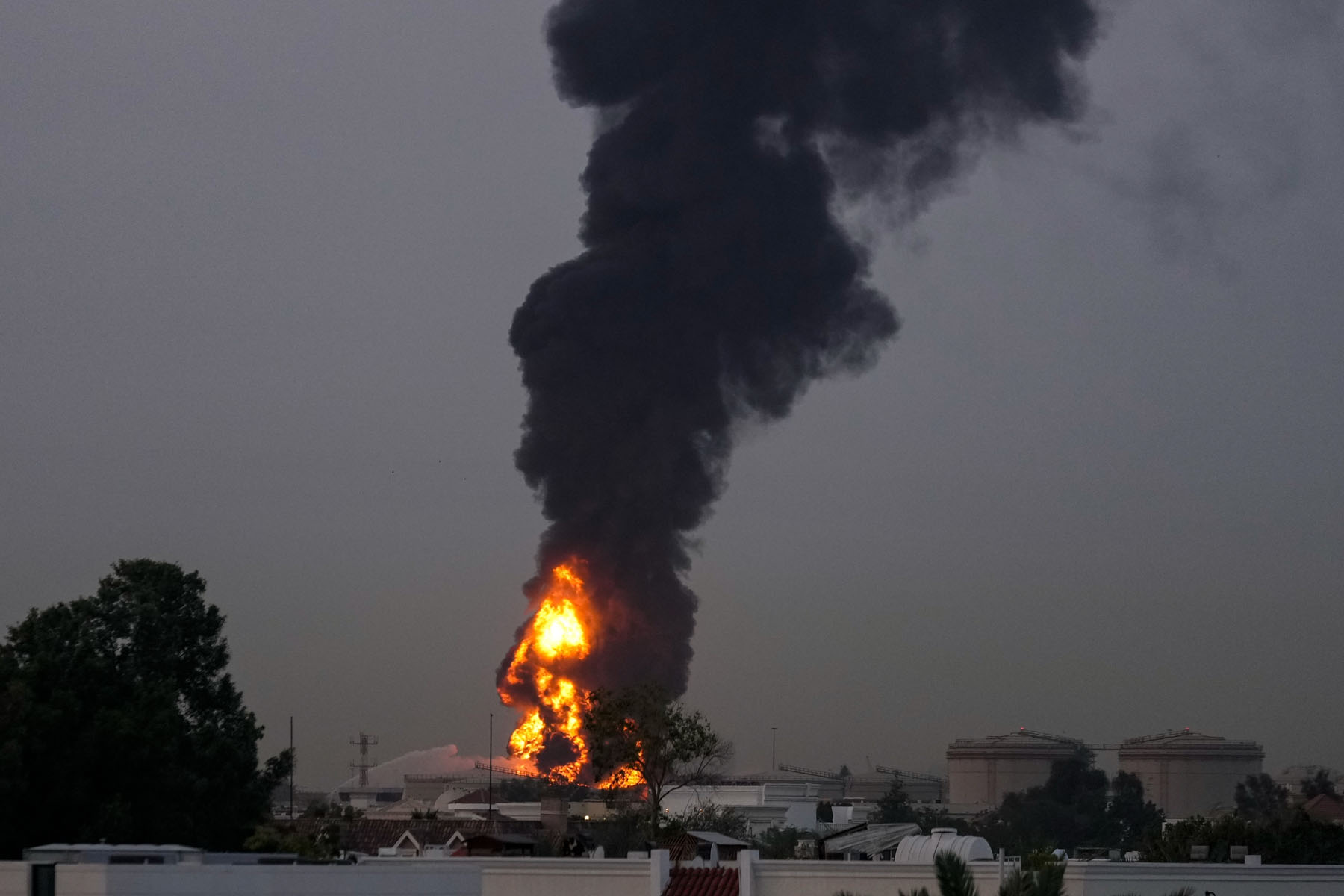
A Kuwaiti oil tanker caught fire at Dubai port. Kuwait’s state-owned oil company said the tanker had been directly attacked by Iran, but there were no human casualties. In addition, four people were injured in other fires in the city due to debris falling from air defence systems.
Israeli Prime Minister Benjamin Netanyahu said the war had achieved more than half of its strategic goals, but refused to give a specific timeline for when it would end.
The United Nations Interim Force (UNIFIL) has confirmed that two peacekeepers were killed in an explosion in southern Lebanon. Two others were injured in the incident, one of whom is in critical condition.
A civilian was injured when shrapnel fell near the US Embassy in Baghdad during a drone strike.
Iran’s parliamentary commission has approved a plan to levy tariffs on ships operating in the Strait of Hormuz. The waterway, which is considered a major route for energy supply, has been affected by the war, which is expected to affect the global market.
Meanwhile, the G7 countries have pledged to take all necessary measures to stabilize the energy market. At the same time, NATO forces have stopped missiles fired from Iran towards Turkey, indicating efforts to prevent further escalation of the regional war.
U.S. Secretary of State Marco Rubio expressed optimism about the “private” dialogue with Iran. He said internal divisions within Iran had raised the possibility of a diplomatic solution.
Meanwhile, Israel claimed the attack on Imam Hussein University in Tehran, accusing the institute of being involved in advanced weapons research.
US President Donald Trump has threatened to take strong military action if a deal is not made with Iran soon. He sought to ratchet up pressure by hinting that Iran’s oil infrastructure and energy facilities could be targeted.
















प्रतिक्रिया दिनुहोस्