


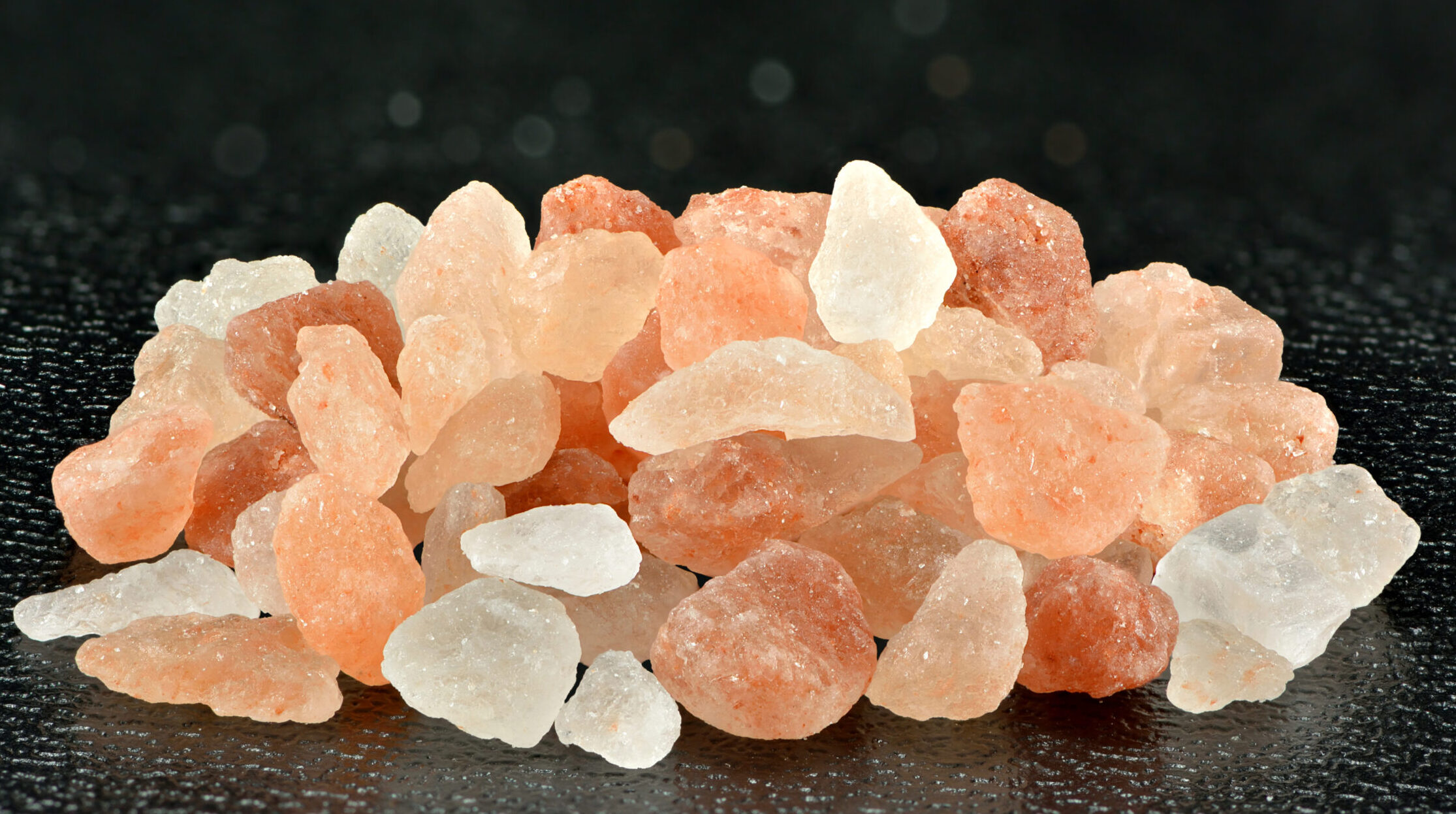
Kathmandu. In recent years, the attraction towards ‘pink salt’ has been increasing in Nepali society.
The number of people using ‘pink salt’ instead of iodized salt is increasing every day. Misinformation circulating on social media, calling Siddhe salt ‘natural’ and increasing concern for people’s health has increased the attraction of many people towards the use of ‘Siddhe Nuna’.
Assistant Chief Executive Officer of Salt Trading Corporation Limited Dr. According to Dr. Brajesh Kumar Jha, such a tendency can lead to serious health problems. The use of iodised salt has been promoted in Nepal for the past few decades. Iodine is an essential micronutrient for the body. It especially helps to balance the work of the thyroid gland. Dr. Jha said that due to the lack of it, problems like swelling of the throat (goitre), obstruction in mental development and weak intellectual development in children are seen.
In order to take care of 4 percent of the cretinism patients, another 4 percent of the workforce had to be busy on a daily basis. “This means that 8 percent of the population has to be fed without working,” he says, adding, “The concept of selling iodised salt was introduced in Nepal with the conclusion that this will not uplift the nation.” With the help and cooperation of the World Health Organization (WHO), UNICEF Micronet Initiative and ICID, the government of India and the direct support of the Government of India, the iodine related international organizations related to iodine. He said that he started selling iodised salt from 2030 BS.
According to Dr. Jha, the traditional style of Nepali kitchen is also playing an important role in reducing the amount of iodine. Often, the iodine in salt is destroyed by the use of salt at the beginning of cooking, cooking for a long time, roasting vegetables and adding sour ones. “When cooked without covering, iodine evaporates faster. By the time the food is ready, a large part of the iodine added to the salt is gone,” he says.
Iodine is an essential micronutrient for the human body. It activates the thyroid gland in the neck and helps to produce the hormone thyroxine. This hormone controls the body’s metabolism i.e. the process of energy production and use. Dr. Jha says that due to the lack of iodine, the body cannot convert the food into energy effectively, due to which people can see fatigue, lethargy and lethargy.
“If iodine deficiency is depleted, its effects are visible from the time of pregnancy, if there is not enough iodine, there is a risk of miscarriage, stillbirth or the birth of a physically and mentally weak child,” he said. ’
Dr. According to Jha, in 1965, the then government conducted a nationwide survey. According to the survey, 55 per cent of the population is deficient in iodine and they are suffering from some form of deformity. He says, “Critinism was found in 4 percent of them. Critinism is a person who is sluggish and unable to do his work on his own. Critinism is also considered a frightening condition. ’
According to the World Health Organization (WHO), IQ levels are also significantly lower in children with iodine deficiency.
“In such a situation, the increase in the use of pink salt or other traditional salt is a matter of concern from the point of view of health,” he said. According to him, Nepal had been facing serious health problems in the past due to iodine deficiency.
In the past decades, problems like throat disease were rampant in Nepal. However, with the expansion of the use of iodized salt, this problem has decreased significantly. He says that this achievement made after years of efforts by the Government of Nepal and the WHO is now showing signs of being at risk again. He believes that if the habit of using iodized salt decreases, then there is a possibility of recurring old health problems.
He says that some people are trying to stay away from iodized salt because of the fear of iodine overdose due to misinformation such as social media. “The chances of excessive iodine intake from a normal diet are very low,” he says. The problem only occurs if you consume excessive amounts of iodine on a regular basis, which is not practically possible in daily life. Therefore, the balanced use of iodized salt does more harm than good.
In today’s context, the allure of ‘pink salt’ may be new, but the need for iodine for human health is old, but it is still inevitable. Salt is not only a flavor enhancer, it is directly related to body development, intellectual ability and overall health. Therefore, it would be wise to choose salt keeping scientific facts and long-term impact in mind rather than following publicity and rumour, said Dr. Jha.
Initially, 15 ppm (parts per million) iodine was added to the salt as per the government’s order. “15 ppm is 15 parts out of a million. The effect was not so good. It was added again to 20 to 30 ppm,” he says. ’
He said that the government is planning to add iodine to the salt again to manage the problem of washing the salt because it is blackened, keeping it near the fire for melting and storing it in the open for a long time.
According to the government’s plan, salt trading has been instructed to mix salt into powder and mix it with iodine and sell it by packing it. According to him, so far iodised powder salt is being sold in packets from the most remote areas of Nepal. The packets currently being sold contain 50 ppm iodine. Dr Jha said that he has been working at the same rate so far.



















प्रतिक्रिया दिनुहोस्