

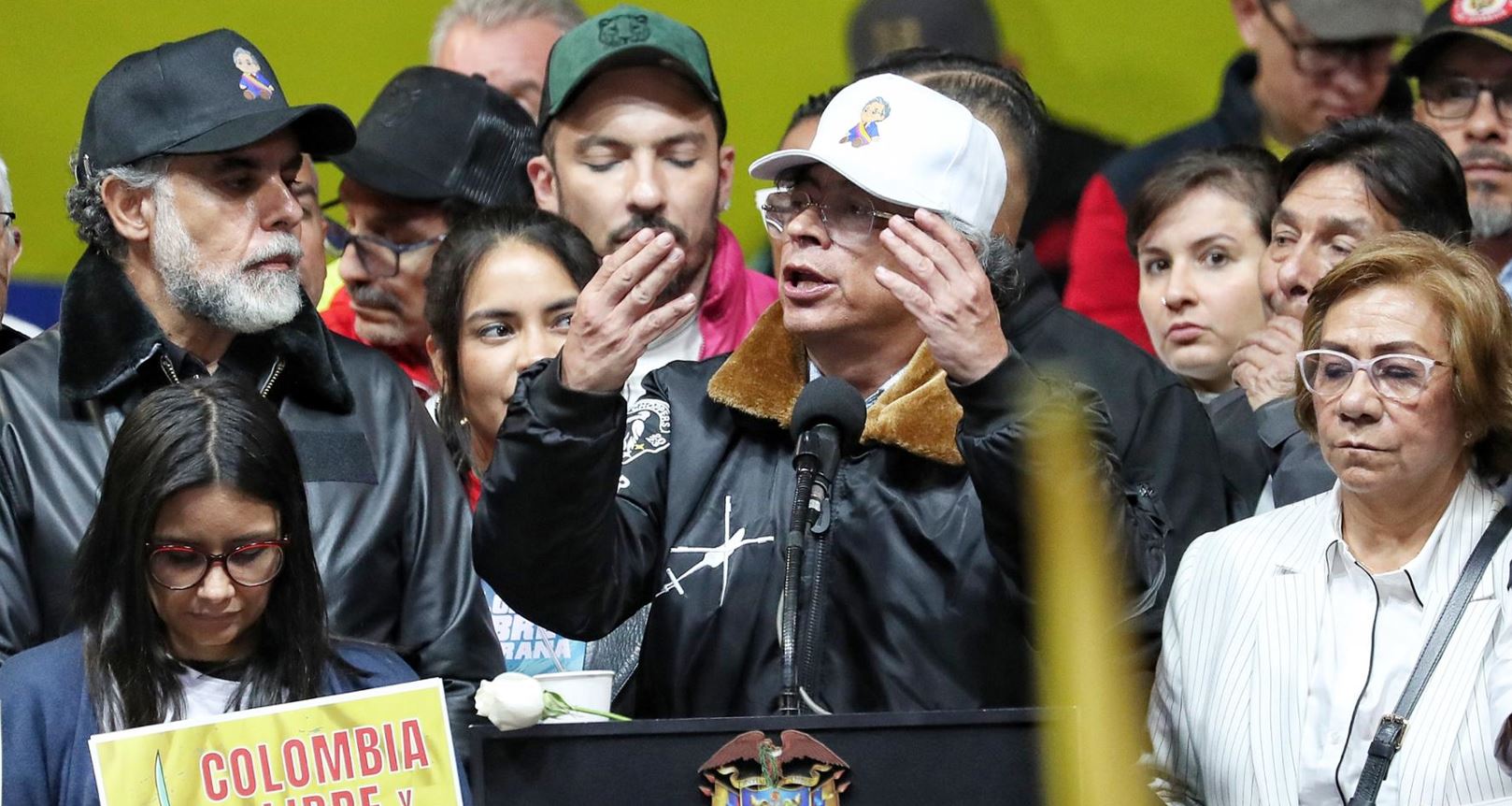
Kathmandu. Colombia’s leftist President Gustavo Petrol’s harsh criticism of the Trump administration’s military intervention in Venezuela has strained relations between Washington and Bogotá.
He described the intervention as a “despicable infringement” on Latin American sovereignty and compared it to the 1937 carpet bombing of Guernica, Spain, by Nazi Germany.
Such a strong reaction from Colombia, a historically close ally of the United States, is unusual. Over the past three decades, the United States and Colombia have been closely cooperating in areas such as drug trafficking, counter-insurgency and rural development. Under this cooperation, Washington has provided billions of dollars in aid to Colombia.
But after President Petrol openly opposed the US control of Venezuelan President Nicolas Maduro, he and President Donald Trump intensified. After Trump said U.S. military action in Colombia could be “appropriate”, Gabriel called on people to take to the streets to defend national sovereignty. Thousands of Colombians responded by chanting “Long live a free and sovereign Colombia!”
But to everyone’s surprise, on the day of the protests, President Patrol softened his earlier harsh statement and recounted his friendly telephone conversation with President Trump. He called for the resumption of direct dialogue between the two governments and warned of the risk of conflict if the dialogue was not held.
President Trump also invited Petro to visit the White House, describing his conversation with Petro as “respectful”. Analysts say the sudden peace between the two leaders, who have long been harsh on each other, suggests that ideological differences can be put aside for practical gains.
U.S. support for Colombia is still crucial in the fight against rebels and drug traffickers, and for the United States, Colombia remains a key drug prevention base in the Caribbean. Colombian diplomats and the private sector have also played an active role in preventing a complete breakdown in relations, according to experts at a Washington-based think tank.
Earlier, President Trump had used strong words to call Petrolman an “international drug leader”. Colombian officials have also been threatened with revoking U.S. visas, suspending financial aid and imposing punitive tariffs on exports. This raised serious concerns about the possibility of US intervention in Colombia.
However, experts underestimate the possibility of direct US military action against the democratically elected President Petro. Meanwhile, Colombian defense and diplomatic officials have tried to defuse tensions, signaling that cooperation will continue.
Finally, President Petrol, through negotiations, made it clear that peace was a priority and urged citizens to be reassured. Preparations are underway for a possible visit to the White House, although the formal diplomatic process has yet to be completed.













प्रतिक्रिया दिनुहोस्