Skip to content

Political parties and candidates will not be allowed to receive more than Rs 25,000 in cash. 

nabil bank

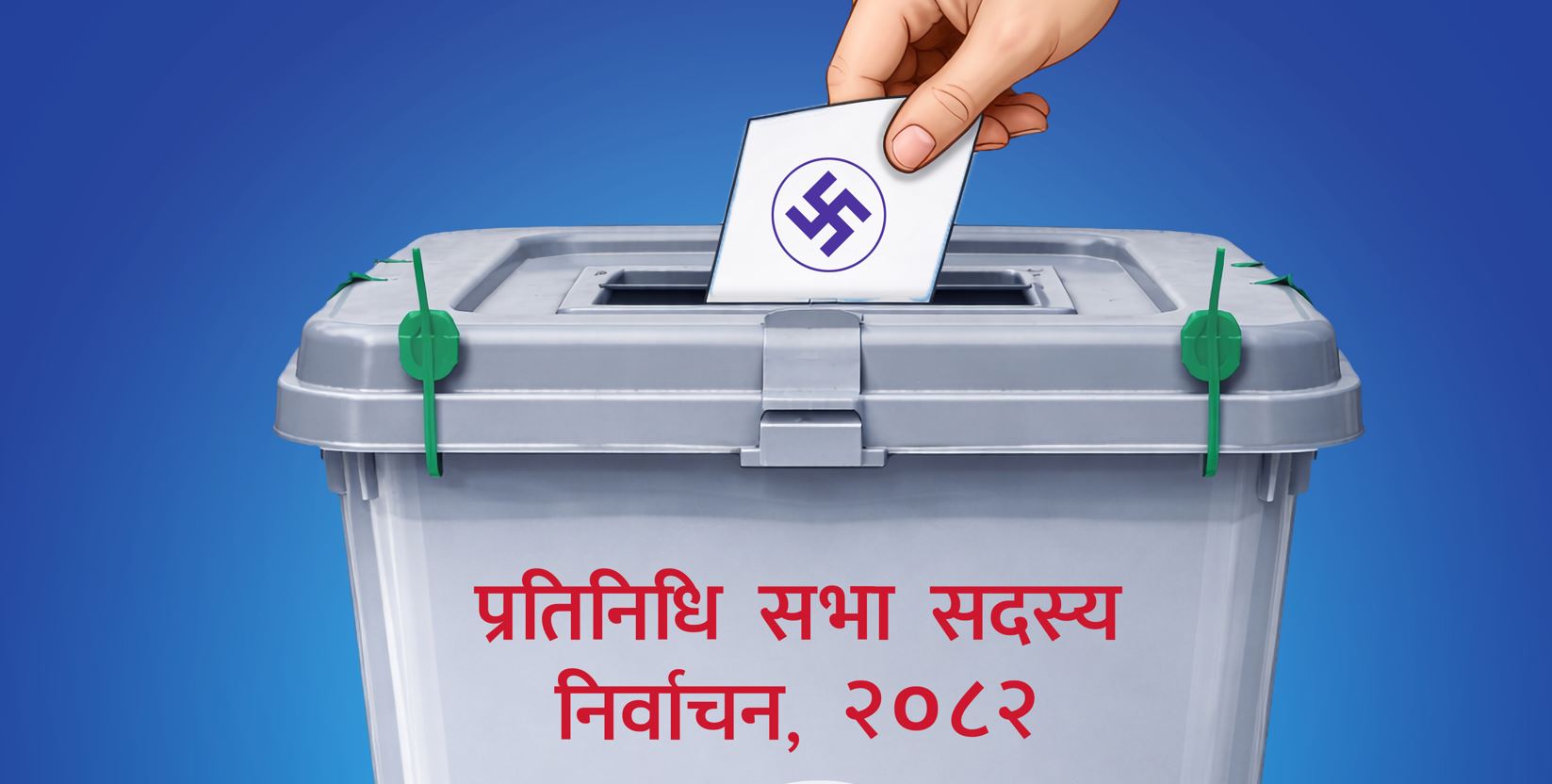
. KATHMANDU: The Election Commission (EC) has endorsed the ‘House of Representatives Member Election Publicity Bank Account (Operation and Management) Work Procedure-2082’ in a bid to make the election expenditure transparent and economical.

The guideline approved by the EC on Tuesday is said to be brought with the objective of controlling, monitoring and discipline the expenditure of the political parties and candidates in the election to the House of Representatives.TAG_OPEN_div_48

As per the procedure, political parties and candidates are now required to open separate bank accounts for the election publicity.TAG_OPEN_div_46 For this, the political parties should register at the EC’s secretariat and the candidates should submit the application in the prescribed format at the Election Office. Along with the application, the candidates have to produce the official letter of the party, the candidacy certificate or identity card of the candidate, the signature of the concerned bank, the sample card and the citizenship certificate of the account operator.

Banks and financial institutions will open accounts only after the Commission or the Election Office makes a recommendation after examining the documents.TAG_OPEN_div_44 The information about the opening of the account must be given to the Commission, the Election Office and the Office of the Treasury and Financial Comptroller.

According to the working procedure, the account can be operated only with the joint signature of a maximum TAG_OPEN_div_42 of two office-bearers designated by the political party. In the case of a candidate, the account can be operated with the signature of the candidate himself or the person authorized by him/her, alone or with the joint signature of two persons. Likewise, the work procedure states that all income and expenditure related to the election campaign should be made in Nepali currency.

Voluntary financial assistance, publicity expenses, cheques, drafts, TT or electronic payments should be made through all bank accounts.

Political parties and candidates will not be allowed to receive more than Rs 25,TAG_OPEN_div_39 000 in cash. Such amount has to be deposited directly in the bank account. In case of less than Rs 25,000, cash receipt or receipt can be deducted and deposited in the account.

The Working Procedure strictly prohibits taking financial assistance from prohibited bodies and individuals as per the Political Parties Act, 2073. The government has completely prohibited accepting assistance from the Government of Nepal, provincial and local level bodies, institutions owned or controlled by the government, public limited companies having public shares, government or community educational institutions, national and international non-governmental organizations, foreign governments or individuals, unnamed individuals or organizations and other organizations designated by the Commission.

The working procedure mandatorily requires disclosing the name, address, profession, permanent account number, source of money and tax details of the person or organization providing assistance while receiving more than one hundred thousand rupees.

The amount in the bank account related to election expenses opened before the implementation of the procedure should now be transferred to the account opened as per the new procedure. “Before the implementation of this procedure, a political party or a candidate shall have to transfer the amount received by opening a bank account for the purpose of election campaigning to the bank account maintained in accordance with this procedure,” the work procedure states.

After the completion of TAG_OPEN_div_31 the election, the political parties and candidates will have to make public the details of the election campaign expenditure and submit it to the concerned election office. The bank account will be closed within 35 days of the preparation of the report, but the details will have to be kept safe for six years. The EC can close the account at any time in case of party dismissal or cancellation of candidacy.

The working procedure has given the responsibility of monitoring the expenditure made by political parties and candidates in the election to the Chief of the Treasury and Financial Comptroller Office (Kolenika). The mayor of Kolenica will monitor the election code of conduct as the monitoring officer. The monitoring will collect details about whether or not government employees or public property have been misused, whether assistance has been taken from the prohibited body, whether the expenditure has exceeded the limit and whether or not spent on prohibited works.

There is a provision that the documents and details related to the bank account are considered confidential and non-encroachable as per the prevailing law, but there is a clear provision that the Election Commission or the official authorized by the Commission may examine or examine the account if it deems necessary.TAG_OPEN_div_27

In the previous elections, serious questions were raised about the source, quantity and use of the campaign expenditure.TAG_OPEN_div_25 Non-transparent transactions in the name of voluntary assistance, cash expenditure, the practice of taking aid from prohibited bodies and the tendency to exceed the limit have added challenges to the fairness and good governance of the election. In this context, the EC has stated that this work procedure has been implemented to effectively implement the Clause 16 of the Election Code of Conduct, 2082 and to make the election systematic and dignified.


Prabhu
sikhar insurance

प्रतिक्रिया दिनुहोस्

global ime
ime
citizen life
MAK 4T
Arghakhachi
Gili
sebon