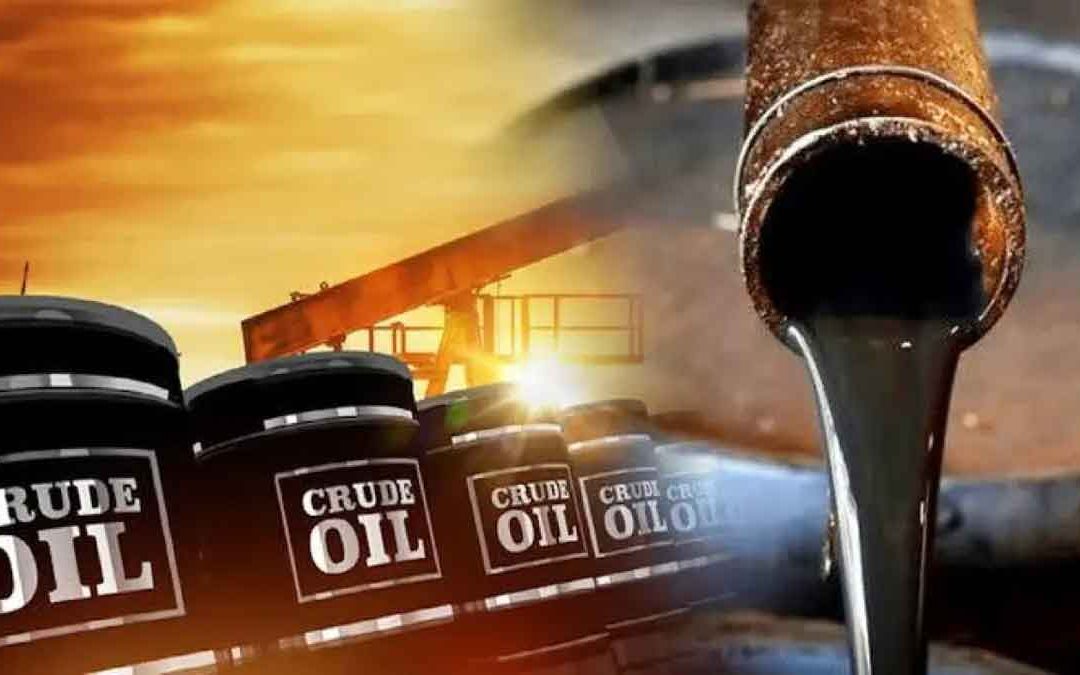
. Rising tensions in the Middle East region are affecting the global economy. The price of crude oil in the international market has increased sharply, especially due to the war between the US, Israel and Iran. It is also being seen in the stock markets of the Middle East region.
The impact of the increase in the price of oil in the world market has been seen in the economy around the world. As oil prices rise, the cost of raw materials used in the energy sector, jet fuel, transport, industry, agricultural production and fertilizer production will also increase. This has created the risk of increasing inflation around the world.
Experts in the concerned sector say that the impact of the increase in the price of oil will be seen in Nepal as well.TAG_OPEN_div_37 According to international media reports, the price of oil in the world market has exceeded $ 100 per barrel due to the war. Nepal’s commerce expert Ravi Shankar Sainju said that the impact will be seen in Nepal’s fuel, transportation, industry, agricultural production and raw materials used in fertilizer production.
According to the BBC, the price of oil has increased due to the possibility of disruption in energy supply due to the war.TAG_OPEN_div_35 Much of the world’s oil is transported through the Strait of Hormuz (an important sea route connecting the Persian Gulf and the Gulf of Oman). It is a very important sea route connecting the Persian Gulf region to international markets. Normally, about 5 percent of the world’s oil reaches the world market through this route.
Since the outbreak of war, the movement of ships through this route has decreased. Some oil tankers have suspended their journeys due to increased security risks. Some ships have changed their course because of the increased security risks caused by the war. This has a direct impact on the price of oil in the global market. In the international market, the price of Brent crude oil has increased by about 24 percent to more than $ 114 per barrel. Similarly, Nymex Light Sweet crude oil has increased by more than 26 percent. With the rise in oil prices, stock markets around the world have also fallen.
Japan’TAG_OPEN_div_31 s Nikkei 225 fell more than 7 percent and Hong Kong’s Hang Seng fell more than 3 percent. Australia’s ASX 200 and South Korea’s Kospi also fell significantly.
If the current war continues for a long time, the price of oil could rise further. According to international media, the price of oil could rise to more than $150 a barrel if shipments through the Strait of Hormuz are disrupted for a long time.
What is the impact of in Nepal?
For a country like Nepal, which is completely dependent on petroleum imports, the increase in the price of oil in the international market can be a big challenge.TAG_OPEN_div_26 Nepal imports petroleum products mainly from India and its price is determined on the basis of the international market. If the price of crude oil remains high in the world market for a long time, then the price of petrol, diesel, kerosene and aviation fuel may increase in Nepal. This will increase the transportation cost and will also affect the price of daily essentials, said Sainju.
The cost of transporting food, construction materials and other goods increases as transportation costs increase. The direct impact of this is seen in the increase in prices in the market. Similarly, the increase in the price of aviation fuel can also increase the airfares. It may also have an impact on the tourism sector of Nepal, which is dependent on tourism.
If the war in the Middle East is not brought under control soon, energy supply instability is likely to increase. In such a situation, there is a possibility of further pressure in the global economy and the rate of inflation will increase. Nepal also needs to make economic preparations and policy adjustments in view of such potential impacts.






















प्रतिक्रिया दिनुहोस्