

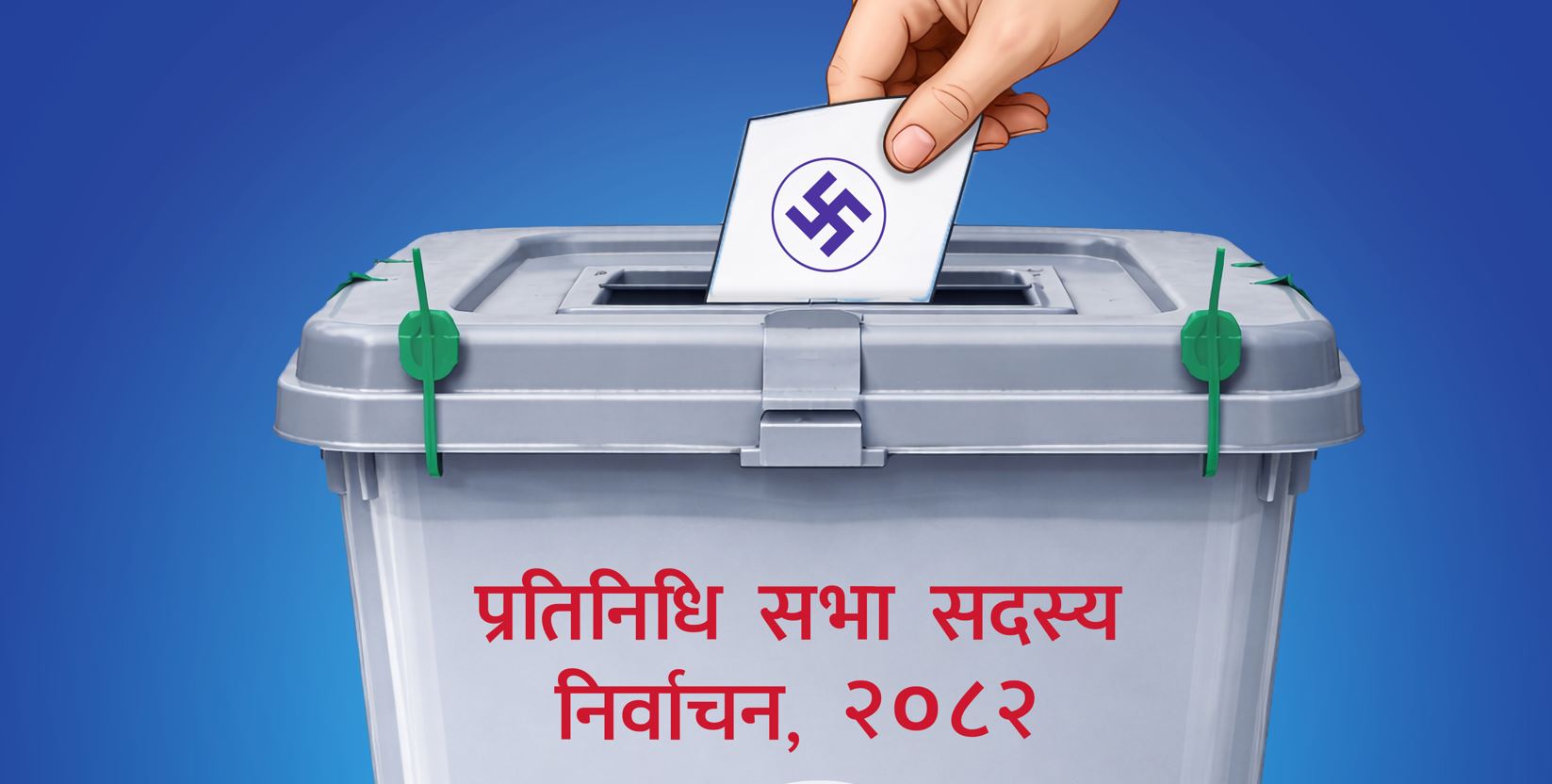
Kathmandu. According to the Joint Preliminary Observation Report, there is no transparency in the expenditure of the candidates in the election to the House of Representatives. A joint preliminary election observation report by the National Election Observation Committee (NEOC) and Election Observation Committee Nepal (EOC Nepal) has stated that there is a huge gap between the legal limit and the actual expenditure in the election campaign expenditure.
According to the report, the Election Commission has spent millions of rupees in practice against the expenditure limit set by the Election Commission. At a press conference organized here today, NEOC President Dr Gopal Krishna Siwakoti shared that a detailed research report on election expenditure would be published separately.
The government had fixed the maximum expenditure limit of Rs 33 lakhs for the candidates towards the first-past-the-post election system and around Rs 200,000 for the candidates towards the proportional representation system. However, it was found that the actual expenditure in the high profile constituencies was more than the ceiling of expenditure set by the commission, said Dr Shiwakoti. The report claims that in other sectors too, the expenditure was 10 times more than the prescribed limit.
Similarly, the increasing dependence on digital publicity has also become a challenge for the transparency of spending, according to the report. After the registration of candidacy, the demand for social media managers, content creators and digital publicity related services has increased significantly. However, the report points out that “invisible expenditures” are on the rise because these expenses are often not included in formal expenditure statements.
The EC had collaborated with social media platforms such as Meta and TikTok to monitor digital campaigns. Similarly, with technical support from the United Nations, UNDP and The Asia Foundation, special software was used to monitor social media and digital content. Advocate Shree Krishna Subedi, chairperson of EOC Nepal, said that the report has shown that the advertisement spending through social networks is still non-opaque.
“This cable financial gap is not just a problem of transparency, it is a structural barrier that systematically excludes women, Dalit candidates and those with access to donor networks from meaningful competition,” he said. The report states that while the trust of stakeholders in the Election Commission is high during the observations, the lack of voter education and unequal access to information in remote areas are widespread.












प्रतिक्रिया दिनुहोस्