

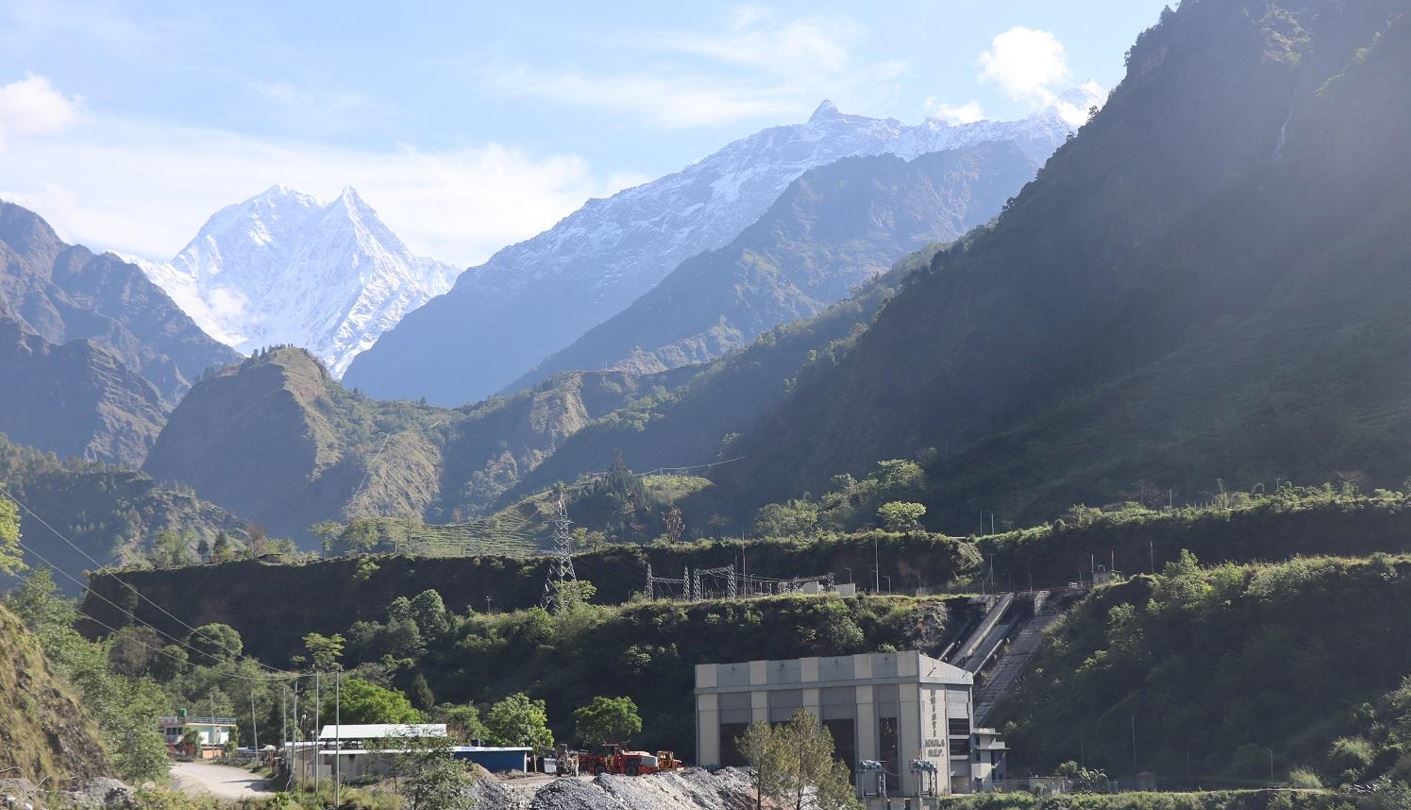
Myagdi. Annapurna Rural Municipality has emerged as the emerging hydro hub of Nepal in the past decade. With the conversion of Kaligandaki, Mistri, Nilgiri, Rele, Ghalemdi and Gharkhola rivers into sources of energy production, economic, social and physical development has gained momentum in the district. But with the development of hydropower, there are growing concerns about environmental impacts, conservation of biodiversity, and the future of natural hot springs.
According to Annapurna Rural Municipality Chair Bharat Kumar Pun, six hydropower projects with a capacity of 176 MW are in operation while three projects with a capacity of 255.5 MW are under construction. Hydropower projects such as 5 MW Ghalemdi Khola, 42 MW Mistri Khola, 38 MW Nilgiri-1, 71 MW Nilgiri-2 and 6 MW Relekh Khola are in operation in Narchyang area. Likewise, 14 MW Gharkhola Hydropower Project has come into operation at the border area of ward no 5 and 6.
Construction of 180 MW Kaligandaki Gorge Hydropower Project has started at Bhalebas area of Narchyang. The 9.14 MW Super Ghalemdi and 66.5 MW Kaligandaki Super projects are under construction. IME Group is also preparing to add 66 MW Tiplang Kaligandaki Hydropower Project.
Annapurna, the center of energy production,
The history of hydropower development in Annapurna region dates back to the construction of 2 MW Tatopani Small Hydropower Project by Nepal Electricity Authority (NEA) in 2045 BS. Although there was not much activity for a long time after that, Annapurna has become a hub of energy production due to the increase in private sector investment in the last decade.
The 5 MW Ghalemdikhola Project came into operation in 2076 BS. After that, Mistrikhola, Nilgiri-1, Nilgiri-2, Gharkhola and Relekhola projects came into operation. Pramod Shrestha, proprietor of Ghalemdi Hydro, said that the construction of Dana substation and transmission line has increased a significant attraction towards investors.
Hydropower replaced by Narchyang
Annapurna Rural Municipality-4, Narchyang has become the centre of hydropower development. The projects built and under construction here have changed the character of the village. According to ward chair Lok Bahadur Phagami, Narchyang which once had no access to road, has now been connected with road, bridges and other infrastructures due to the hydropower project. “The road has crossed the Akkare cliff that we had not imagined. Employment and income opportunities have been created in the village itself,” he said.
With around 450 households and 1,600 people, the number of migrant workers in the project is more than the local population. The price of land in the village ranges from Rs 30 to Rs 3.5 million per ropani. Many people who had migrated to the cities and foreign employment have started returning to the villages.
Tek Bahadur Pun, who has been running a hotel business after returning from Pokhara, said that the compulsion to stay outside has been removed after the opportunities were created in the village. Locals are earning from land compensation, hotel business, agriculture, animal husbandry, transportation, construction material supply, contract lease and share investment.
Increasing revenue of the municipality
The income of the rural municipality has also increased significantly due to the royalty received from the hydropower project. Annapurna Rural Municipality has received Rs 7 million royalty through Natural Resources and Fiscal Commission in the last fiscal year. According to Chief Administrative Officer Kapil Pandey, the amount has increased to Rs 1.70 crore in the current fiscal year.
In addition, the projects are carrying out programmes on education, health, skill development, tourism promotion and environment conservation as part of their social responsibility. The study of hydro engineering at Prabha Secondary School for five years is also the result of this.
Locals could not take full advantage of
Although hydropower projects have increased economic activity, the local community is still not adequately prepared for the long-term benefits. Although most locals have taken immediate benefits from compensation, wages or construction opportunities, there is a lack of strategic thinking about how to participate in the post-project economy. Local leaders point out that long-term investment in agriculture, tourism, service and entrepreneurship sectors is necessary as wage opportunities will decrease after the completion of the construction.
Residents of the affected areas have bought shares of hydropower companies. Locals of the affected areas had invested more than 17 lakh units of shares in the Mistrikhola project alone. Other projects are also preparing to issue shares to the locals.
Environmental Challenges Increasing
Along with the development of hydropower, the debate on environmental impact has also increased. Locals have complained that the human habitat of fish and toads has been affected due to the decrease in the water level in the river.
According to Abin Chochangi of Narchyang, Mistrikhola used to have plenty of fish in the past. However, aquatic animals have stopped being seen in the river after the water started flowing through the tunnel after the operation of the project. Ward chair Phagami said that although there has been economic and physical benefits from the hydropower project, the aquatic animals in the river have started disappearing, the traditional water sources have dried up and the movement of wildlife has decreased.
According to the locals, the natural ecosystem has been affected even though there is a provision to release minimum water into the river. There is a demand to make the regular study and monitoring of environmental impact more effective.
Concern about the future of Tatopani Kund
Natural hot water springs in the Annapurna region are also at risk due to the hydropower project. Locals of Bhurung Tatopani, Pashudra, Ratopani and Sekarku areas have said that the diversion of the river water through a tunnel could affect the natural hot water sources.
According to Anil Hirachan of Bhurung Tatopani, change in the water flow of the Kaligandaki River could affect the Tatopani source. Locals want more information about the environmental impact of the project. Voices have been raised to prioritise the conservation of the hot spring as it is an important base for tourism and internal income of Annapurna Rural Municipality.
Experts and local leaders say that hydropower needs to be made the basis of the local economy rather than just compensation and wages. It has been suggested to adopt a strategy to link agricultural production to project market, establish industries based on energy use, integrate tourism and hydropower and provide technical training to local youths.
Chair Pun said that the rural municipality has also started preparation to formulate a long-term policy linking hydropower development with overall economic transformation. The royalty money should be invested in production-oriented rather than consumption-oriented.












प्रतिक्रिया दिनुहोस्