

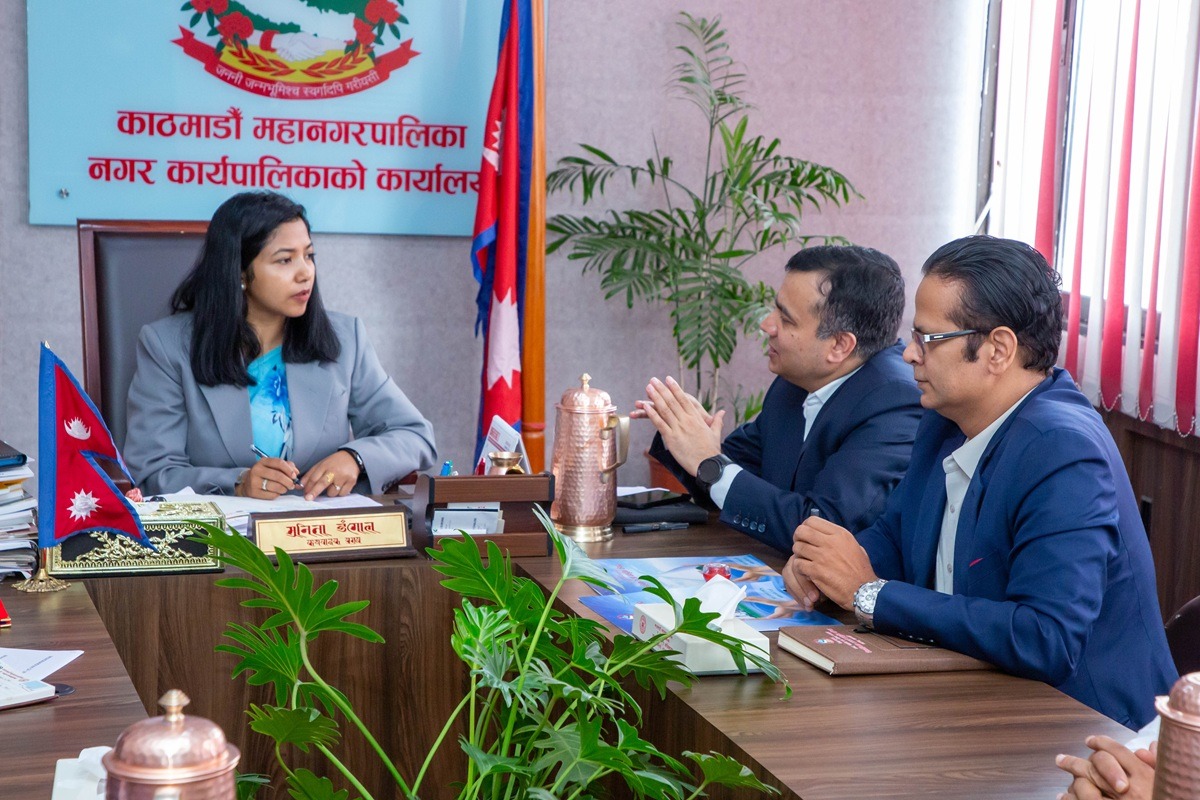
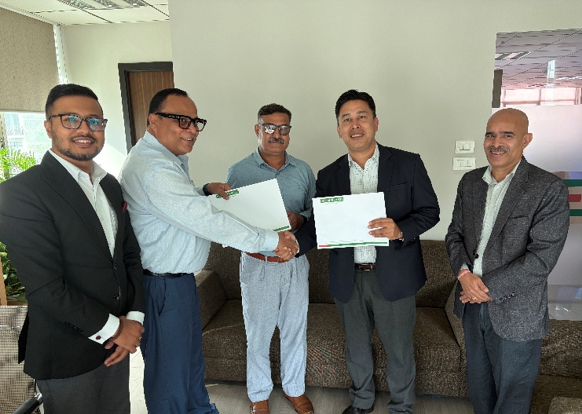
Kathmandu. KATHMANDU: The Kathmandu Metropolitan City (KMC) and Alternative Energy Promotion Centre (AEPC) have signed a memorandum of understanding (MoU) to operate a biogas plant in Teku of Kathmandu. Chief Administrative Officer of Kathmandu Metropolitan City, Saroj Guragain, and Executive Director of Centre Nawaraj Dhakal signed the agreement in the presence of Acting Mayor Sunita Dangol. The agreement has been signed with the objective of making the management of organic waste produced in the city modern and technology-friendly.
“The agreement has been signed with the goal of increasing the use of technology for the sustainable management of organic waste generated in the city. I hope to complete the work within the stipulated time to reach this goal. Talking briefly after signing the agreement, acting chief Dangol said, “Rehabilitation is not the only significant achievement. Sustaining it and expanding it into learning is an achievement. By making this project a success, our efforts are on to create a sustainable management system for the waste generated in the city. ’
On the occasion, Executive Director of the Centre Dhakal said, “We will bring the plant into operation with the necessary equipment, materials and technical services.” We will hand it over to the metropolis after monitoring and supervision. Talking about the areas of cooperation, he said, “There can be collaboration between the metropolis and the center in the programs under the Green Climate Fund.” ’
The plant was started in 2072 BS under the Integrated Sustainable Waste Management Project of the metropolis. The plant was supposed to generate 14 kilowatts of electricity, 300 kilograms of organic fertilizer and 13,500 liters of water from 3 metric tons of organic waste daily. For this, the metropolitan city and the European Union had invested Rs 1.82 crore.
According to the agreement, the metropolis will manage the necessary budget for the long-term operation and maintenance of the plant. Likewise, it would be KMC’s responsibility to select qualified human resources or operator for operating the plant and operate the plant in a commercial model, to ensure environment-friendly operation by assuming full ownership of the infrastructures after the rehabilitation and to contribute to the circular economy through the production of biogas and bio-fertilizer by utilizing waste as resources.
The Centre will conduct a detailed feasibility study of the plant for the revival of the project. The equipment will be handed over to the Metropolitan Municipality after completing the purchase, installation and testing. Discussions were held time and again between the Department of Environment Management and the Centre of KMC to determine the responsibility for the operation of the plant. On July 28, acting chief Dangol and Minister for Energy, Water Resources and Irrigation Biraj Bhakta Shrestha held talks on inter-governmental coordination and cooperation.
Kathmandu Metropolitan City (KMC) is not only limited to waste management but also plans to make the project commercially successful under the public-private partnership programme. This will increase the use of technology for sustainable management of biodegradable waste. The amount of garbage reaching Banchare hill will decrease. At the same time, income from waste will increase. The metropolis believes that the energy and fertilizer produced from this will greatly contribute to the cleanliness and environmental balance of the city.













प्रतिक्रिया दिनुहोस्