

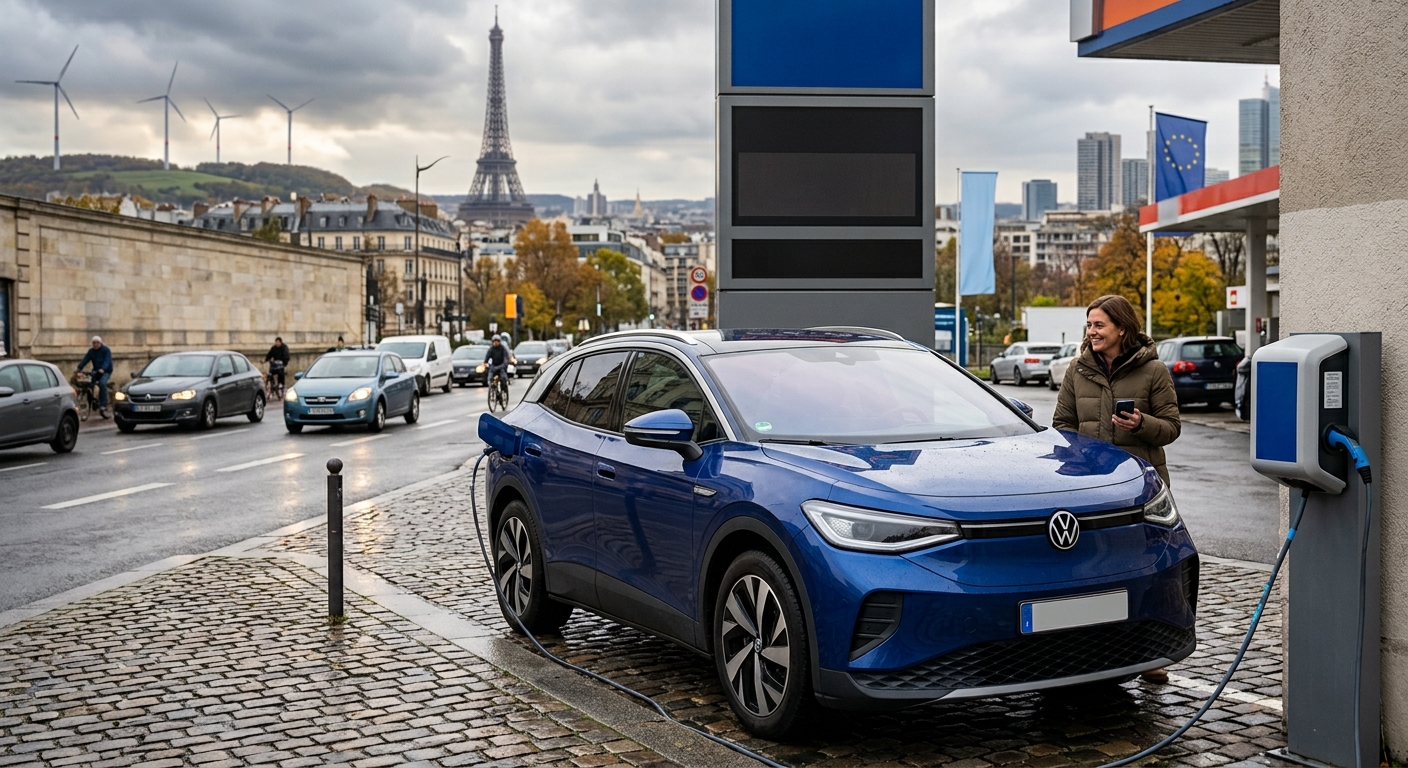
Kathmandu. In Europe, the cost of charging an electric vehicle is on average less than half the cost of refueling a diesel-powered vehicle, according to a study.
An analysis by Transport and Environment, a Brussels-based environmental think tank, suggests Europe’s transition to electric vehicles needs to be accelerated.
The organization has suggested that instead of reducing the fuel tax uniformly for all consumers, relief and assistance should be provided to low-income families. Similarly, the additional tax from the energy companies can be used to support the development of public transport and the replacement of old vehicles.
Antoine Frogat, senior director of the organization, said that Europe is currently in a sensitive phase of the energy crisis in the context of high diesel prices. According to him, if diesel exports from the United States are disrupted, the risk of fuel supply shortages in Europe may increase.
In the long run, he said, the expansion of electric vehicles will help reduce dependence on petroleum products. However, he also stressed that necessary measures should be taken to provide relief to consumers and businesses in the short term.
According to the study, about 32 euros more is now being spent to fill 50 liters of diesel compared to the beginning of this year. Of that, an increase of about 16 euros is related to an increase in profits from fuel refining, according to the study.
The European Central Bank estimates that diesel refining profit rose to 0.41 euros around September 14 from about 0.10 euros in February.
The study only compared the direct cost of refueling a vehicle and charging an electric vehicle. For this, diesel vehicles consume an average of 6.9 liters of fuel in 100 kilometers and battery-powered electric vehicles consume an average of 20.2 kilowatt hours of electricity over the same distance.
The calculation based on the average cost of electricity per kilowatt-hour of €0.343 shows that the cost of charging an electric vehicle is significantly lower than the cost of diesel fuel.
According to the organization, the relationship between electricity and gas prices and the lingering effect on household electricity prices were also included in the study. Therefore, the estimate of the charging cost of electric vehicles is likely to be towards the higher limit of the actual cost.
An earlier study found that six of the eight largest oil companies posted more than double their profits in the second quarter of 2026 from the same period last year.
Similarly, another study released on Monday showed that the total cost of ownership of battery-powered electric heavy trucks in six of the nine major EU markets is lower than that of diesel trucks. Those six markets account for about 46 percent of new heavy trucks sold in the EU.
EU Commissioner for Energy and Housing Dan Jørgensen said member states should consider energy-saving measures to mitigate the impact of potentially higher gas prices.
Meanwhile, Transport and Environment urged the European Commission to pay more attention to oil and diesel prices, saying the impact of the crisis was not limited to gas.

















प्रतिक्रिया दिनुहोस्