

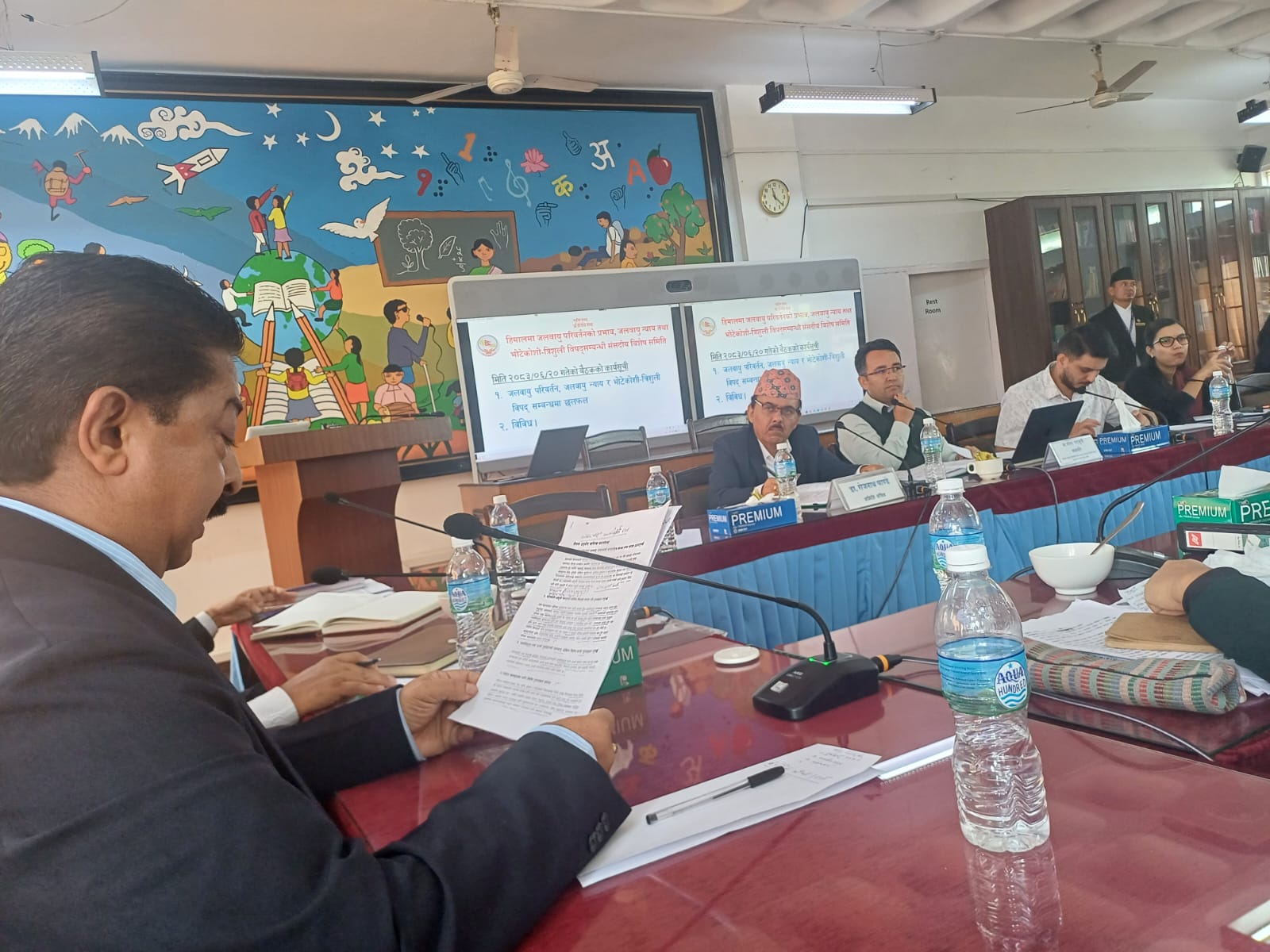
Kathmandu. President of the Federation of Nepalese Chambers of Commerce and Industry (FNCCI) Anjan Shrestha said that climate change is adversely affecting the private sector, industry and the overall economy.
During a meeting of the Parliamentary Special Committee of the Federal Parliament held at Singha Durbar today, discussing the present situation of Nepal, challenges of development, impact of climate change in the Himalayan region and climate justice, Chair Shrestha stressed on the need of involving the private sector in the policy-making and implementation process effectively for reducing and adapting to the impact of climate change.
Stating that disaster stemming from climate change has posed a big risk to industry, business, infrastructure and supply systems, he underscored the need for effective collaboration between the government and private sector.
The meeting was attended by Minister for Infrastructure Development Sunil Lamsal and Law Minister Sobita Gautam.
On the occasion, Minister for Infrastructure Development Sunil Lamsal said that the government was preparing to work on a new thinking and framework for infrastructure construction and was working to make the procurement process easier and more effective. He said that continuous dialogue and cooperation was being held with the Chinese side for the operation of Nepal-China border points.
He also informed that the government is working on the construction of industrial parks, satellite cities and trading hubs. In the meeting, Law Minister Sobita Gautam informed that the process of formulating various laws related to disasters is moving forward. He said that the formulation and implementation of necessary laws keeping the disaster at the center should be taken forward with priority.
Chairman of the Parliamentary Special Committee, Ganesh Parajuli, said that the impact of climate change in the mountainous region and the issues of climate justice should be linked with infrastructure development. He stressed that the infrastructure to be built in the vulnerable areas should be made climate-friendly and sustainable and the security of sensitive settlements and communities along the river should be given priority.
Stating that the private sector has suffered a lot directly and indirectly due to climate change and disasters, FNCCI President Shrestha stressed the need of according priority to climate adaptation, disaster risk reduction and rehabilitation programmes.
He said that the private sector should also increase investment in climate-friendly business practices, green technology and sustainable production systems. “The role of the government alone is not enough in disaster risk reduction. There is a need to institutionalize coordination and partnership between the private sector, local communities, provincial and local levels and the concerned government agencies. ” he said.
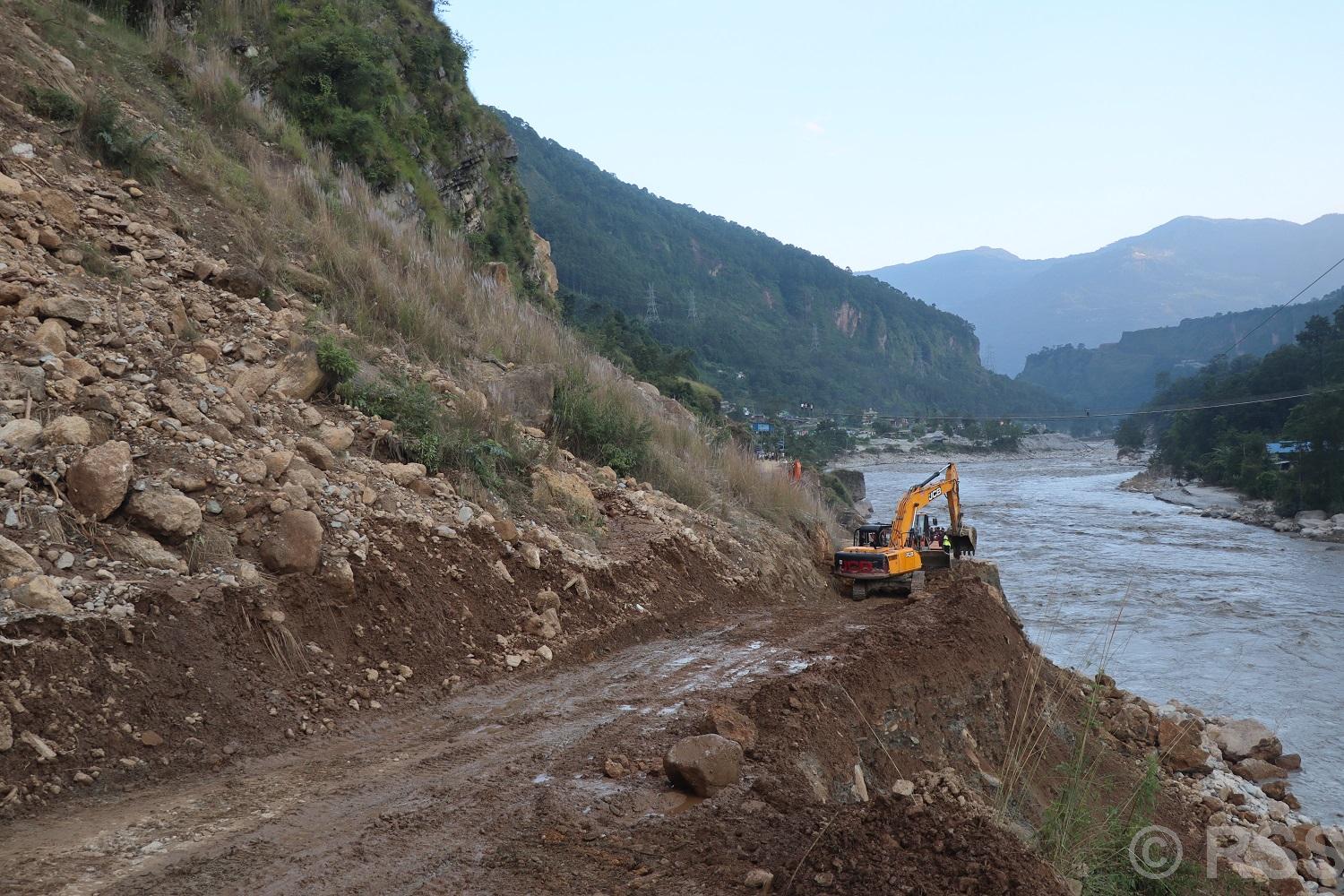
In the meeting, it was expressed that the issue of Nepal’s climate risk should be raised more effectively in the international forum. Similarly, the meeting also discussed the need to make the advance information system effective at a time when the risk of flood, landslide and other water-borne disasters is increasing in the Bhotekoshi-Trishuli corridor.
The meeting underscored the need of developing hydropower and other infrastructures without adversely affecting the natural flow of the rivers, adopting a policy of sustainable resource management by stopping the over-exploitation of natural resources and effective coordination among the federal, state and local governments for the management of climate change and disasters.
Concluding that climate change, climate justice, disaster risk reduction, infrastructure development and the role of private sector should be taken ahead in an integrated manner, the meeting stressed that the issue of building safe, sustainable and climate-resilient infrastructures and encouraging private sector investment by incorporating the risk created by climate change into the mainstream of development should be made an important basis of the upcoming policy and programme.














प्रतिक्रिया दिनुहोस्