

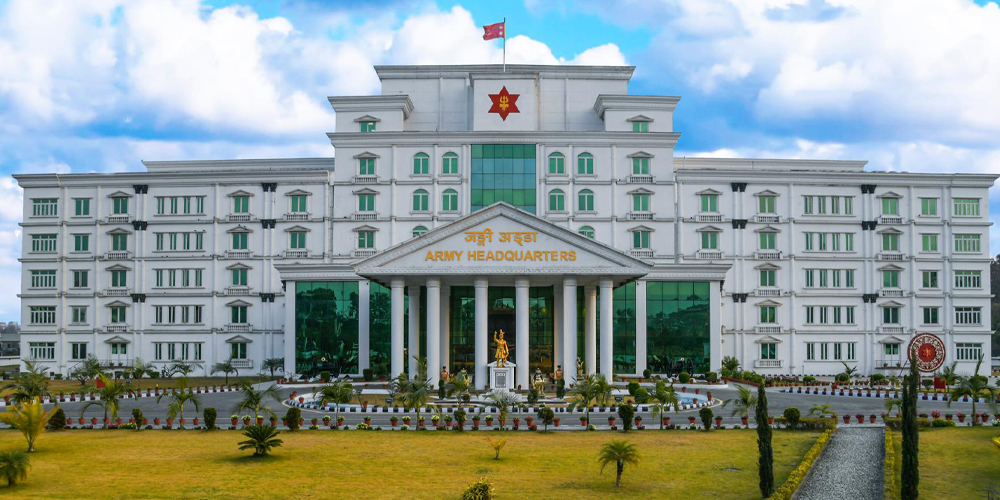
It is a matter of debate from time to time about the limitations of military organization in a democracy. The use of military power depends to some extent on the immediate needs of the country according to the needs and circumstances.
In recent times, the national security agencies, which should be confined to the constitutional ambit of security and disaster management in our country, have been involved in business activities ranging from road construction, operation of petrol pumps, leasing of commercial complexes to operation of banking sector and industries.
The delay in the construction of the Kathmandu-Tarai-Madhes Fast Track, preparations for the operation of the ailing Hetauda garment industry, the commercial building in Mahakal and the Kathmandu Metro Plaza case have created a serious debate on the commercial expansion of the Nepal Army. Although it seems to have solved any problem in the short term, it has become necessary to seriously deliberate on the impact on open market competition, investment environment and democratic management in the long run.
In this context, Pakistani journalist and security analyst Ayesha Siddiqui’s analysis of Pakistan’s military use and its famous book ‘Military Inc. Inside Pakistan’ seems to be worth mentioning.
In the book, Siddiqui mentions that the Pakistan Army has a $20 billion business empire. The book explains the concept of ‘millbus’ and says that it refers to the free capital used by the army officers for personal gain, but not reflected in the state budget. According to the book, such economic activities will increase the political influence of the army and hinder democratic development.
At the time of the publication of the book, the size of the military-related business structure in Pakistan was $20 billion. In Pakistan, the army had extended its influence to banks, insurance, cement, fertilizer industry, aviation, hotels, real estate and infrastructure construction. Siddiqui’s book concluded, “When the army enters the business, it does not just make a profit. It begins to convert economic power into political influence. Then the civil society becomes weak and market competition is affected.
The experiences of Pakistan and Myanmar show that when the army becomes a great economic power, the civil institutions become weak. Unequal competition is created in the open market and ultimately the democratic structures are in jeopardy. Although Nepal has not reached that position and the Nepal Army is still a democratic and trusted institution, the policy decisions made or taken today will determine its future.
Now in Nepal too, it is seen that the army is gradually increasing in business through the government structure. In the past, the Congress, UML and Maoist had started the work of ‘debit’ and ‘credit’ to the army from the barracks. The two-thirds powerful Balen government has been seen one step ahead in expanding this empire.
In the last few years, the role of the Nepal Army seems to be expanding beyond the scope of security and disaster management. Through the construction of roads, the operation of petrol pumps, the construction of commercial buildings, the operation of industrial projects, the army is now enjoying the business of running banks and financial institutions and more business. The spread of the Army Welfare Fund, which was once limited to the welfare of ex-servicemen and military families, has now become widespread.
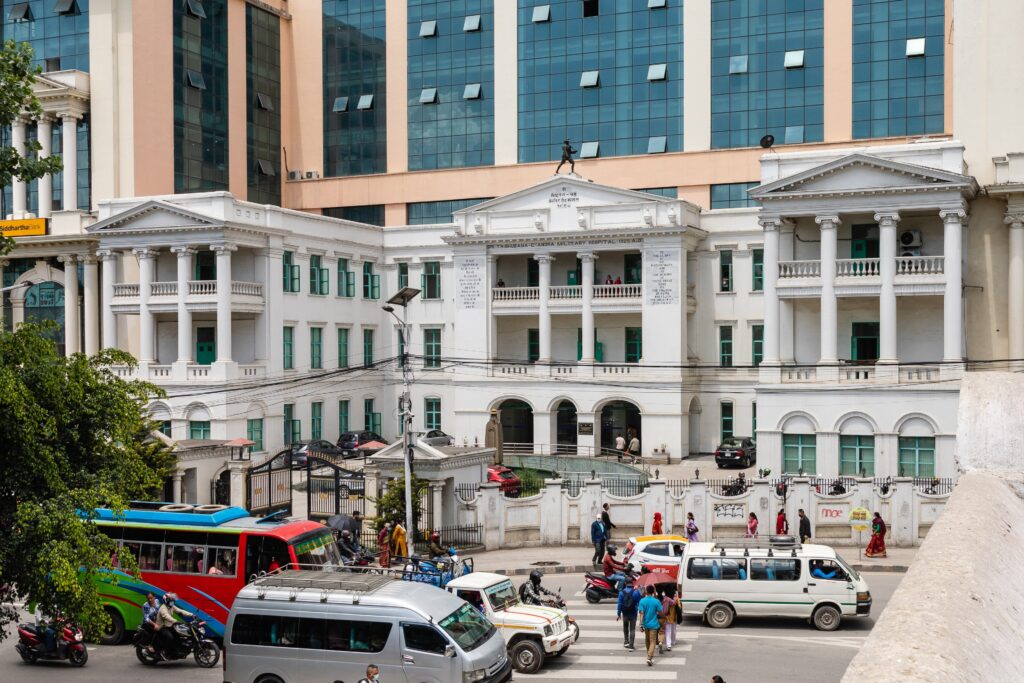
As the interest rate on deposits is decreasing, the military leadership and retired army officers have started wanting to enter the board of directors of the bank through the funds of the fund. From operating petrol pumps in seven major cities of the country to renting out a nine-storey building in Mahakal with an investment of about two billion rupees in place of the historic Trichandra Military Hospital, the line between military welfare and business has become even more blurred. Similarly, instead of encouraging public-private partnership or private sector, the state is handing over the closed Hetauda textile industry to the army with an estimate of about Rs 1.93 billion to run it at full capacity, which shows that the state itself is also in the direction of making the army an entrepreneur.
The biggest project that started from the petrol pump to increase the appetite of the army’s trade empire is the fast track. The project, which was handed over to the Nepal Army as a national pride project, was targeted to be completed by 2083 BS. However, the construction has not been completed yet. On the contrary, the deadline of the project has been extended by three years. It is not certain that it will be completed even after 3 years.
Some people have the misconception that the army has dug the road on its own. Whereas, the role of the army is to award contracts like the projects of the road department. As a result, there is competition between Chinese and Indian contractors at the army headquarters. There is not much discussion about the weakening of the principle of equal competition when the powerful institutions of the state enter the areas where the contractors have to compete.
What message does it send when the security agencies of the state themselves are entering the market as traders? An example of this is the nine-storey building in Mahankal. Most of the commercial building, constructed at the site of the historic Trichandra Military Hospital, with an investment of about two billion rupees, has been rented out for business.
Meanwhile, the Hetauda textile industry is now preparing to hand over the responsibility to the army, which has further intensified the debate. The Ministry of Finance has already released the initial amount to revive the industry which has been closed for a long time. The government argues that the annual operating cost of the project is only Rs 78 crore. The government argues that the clothes required by the army, police, armed police and government agencies can be produced in the country.
Why is the state trying to make the army an industrialist when private garment industries are operating across the country? This is the main question today. A similar question is now being raised in the ‘Kathmandu Metro Plaza’ case of Kathmandu Metropolitan City. Amid the dispute with the private sector, the discussion that the metropolis can give the responsibility of operating the building to the army has increased in business circles.
Nepal is currently facing a serious investment crisis. Industrialists and businessmen are reluctant to make new investments. Bank credit flow is slow. The manufacturing sector is weak. In such a situation, instead of encouraging the private sector, the message that the state itself has started expanding business activities through the army does not seem to have a positive impact on the investment climate. If the practice of snatching any business property from the private sector and giving it to the army is established, what message will it give to the investors?
Another important question in this is transparency. The basic character of the military is security. Most decisions related to security are secretive in nature. However, trade is based on public accountability and openness. When trade and security are mixed within the same institution, questions of transparency and surveillance naturally arise.
The experiences of Pakistan and Myanmar show that the trade of the military has endangered democracy. In Pakistan, the military is now above the constitution. As the military expanded the economic sphere in both countries, it was not only a military institution but also a major economic power. After that, the protection of economic interests began to be linked to political influence. Democratic institutions were weakened and the private sector came under the pressure of unequal competition. As a result, the present state of dictatorship is very clear.
Nepal has not reached there. The Nepal Army is still an institution that operates within a democratic structure and is one of the institutions that enjoys the trust of the people. However, the future of any organization will be decided by the decisions of the present. If the army continues to build roads, sell petroleum, run commercial buildings, run industries, increase its influence in banks and move forward on the path of entering the hydropower sector, what will be its role in the next few years? Is it a security organization or an economic group? This is the main concern now.
This debate is not against the army but is in favor of civilian supremacy, the essence of the open market and institutional balance. It would be in the long-term interest of both the economy and democracy of the country to keep the army within the constitutional framework of commercial barracks, high professional skills and national security rather than the state displacing the private sector and engaging the army in business. Because, history has shown one fact that when the army starts moving from the barracks to the market, its impact is not limited to the economy alone.











प्रतिक्रिया दिनुहोस्