



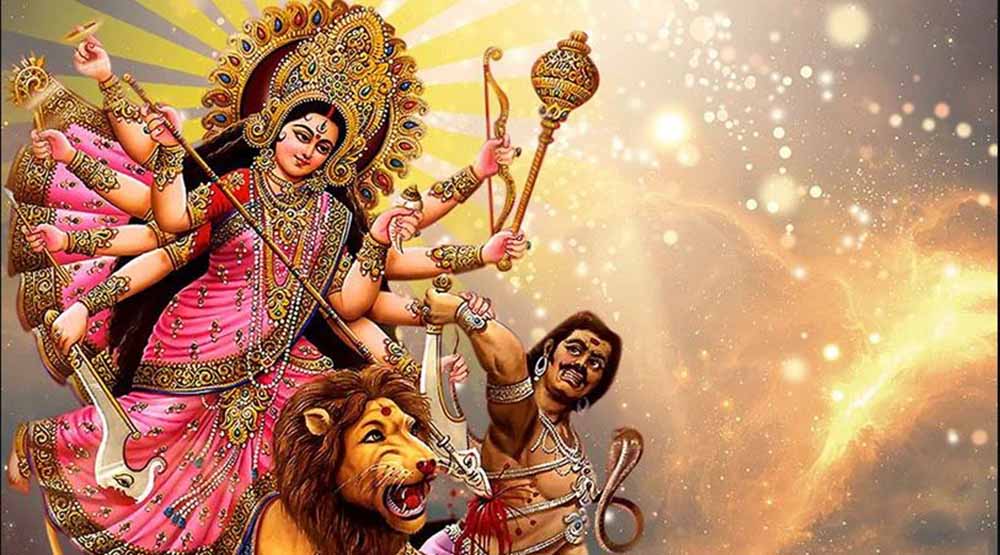
Kathmandu. The Maha Ashtami festival, which is celebrated on the eighth day of the month of Ashwin Shukla Ashtami, is being celebrated today by worshiping Goddess Durga Bhawani in a grand manner.
On the eighth day of Bada Dashain, special worship of Mahakali, Mahalakshmi and Mahasaraswati is performed. It is mentioned in various scriptures of various Vedic Sanatan traditions that Maha Ashtami is the day to make Durga Bhawani powerful. On this day, according to the scriptures, special worship of Durga Bhavani is done by sacrificing animals at various Shakti Peeths of the state. Durga Saptashati, Shrimad Devi Bhagwat and Devi Stotra are recited.
Religious scholar Prof Dr. Ram Chandra Gautam said that since both rational and irrational beings desire to attain salvation, it has been mentioned in the scriptures that those animals will attain salvation by offering ritual sacrifices in temples and Yagya Yagyas. “Three types of worship have been described in the scriptures, Satvik is the worship of sixteen types of worship including water, sandalwood, and akshata, the worship with sattvik and animal sacrifice is called Rajas Puja, the worship of Rajas along with alcohol is also defined in the scriptures as Tamas Puja,” he said.
For Brahmins, animal sacrifice is forbidden. Religious scholars say that animal sacrifice is also important for the liberation of animals by making the goddess powerful to destroy demonic tendencies. Dr. Gautam said that animal sacrifice cannot be called unscriptural as it is also discussed in the eighth chapter of Durga Saptashati Chandi. “There is a scriptural saying that the ruler of the state should perform animal sacrifice methodically for the power of God, mantra power and enthusiasm,” he said. These three powers can be obtained only from Durga Bhawani. That is why animal sacrifice is being performed on this day.
On this day, the ritual of animal sacrifice and worship is celebrated with worship in the form of Kalratri. Since the method of worship and resolution of Kalratri is also different, it has special significance. There is a rule that Brahmins do not even have to perform Kalratri Puja.
On this day, devotees throng the temples of the goddess Guheshwori, Maitidevi, Kalikasthan, Bhadrakali, Naxal, Shova Bhagwati, Bijeshwori, Indrayani, Raktakali, Bajrayogini, Sankata, Bajrabarahi, Dhumbarahi, Dhumkali, Chamunda, Sundari Mai, Bhatbhateni and Bagalamukhi among other temples in the valley since early morning.
Outside the Kathmandu Valley, devotees throng the temples like Kali Bhagwati of Dhading, Manakamana of Gorkha, Gahwamai of Parsa, Chhinnamasta Bhagwati of Saptari, Rajdevi of Dhanusha, Ugratara of Dadeldhura, Chandeshwori, Nala Bhagawati and Palanchok Bhagwati of Kavrepalanchowk, Palchowk Bhagwati of Sindhupalchowk, Kalinchok Bhagwati of Dolakha and Pathibhara of Taplejung.
On this day, spare parts, weapons, and means of transport are specially cleaned and worshiped with animal sacrifice at the place where the goddess is established. These means are considered as the weapons of the goddess and are worshipped.
Along with the weapons of the goddess, the Chaturangini army is also invoked and worshiped. Those who do not offer animal sacrifice are worshiped in the puja room today by offering cucumber, ghiraula, pumpkin, radish and coconut, etc. according to their family tradition.
On the occasion of Maha Ashtami, 54 goats and 54 buffaloes are sacrificed at the Dashain Ghar of Hanuman Dhoka on behalf of the state.
















प्रतिक्रिया दिनुहोस्