




Kathmandu. The government has released two white papers for strengthening the water and weather sector.
The white paper jointly released by the Centre for Research on Hydrology and Water Resources under the Ministry of Energy, Water Resources and Irrigation and the Nepal Meteorological Department separately made clear guidelines in the areas of sustainable use of Nepal’s water resources, climate adaptation infrastructure development, aviation safety and disaster risk reduction.
Similarly, the white paper pledges to protect the life and property of citizens through the use of modern technology, open data system, and scientific research.
Special program on 6 river basins and 4 vulnerable glacial lakes
The government has forwarded a plan to expand early warning system in 6 major river basins and reduce the water level in four high-risk glacial lakes to make disaster risk reduction and flood early warning system more effective.
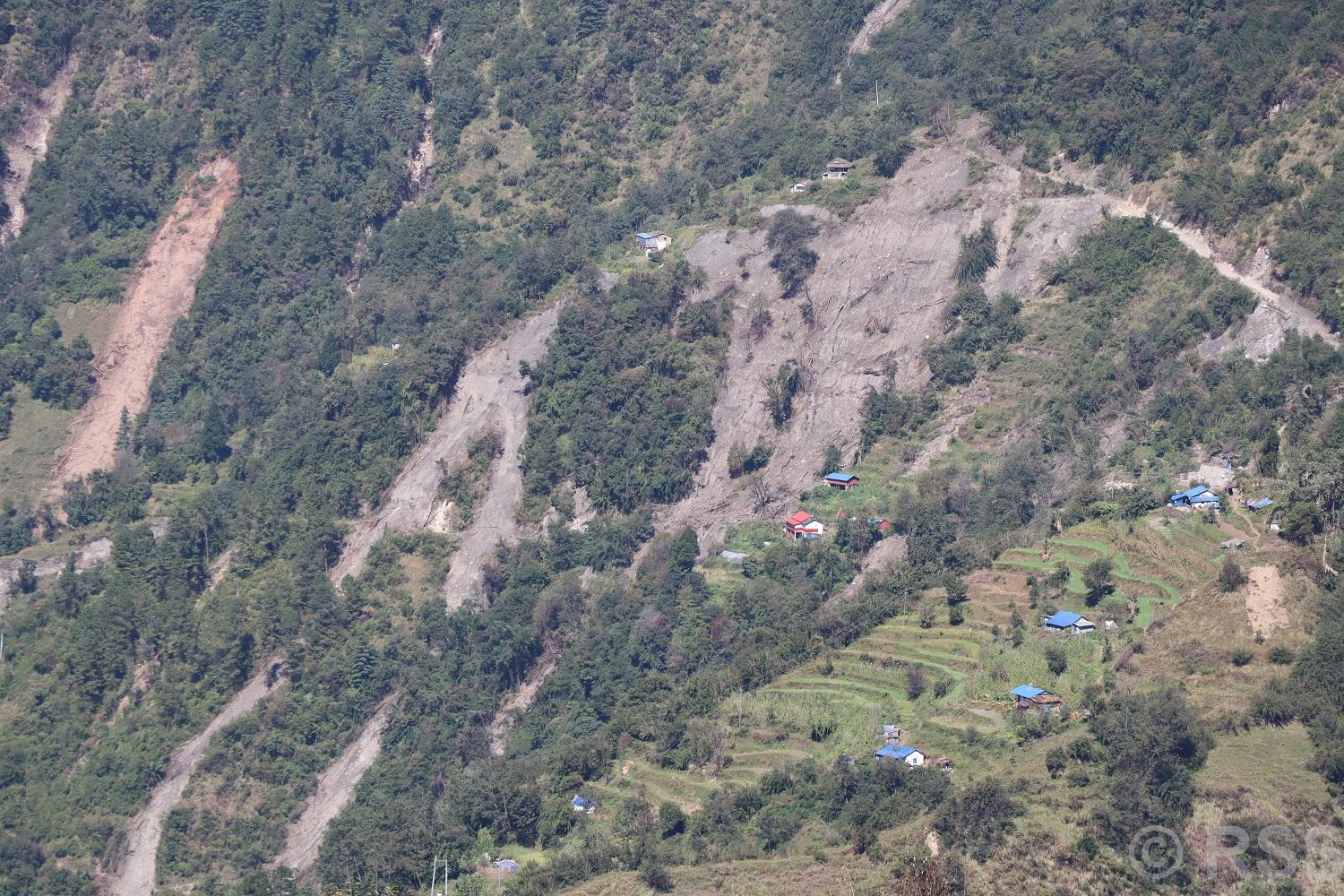
The government unveiled a new strategy with modern technology through a five-year strategic plan of the Centre for Research on Hydrology and Water Resources Research Centre and white paper of the Department of Meteorology at a time when global temperature in the mountainous region was increasing due to climate change, melting glaciers, avalanches and glacial lake outburst.
Goff Sanjeevani Project: Four glacial lakes to be reduced
The project has been initiated to reduce the water level in Thugali of Manang, Lower Arun of Sankhuwasabha, Lumding Cho of Solukhumbu and Hongu-2.
The total budget of this project, which will be implemented from 2026 to 2033, is about 49.9 million US dollars. Based on the experience of successfully reducing the water level of Chho-Rolpa in the Rolwading Valley of Dolakha and Imja Glacial Lake in Solukhumbu in the past, these new glaciers will also adopt risk mitigation measures.
6 Flood Early Warning and 24-Hour Monitoring in River Basins
The Centre for Hydrology and Water Resources Research is installing flood early warning systems in six river basins at a cost of $7.54 million under the Prioritized River Basin Flood Risk Management Project (2022-2028).
In addition, the Centre will operate a 24-hour flood forecasting and early warning service from May 15 to mid-October. In the current fiscal year, there is a plan to develop a new flood early warning model for the Karnali and Narayani river basins and to construct a community-based flood early warning system at a cost of Rs 26.1 million under the Bagmati Improvement Project.
AI and Modern Technology in Weather Forecasting
According to the draft white paper of the Meteorological Department, the use of artificial intelligence (AI), machine learning (ML) and high-performance computing system (HPC) will be given priority to increase the accuracy and reliability of weather forecasting.
In addition, 503 manual weather stations across the country will be gradually upgraded to Automatic Measurement Stations (AWS). Maintenance of seasonal radars in Surkhet, Palpa and Udayapur as well as installation of X-band radars for Kathmandu Valley have been proposed.
RadioSonde stations will be set up in six more provinces to study the state of the upper atmosphere. The 1155 toll-free service, mobile app, social media and audio-visual briefings will be used to provide early warning to low- and coastal communities.
Weather Warning for Local Level
The Meteorological Department has given priority not only to preparing forecasts but also to disseminating them to the vulnerable communities in a timely manner. There is a plan to integrate weather observation, identification of vulnerable areas, impact-based forecasting, warning maps and information dissemination through multiple disaster early warning systems.
The goal is to disseminate information to the community level by coordinating with the concerned government bodies and local levels.
Although these plans are expected to contribute greatly in disaster management and reduction of human losses in the long run, the main challenges in their implementation are the continuity of budget, skilled technical manpower, regular maintenance of modern equipment and inter-agency coordination.













प्रतिक्रिया दिनुहोस्