



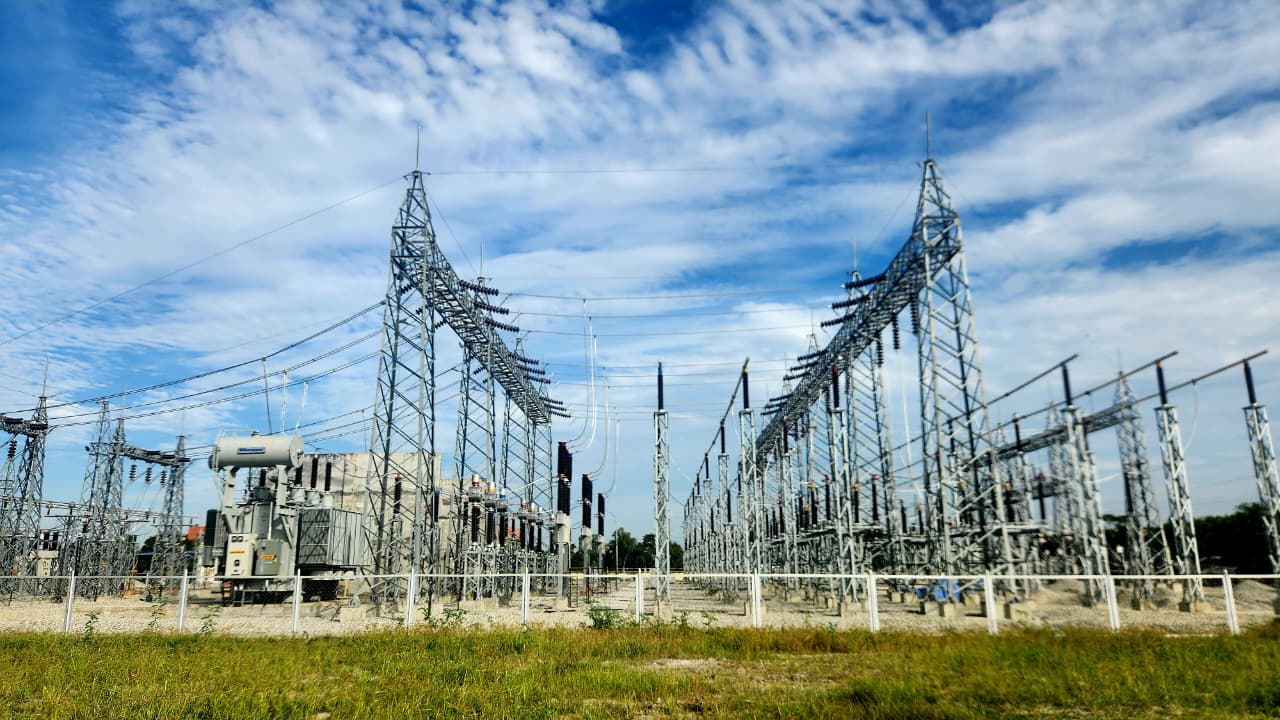
Kathmandu. In order to address the electricity demand of Morang district and surrounding areas and to make the supply adequate, reliable and quality, the construction of a 132 KV Keroun substation has been completed. Work has been started to charge the substation on October 29 and Sunday on October 29.
On those days, the work of loop in and exit of the line will be done at Keron substation on the Duwahi-Damak section of the East-West 132 kV transmission line. The substation will be supplied electricity from the Duhabi-Damak transmission line to the substation.
The Duhabi-Damak transmission line will be closed from 4 am to 12 noon on Saturday and Sunday and the work of loop in and out will be done. Due to this, the power supply will be stopped in all parts of Jhapa, Ilam, Panchthar, Taplejung districts and Urlabari and Pathari surrounding areas of Morang during this period.
The substation has 132÷33 kV, two power transformers of 63 MVA and one power transformer of 33-11 kV, 22.5 MVA. The total capacity of the substation is 148.5 MVA.
Managing Director of Nepal Electricity Authority (NEA) Dirgha Kumar Shrestha said that electricity supply in Morang district would be safe, reliable and technical leakage would be reduced with the operation of Keron substation.
Stating that the 33 kV transmission line is too long, there is more technical leakage and consumers are facing problem of tripping, adding that the length of the 33 kV line will decrease the leakage, which would make the electricity supply reliable and qualitative.
At present, electricity is being supplied from the Duhabi-Rani-Rangeli 33 kV line of about 50 km. Now the power supply will improve as the length of the line will be reduced.
Five feeder lines of 11 kV each have been laid from the substation for local power supply. Similarly, a 33 kV double circuit line has been constructed between Karoon-Rangeli and Keroun-Biratchowk. After the substation comes into operation, the line will also be charged, said Darshan Ray Yadav, chief of the Keroun substation project.
The contract for the construction of the project was signed in July 2078. The estimated cost of the project is around one billion rupees and it has been constructed with the investment of the Government of Nepal and the Electricity Authority and a concessional loan from the Asian Development Bank (ADB).

















प्रतिक्रिया दिनुहोस्