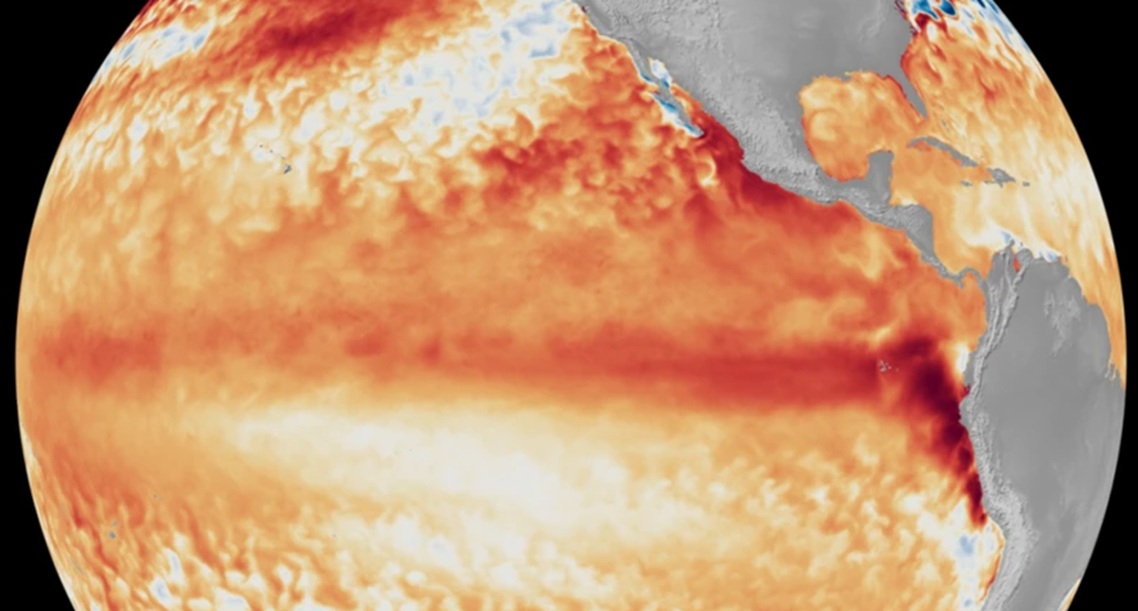
Kathmandu. The normally powerful El Niño has increased the risk of floods, droughts and warming around the world.
This has also added to the challenge of food security. According to climate experts, 2026 is likely to be the second warmest year on record, and 2027 is likely to set a new temperature record.
According to Copernicus, the climate monitoring agency of the European Union (EU), El Niño has accelerated the temperature rise caused by human activities. According to the organization, the world’s average temperature and sea level temperature reached their highest point in October.TAG_OPEN_div_28
The government has declared a state of emergency in various parts of the country as the risk of flooding in Peru due to El Niño has increased. More than 9 million people, or about a third of the total population, are at risk of floods and landslides. Bolivia also declared a national emergency earlier.
Concerns have been raised that drought in Asia will affect hydropower generation. Sri Lanka has withdrawn its electricity tariff hike plan due to rising water levels in the reservoir, but is expected to face severe drought in the first six months of 2027.
} Similarly, the Philippines has allocated more than $980 million to protect the agricultural sector from the effects of El Niño. Rice production fell by 18 percent in the three months to September due to the rise in fuel and fertilizer prices due to El Niño and the Iran war.
TAG_OPEN_div_20 According to Copernicus, there is a 20 percent chance that 2026 will be a warmer year than or more than 2024. According to an AFP analysis, 33 countries set new temperature records in October.
Maximo Torero, chief economist of the Food and Agriculture Organization of the United Nations (FAO), said that the price of food commodities in the world market could increase due to the decrease in crop production due to El Niño and the floods affecting food storage and transportation. He said that due to the Iran war, the price of fuel and fertilizer will also increase, which will further affect low-income families. This can also lead to reduced food consumption and increased malnutrition.TAG_OPEN_div_18
The FAO said it had asked for $20 million to help 22 countries most vulnerable to food crises from El Niño, but had received only 20 percent of the money.TAG_OPEN_div_16




















प्रतिक्रिया दिनुहोस्