



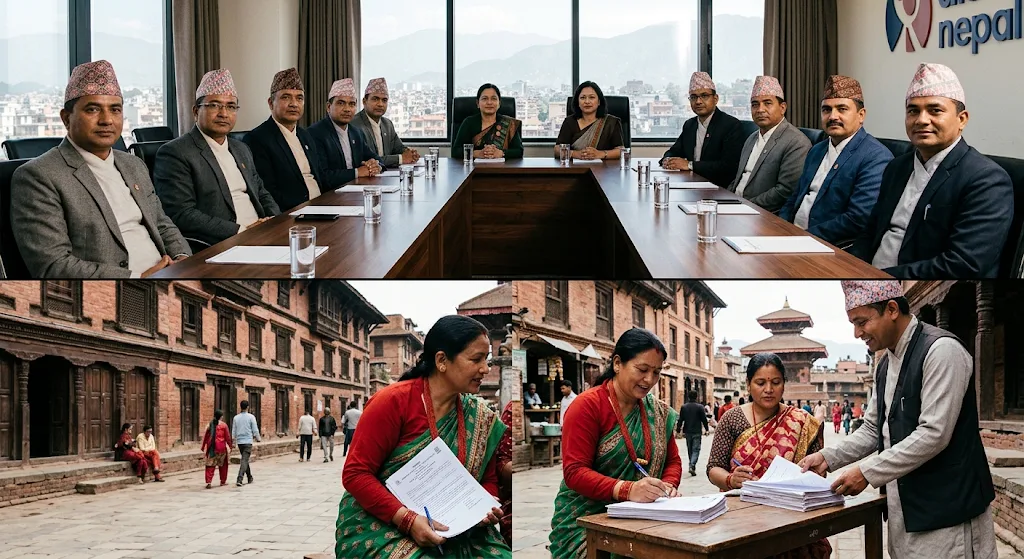
Kathmandu. Although the participation of women in the life insurance sector in Nepal is higher than that of men, the leadership level of insurance companies is dominated by men, according to a study. Although the presence of women in insurance purchase is strong, their representation in the board of directors and executive management is weak.
A report made public by the Insurance Authority of Nepal has shown that although women are ahead in terms of access and participation in the insurance sector, gender inequality persists in the institutional leadership. All 35 licensed insurance companies in the country participated in the study.
According to the report, 57 percent of the total insured and 58 percent of the insured people in the life insurance sector are women. The participation of women in small life insurance is even higher. The share of women in both insured and insured people in this sector is 62 percent.
However, although the participation of women in insurance is high, the contribution of men in insurance premium payment is comparatively double. On the basis of life insurance, men pay an average insurance premium of Rs 42,592 while women pay only Rs 21,054. Similarly, the claim registration rate is 3.8 percent for men and 1.8 percent for women.
The participation of women in non-life insurance is comparatively low. Of the insured in accident and health insurance, 53 per cent are male and 38 per cent are female. In small business-targeted micro non-life insurance, 59 per cent of the insured and 66 per cent of the insured are male.
The gender disparity is even more pronounced at the leadership level of insurance companies. Men represent 81 per cent of the board of directors of non-life insurance companies. Similarly, the share of men in the executive management level, including the CEO, is 78 per cent, according to the report.
However, the participation of women in the field of insurance agents is comparatively good. The share of women agents in small life insurance is 46 percent. The study has pointed out that despite the policy provision of equal opportunity in the insurance sector, its impact is not adequately seen in leadership and remuneration.












प्रतिक्रिया दिनुहोस्