Skip to content

Challenges in implementing government procedures to increase workers’ minimum wages, increasing private sector costs

तत्काल कार्यान्वयनमा आए भारतीय कामदारलाई फाइदा

nabil
global ime

{{TAG_OPEN_div_121}Kathmandu. After the government increased the minimum wage for workers in projects and programs operated through public procurement, debates have begun in favor of its implementation. The government’s decision to increase the minimum wage for workers immediately posed an implementation challenge.

This system, introduced with the aim of improving workers’ living standards and increasing attractiveness to domestic employment, is a concern for the private sector that will significantly increase production costs in the construction and industrial sectors.

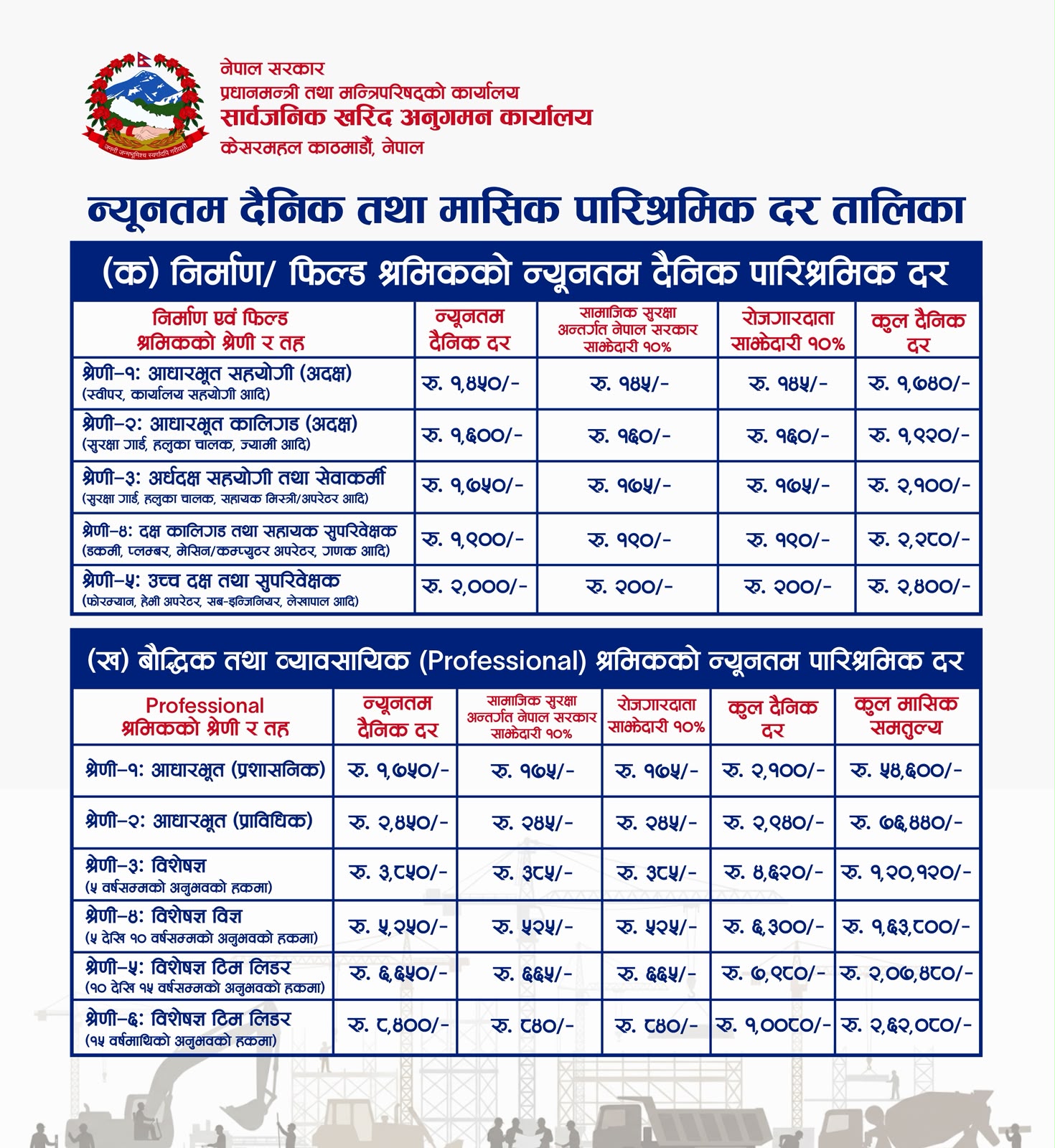
The ‘Procedure on Remuneration and Social Security of Workers Engaged in Public Procurement, 2083’ issued by the Public Procurement Monitoring Office sets minimum wages based on the worker’s skills, experience, and nature of the work.

According to the procedure, workers will receive a monthly salary ranging from 32,607 rupees to 262,080 rupees. Although this government move is viewed positively in the interest of workers, private sector representatives say its implementation has not been easy.

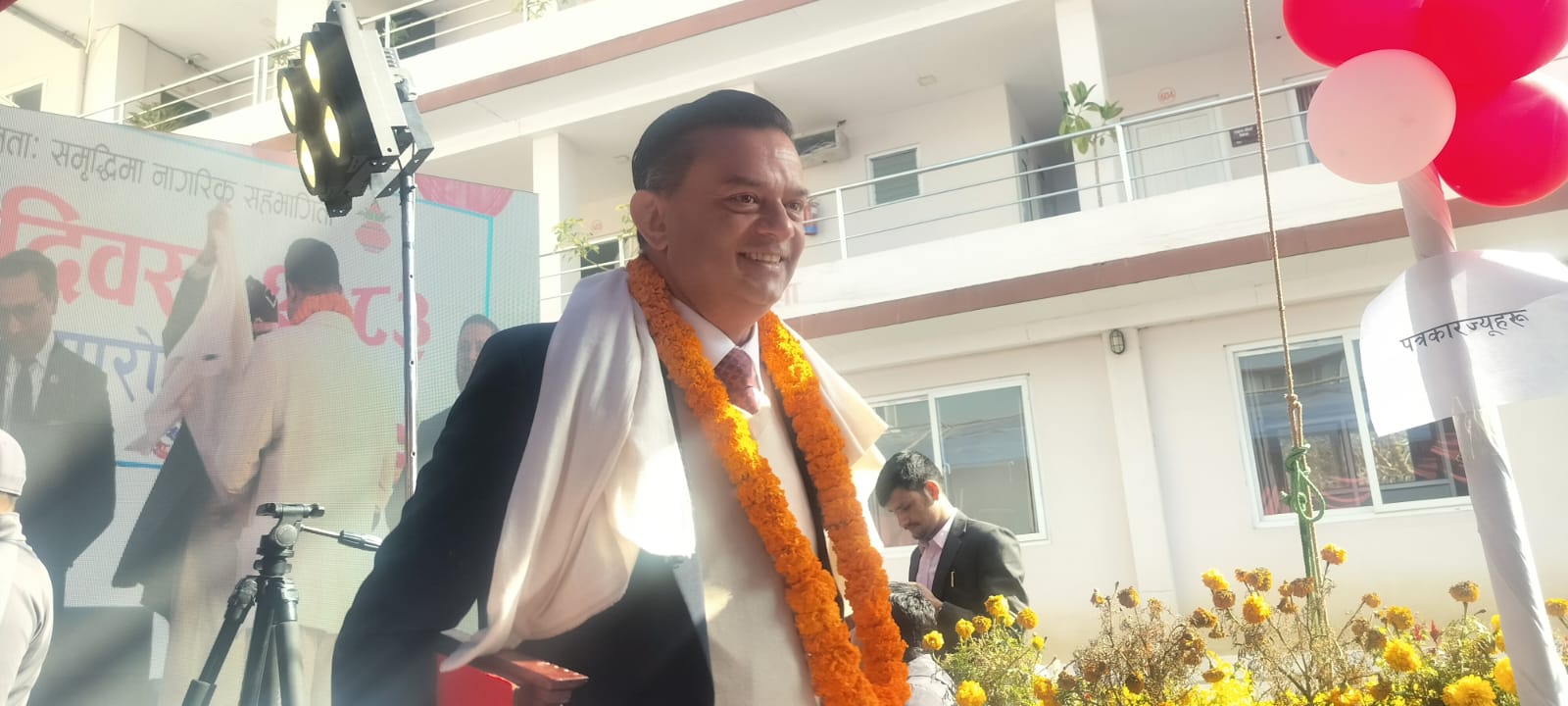
TAG_OPEN_div_113 Ravi Singh, then outgoing president of the Federation of Construction Manufacturers of Nepal, explains that this decision will increase the cost of projects in the construction and infrastructure sectors, weaken production competitiveness, and put additional financial pressure on the private sector.

Although the government’s system is in the interest of workers, he explains that implementing it immediately in all areas is practically difficult. According to him, production costs are high in Nepal.

Most raw materials needed for industrial production must be imported. In such a situation, he argues that significantly increasing workers’ wages at once would further increase the cost of Nepali production and make it even harder to compete with Indian products.

‘The cost of production in Nepal is already expensive. The goods we produce are not in a position to compete with other countries’ products. In such a situation, it becomes difficult for the private sector to implement a system that increases workers’ wages up to three times at once,’ he says.

According to him, more than 25 percent of workers currently working in Nepal’TAG_OPEN_div_105 s construction sector are Indian citizens. The use of Indian workers is also significant in other industrial sectors.

Since the wages Nepali workers currently receive are better compared to Indian workers, he says that implementing the new rates set by the government could make labor management in construction and industry more challenging. Currently, the government implements minimum wages through the Act, Singh says Indian workers will benefit from it.

Currently, the minimum monthly wage for construction workers is around 19,000 rupees, he said. However, under the new system, the wage for unskilled workers will exceed 52,000 rupees.

Currently, the daily wage of workers in India is about 407 Indian rupees, and in Bangladesh, about 750 rupees in Nepali rupees, he said that the rates set by Nepal should also be evaluated from the perspective of regional competition.

Recently, due to various reasons, there has also been a significant increase in the cost of government projects. Businessmen say that the cost of some projects has increased by up to 28 percent. In such a situation, they say that an increase in workers’ wages will further increase the financial burden of the project.

”The state of capital expenditure in Nepal is weak. There is also the ongoing problem of the project not being completed on time according to the allocated budget. With limited resources required for development projects, the new remuneration rates set by the government could put additional pressure on project implementation. ” A representative from the private sector says, ”This could have a direct impact on consumers. As the costs of construction materials, transportation, equipment, and labor rise, the total cost of the project rises. The burden falls on the state budget or the price consumers must pay. ’’

According to him, while increasing workers’ wages, the government should simultaneously develop their efficiency and skills. He suggests that a policy of gradually increasing wages by assessing workers’ skills, production capacity, and quality of work would be more practical. “We have no objection that workers should be paid well. However, workers’ capabilities should also be increased. The government should make arrangements to make them skilled and increase wages accordingly,” he says.

The Independent Energy Producers Association of Nepal (IPPAN) says that the new remuneration system could also affect the hydropower sector. The cost of building hydropower projects in Nepal has already been high, and since the rate of electricity purchase agreements (PPAs) has not been reviewed for a long time, increasing workers’ wages could become an additional challenge, says IPPAN General Secretary T.N. Acharya.

According to him, with the decision to increase workers’ wages, the overall cost of the project will also rise, so it is necessary to link this to the electricity purchase rate. He believes that if the government wants to increase labor costs, it should also consider the economic viability of the energy project and the review of the PPA rate.

“It has been more than a decade since the PPA rate was reviewed. If the government wants to increase labor costs, it will also have to review project costs and electricity purchase rates accordingly,” says Acharya.

However, Acharya also acknowledges the positive aspects of government procedures. He says that due to insufficient employment opportunities in Nepal, many workers are forced to go abroad just to earn 40,000 to 50,000 rupees per month. If an environment is created for respectable wages at home, it can help reduce worker turnover and maintain the necessary workforce in the construction sector.

”The arrangement brought by the government is right in favor of the workers. It can help solve problems like labor shortages and migrant workers in Nepal. This is also a positive step to change the mindset that good earnings only come after going abroad,” says Acharya, “but the downside is that the cost of the project increases. ’’

Representatives from the private sector have accused the government of not conducting sufficient studies on its economic and practical impacts before introducing the procedure. According to them, such a policy should only be implemented considering Nepal’s economic situation, industrial production capacity, regional competitiveness, and the private sector’s ability to pay.

They argue that it would not be practical to set wages at the same level in Nepal compared to those given in Gulf countries. They say that since Nepal’s production capacity, market size, and economic structure differ from those countries, it is necessary to understand the country’s actual situation when determining workers’ wages.

Although the government’s goal of ensuring workers’ social security, providing fair wages, and respecting labor is positive, they say its implementation must align with the capacity of the private sector.

Worker’s compensation at the moment

What is in the government’s procedure?

The government’s procedure states that minimum wages will be set for workers working in all types of projects÷programs operated through public procurement.

According to the procedure, basic assisted (unskilled) workers will now have to pay a minimum daily wage of 1,450 rupees. Under social security, the total daily wage for unskilled workers will be 1,740 rupees, with the Nepal government’s share of 10 percent and the employer’s 10 percent.

The minimum wage for intellectual and professional workers should be 1,750 rupees per day, and with social security, it should be 2,100 rupees. Among intellectual and professional workers, the salary for expert team leaders with more than 15 years of experience should be a minimum daily of 10,080 rupees (262,080 rupees monthly) including social security.

Similarly, arrangements have been made for listing workers involved in public procurement. Registration and identity cards will also be mandatory. Employers must register every worker at the Employment, Skills and Entrepreneurship Center or the electronic system before hiring them.

The center will maintain workers’ records based on the received details and issue free identity cards with national identification numbers. The procedure states that employers involved in public procurement must deposit the amount directly on the same number.

A rule has been established that individuals under 18 years of age cannot be employed as workers. For foreign nationals, the procedure states that they cannot be employed without a labor permit.

Prabhu
sikhar insurance

प्रतिक्रिया दिनुहोस्

citizen life
MAK 4T
Hilife
CG Digital