



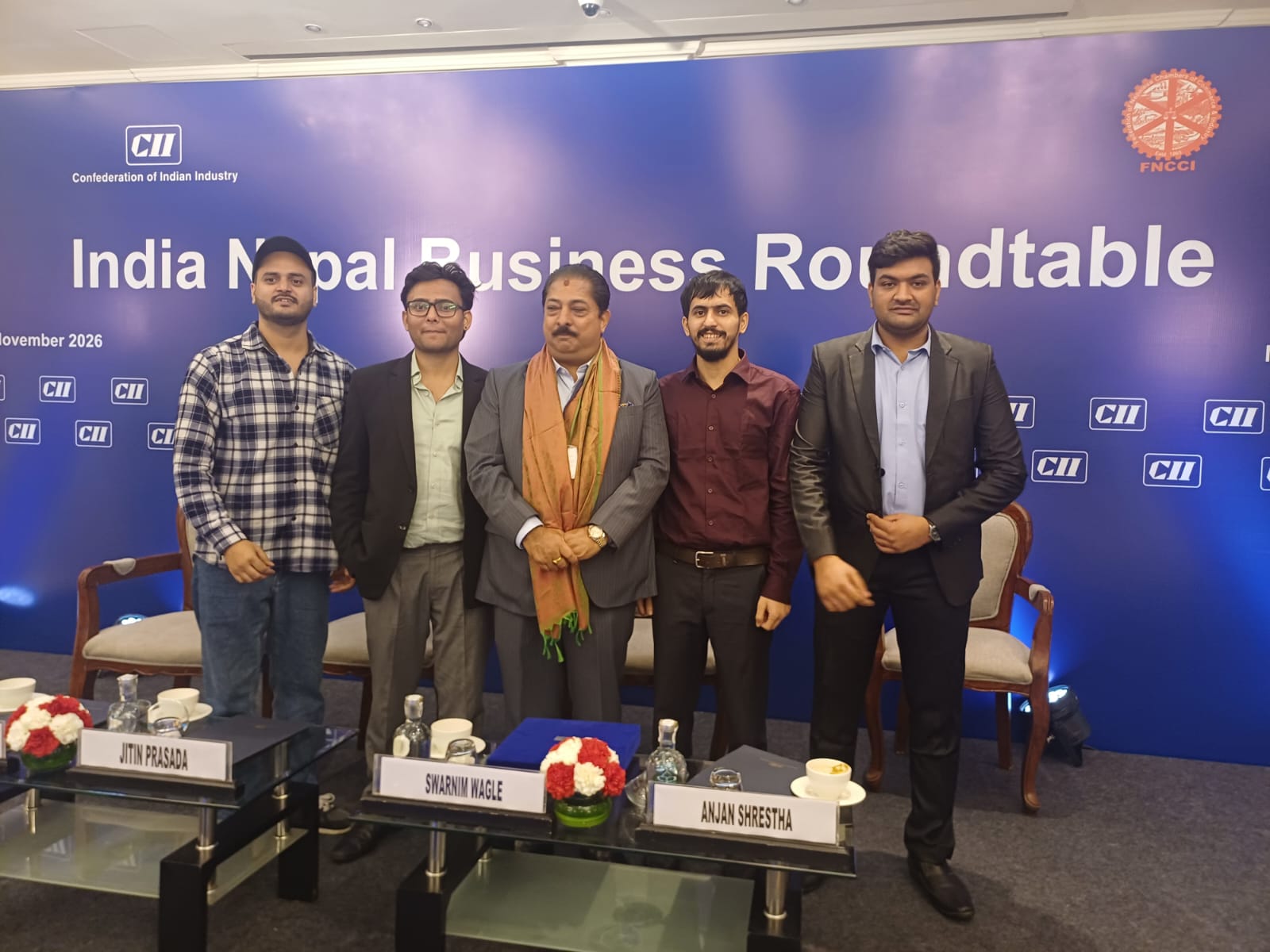
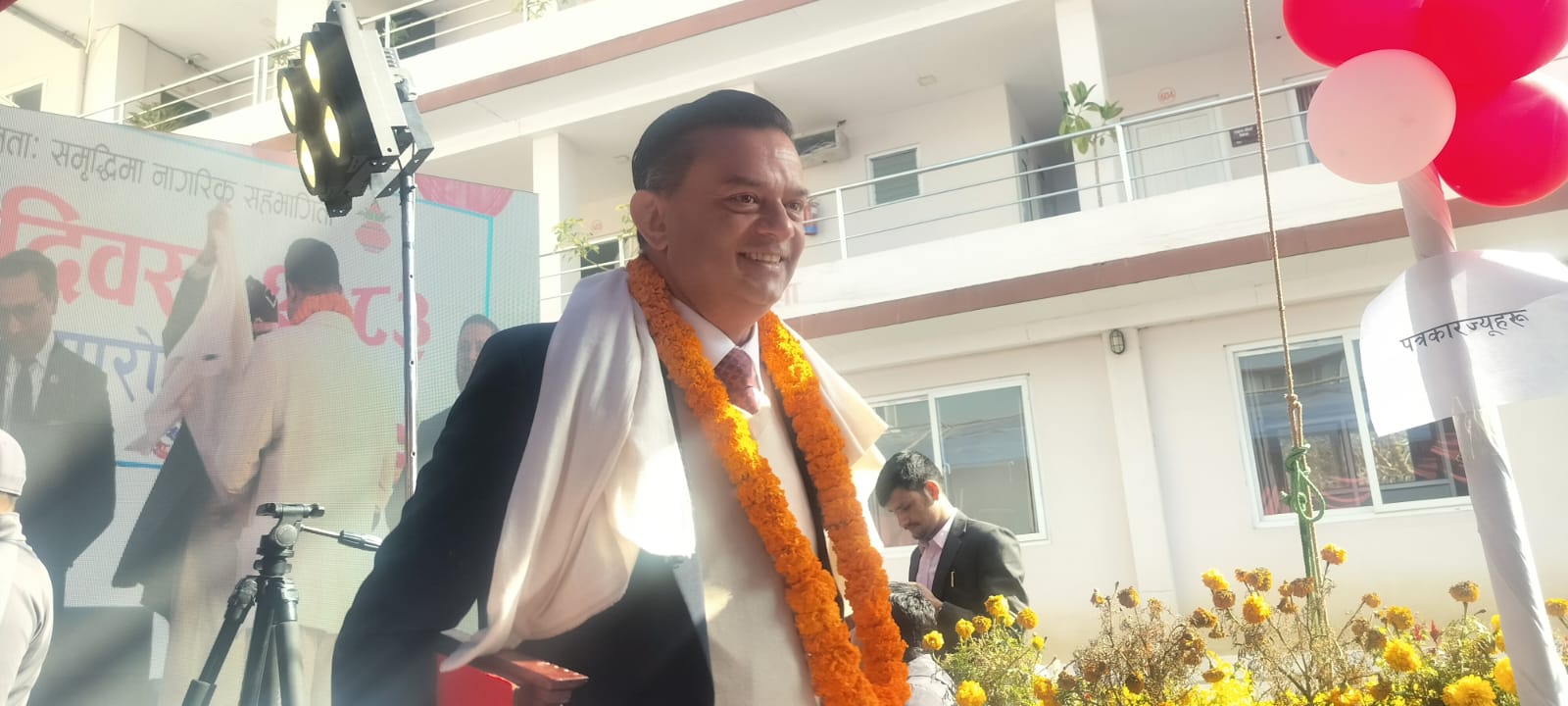
Kathmandu. Anjan Kumar Shrestha, President of the Federation of Chambers of Commerce and Industry of Nepal, emphasized the need to expand cooperation in seven areas of trade, transit, connectivity, infrastructure, energy, investment, and technology to elevate economic relations between Nepal and India.
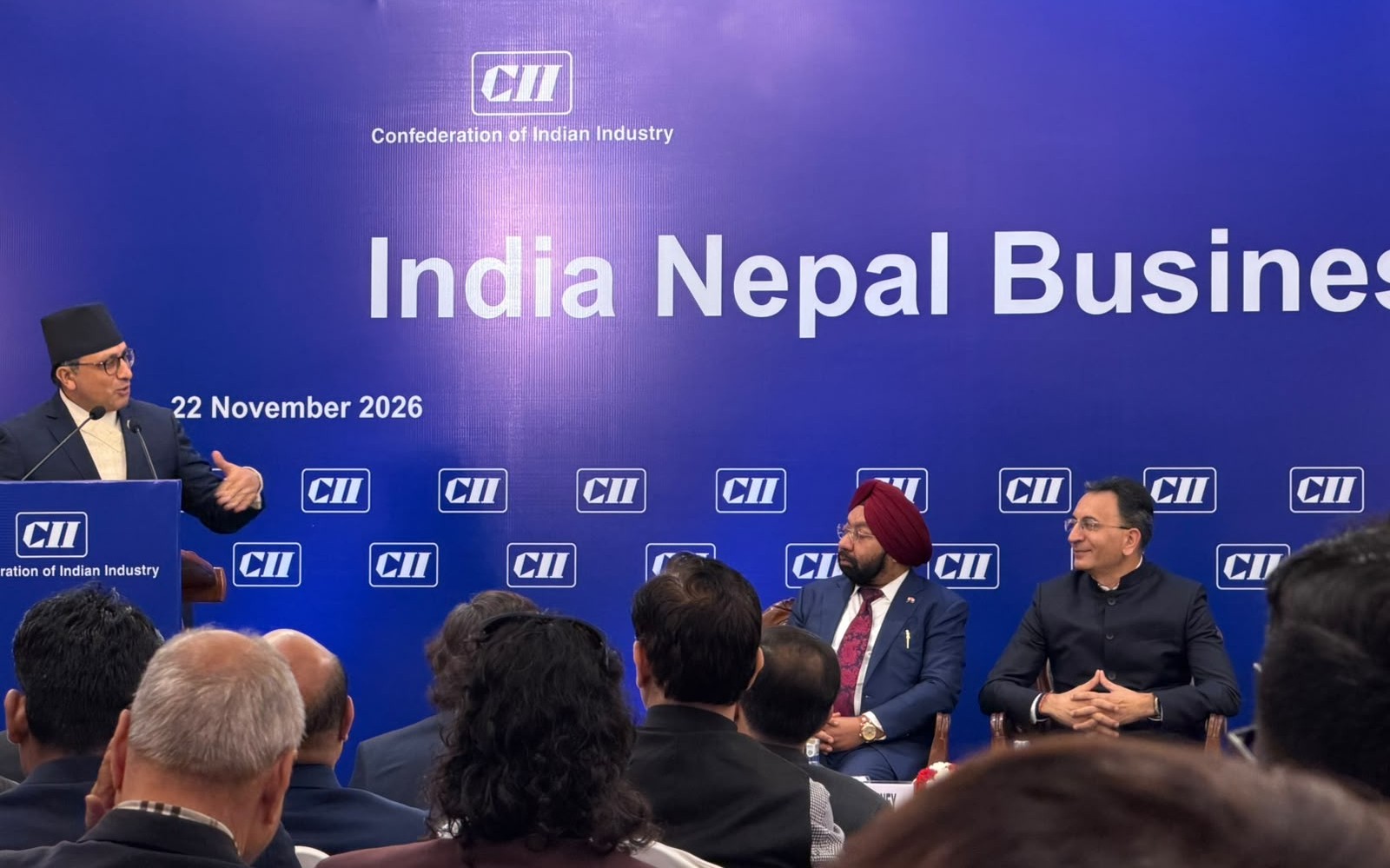
During Prime Minister Walen Shah’s two-day visit to India, he said this at the Nepal-India Economic Partnership event held in New Delhi, India, on Sunday. Chairman Shrestha said that trade relations with India need to be made more balanced and professional.
He pointed out that to make the partnership between the two countries effective, two guarantees of secure and modern border management and investment protection are necessary. Chairman Shrestha said that Nepal-India relations should be viewed not only from the perspective of history and culture but also from the viewpoint of trade and business.
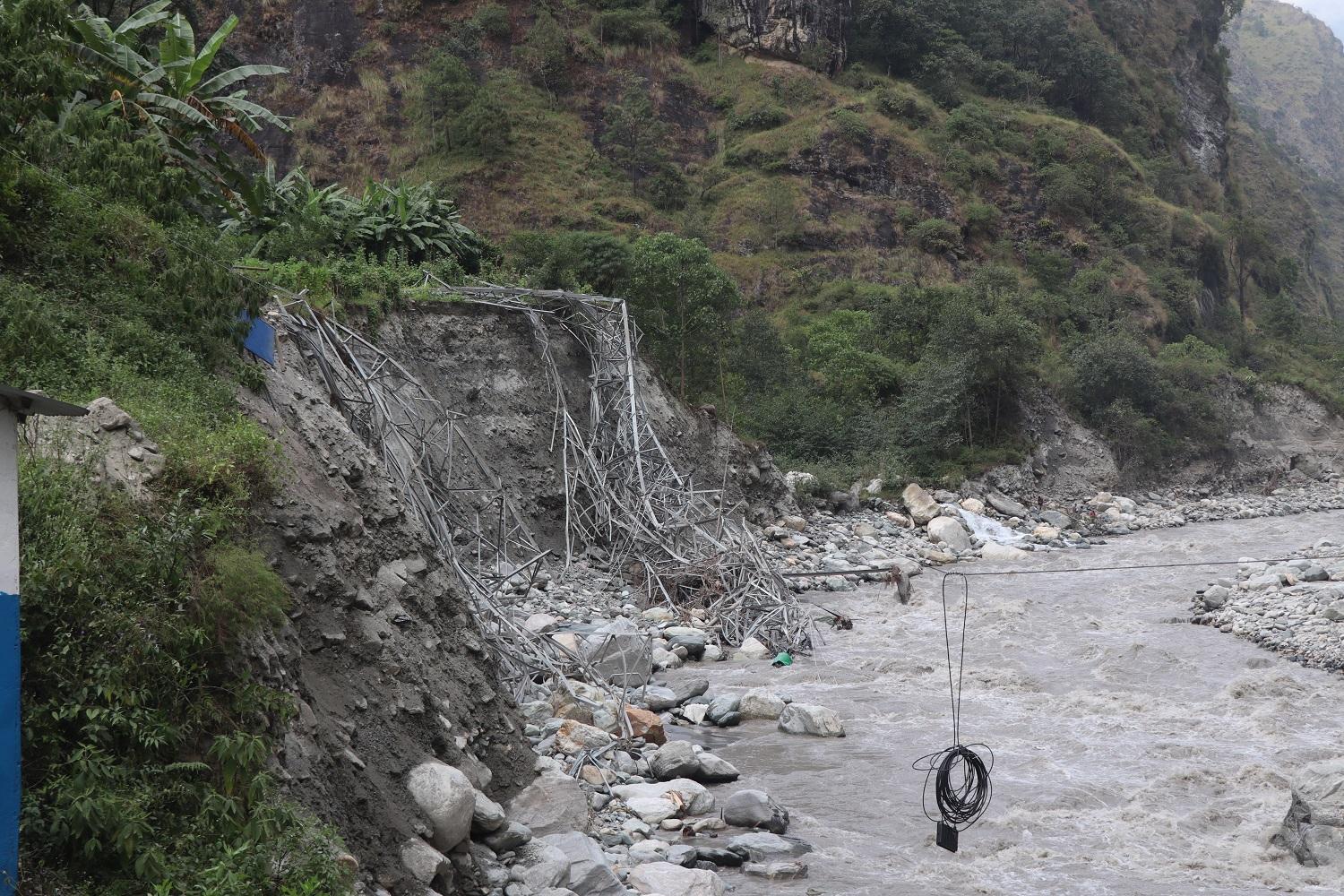
Thanking the Confederation of Indian Industry (CII), he said that CII has long been a partner of the Federation of Nepalese Chambers of Commerce and Industry. He said that the floods in Bhotekoshi and Trishuli created a difficult situation.
According to Chairman Shrestha, India is Nepal’s largest trading partner. He recalled that last year, trade between Nepal and India amounted to approximately 9.4 billion US dollars.
He mentioned that more than 80 percent of Nepal’s total exports go to India. He mentioned that India is Nepal’s largest investor. He informed that last year, Nepal earned 2.9 billion rupees by selling electricity to India and Bangladesh, which is 68 percent higher than the previous year.
He mentioned that one in every four tourists arriving in Nepal by air is an Indian citizen, and that Indian tourists come to visit religious sites like Pashupatinath, Muktinath, Janakpur, and Lumbini, and that they also come with their families to celebrate holidays and organize wedding ceremonies.
Noting that the citizens of both countries have close travel and economic ties, Chairman Shrestha said that one in every three Nepalis living abroad lives in India. Similarly, he stated that Nepal has long been among the top 10 source countries for which India receives remittances.
“Despite such close ties, the total amount of Indian investment in Nepal is less than one billion US dollars,” he said. Noting that India set a record of 94.5 billion US dollars in foreign direct investment just last year, he complained that Indian private sector investment in Nepal has not been expected for the past two decades. “This is a matter of serious concern,” he said.
He said Nepal needs to learn from India how to continuously practice reforms, prioritize investors, and build an effective bureaucracy that works with the economy at the center. He mentioned that Nepal has also begun moving forward on the path of such reforms, and informed that currently, arrangements have been made for automatic approval of foreign investment in 102 industries.
He stated that there is no limit on investment in these industries, and services are being provided through one-door service centers. He informed that the process of amending 59 acts and about 500 legal provisions has been advanced.
Chairman Shrestha presented the concept of seven relationships and 2 guarantees for the progress of the Nepal-India partnership.
Seven relationships: cooperation must be expanded from business to technology
He stated that trade between Nepal and India should proceed equally in both directions. He believed that Nepal should increase exports of its branded and value-added goods to India. He said that once Nepalese products are tested and recognized in both countries, the process that would take weeks could be completed in just a few days.
Similarly, Indian ports serve as gateways for Nepal. Describing the electric cargo tracking system and freight services on the new Kolkata–Biratnagar railway as positive starts, he emphasized the need to expand the capacity of additional ports and railways. He proposed developing integrated checkpoints in Bhairahawa, Nepalgunj, and Dodhara–Chandni as logistics and commercial centers.
He said that the operation of the Ayodhya–Janakpur rail service, extension of the railway line to the new border checkpoint, and additional flights to Bhairahawa and Pokhara are necessary. He mentioned that a UPI (Unified Payments Interface) payment system should be arranged for Nepali tourists visiting India, and in the coming phase, arrangements should be made for Nepali tourists to make payments across India via QR codes.
His proposal was to develop such expressways, airports, industrial parks, and urban transport infrastructure through the public–private partnership (PPP) model.
He mentioned that although Nepal has the potential to generate more than 40,000 megawatts of hydroelectric power, only one-tenth of that capacity has been developed so far. Noting that the governments of Nepal and India have agreed to trade 10,000 megawatts of electricity within the next 10 years, he said this should be advanced more effectively.
Chairman Shrestha said that Indian investment should be expanded in promising sectors such as tourism, agro-processing, pharmaceutical production, cement, and information technology. He stated that companies like Nepal Lever, Nepal SBI Bank, Dabur Nepal, and Surya Nepal have proven for decades that Nepal has been an attractive destination for investment.
Similarly, he emphasized the need for a partnership with India that transfers technology through joint investments and provides training to Nepali workforce.
He stated that expanding cooperation in all these seven areas would lead to the creation of regional value chains. He said that economic cooperation between the two countries could be advanced by producing energy in Nepal, operating industries and factories in India, and expanding markets throughout South Asia.
Two guarantees for secure border management and investment protection
Chairman Shrestha stated that two guarantees are necessary to make the Nepal-India partnership effective.
He mentioned that the guarantee is secure and modern border management. He stated that arrangements are necessary to track, seal, and complete customs procedures on time for goods movement across the border. He said this could make commercial transport safe, organized, and effective.
He stated that such guarantees are the protection of investments. Noting that the Government of Nepal has already implemented the Nepal Private Investment Protection and Promotion Strategy (PIPPS), he said it will help maintain a stable policy framework for at least five years and ensure the legal and physical security of investments.
jute, steel, and BIS certification are major problems in Nepal’s industry
Chairman Shrestha also raised three major problems faced by Nepali industry in trade with India. He stated that cooperation from the Indian industrial sector is necessary to resolve issues related to the jute industry, steel industry, and BIS certification.
He informed that India has been imposing anti-dumping duties on Nepali jute products since 2017 and revised it after reviewing it last September. In addition, the imposition of countervailing duty is also under consideration, he said.
Noting that the jute industry in eastern Nepal provides employment to thousands of farmers and laborers, he said that these industries purchase raw jute and machinery directly from India. Therefore, he argued that the Nepali jute industry is not a threat to India’s jute economy but a partner.
He mentioned that it is related to the steel industry. Since last December, the protective duty imposed by India on steel has also been implemented in Nepal, and as a result, Nepal’s steel exports to India have decreased by more than 60 percent in the last fiscal year, he informed.
Although India is the world’s second-largest steel-producing country, he noted that Nepal’s export share in the Indian market is very small. However, he stated that this market is like a lifeline for Nepal’s steel industry.
He also mentioned that this is related to BIS certification. Thanking India for making the BIS certification process smoother than before, he said that delays in renewal of certification and rules related to raw material certification still cause goods to be stopped at the border.
Noting that the support of the Indian industrial sector is necessary to resolve these issues, he expressed confidence that the voices of Indian industrialists and businessmen will help find solutions beneficial to both countries.
He also proposed that the Confederation of Indian Industry (CII) and the Federation of Nepalese Chambers of Commerce and Industry (FNCCI) form a joint task force to find solutions to trade remedies and quality standards. He stated that this task force should submit joint suggestions and recommendations to the governments of both countries.
Noting that Nepal’s sales in India are much lower compared to India’s purchases, he said that when Nepali industry is strong, a large market will also be created for India. Therefore, he believed that India should view the development of Nepali industry as an opportunity to expand its market.
Chairman Shrestha emphasized the need to elevate the relationship between Nepal and India to new economic heights. Noting that geography has made the two countries neighbors and history has made them family, he said that now business must make both countries partners in progress.
Noting that India aims to become a developed nation by 2047, he said Nepal also aims to build a 100 billion US dollar economy and reach a per capita income of three thousand US dollars within the next five to seven years.
He called on both countries to move forward through dialogue through agreement, from potential to project, and from good neighbor to excellent partner relationship.











प्रतिक्रिया दिनुहोस्