The ‘GLOF Sanjeevani Project’ will be launched to protect from the risk of glaciers; how much will it cost?
लगानी न्यूज
Kathmandu. The ‘GLOF Sanjeevani Project’ worth 49.94 million US dollars is being launched with the aim of protecting Himalayan communities affected by climate change at risk of glacial explosive floods (GLoF).
This project will receive a grant of 36.16 million US dollars from the Green Climate Fund, a co-financing contribution of 11.32 million US dollars from the Government of Nepal, 2.14 million US dollars from UNDP, and 0.32 million US dollars from private sector partners.
This project, which will run from 2026 to 2033, will directly benefit more than 385,000 people, according to the project. Of these, 55 percent are women. Additionally, about 2 million additional people living in the lower coastal watershed areas will receive indirect protection benefits.
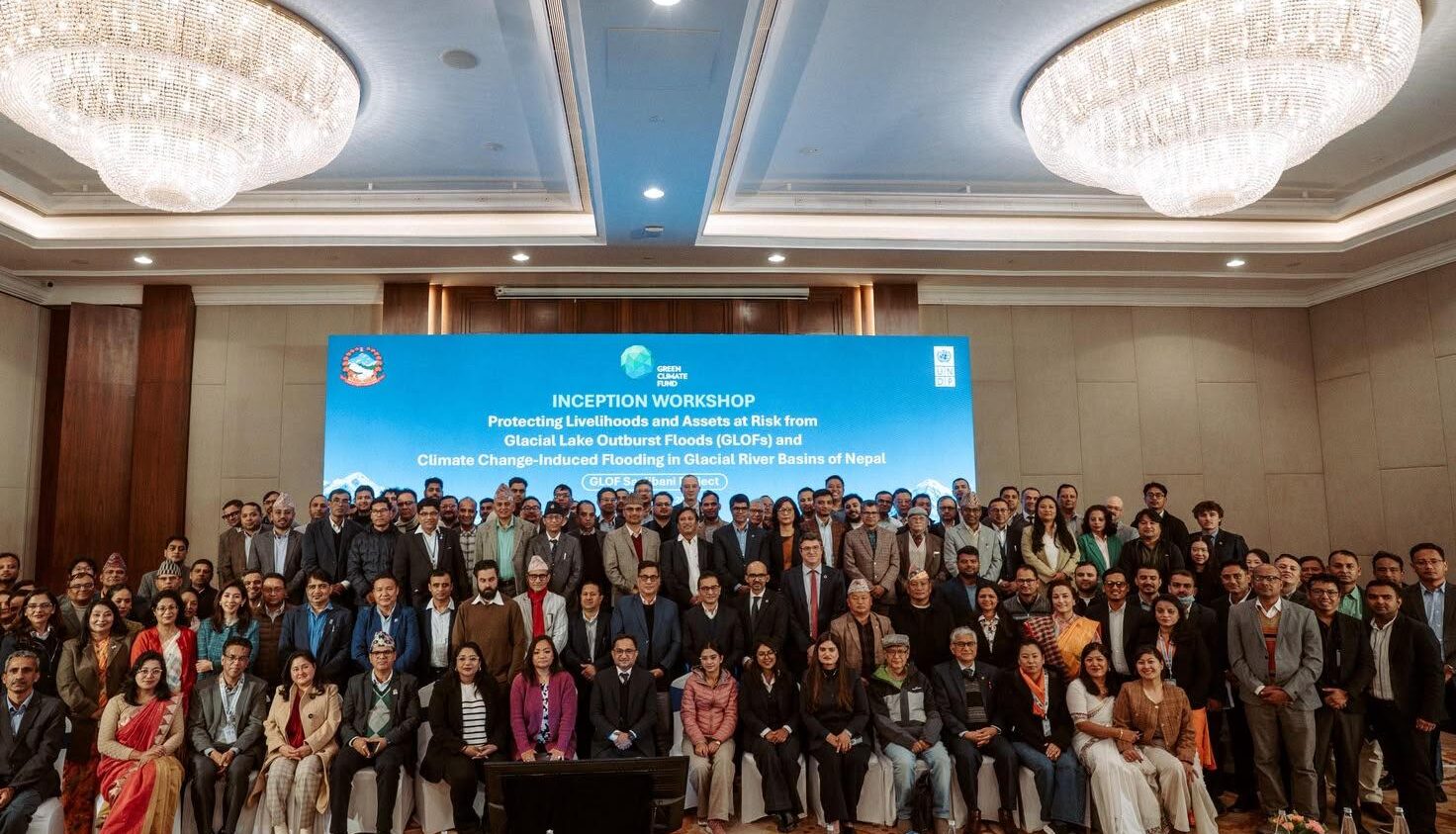
At the project’s inaugural workshop held today, Navinraj Singh, Secretary of the Secretariat of the Water and Energy Commission, stated that an integrated and collaborative approach will be prioritized to ensure timely and effective implementation of the project. “Under this effort, we aim to develop the ‘Hydrology and Water Resources Research Center’ as a center of excellence and strengthen collaboration with hydropower developers, the broader private sector, and other key stakeholders so that the project can have a sustainable and long-term impact,” he said.
{{TAG_OPEN_div_56}Temperatures in the Himalayan region are rising rapidly, accelerating glacier melting and expanding lakes in the high Himalayan regions. This change highlights the national need to move beyond traditional practices of responding only after disasters to active initiatives for long-term risk reduction.
Although Nepal’s contribution to global greenhouse gas emissions is less than 0.1 percent, it continues to suffer the serious impacts of climate change. A recent example of this is the recent flash floods in the Rasuwa–Bhotekoshi region, said Amrit Lamsal, Deputy Secretary of the Ministry of Finance. ‘Through this joint initiative, the Ministry of Finance is committed to fulfilling its responsibilities by aligning GLOF risk reduction efforts with broader national development priorities and accountability frameworks,’ he said.
{{TAG_OPEN_div_52}Similarly, Kyoko Yokosuka, UNDP’s resident representative for Nepal, noted that the devastating floods seen two months ago in the Rasuwa–Bhote Koshi and Gandaki watersheds reminded us how quickly extreme climate risks can turn into humanitarian and economic disasters.
“It has also given us a simple but important message: we cannot just wait for the next disaster,” he said, “This is the most important strategic value of the project. It gives us the opportunity to move forward from responding after disasters to predicting risks, mitigating them, and protecting development investments before disasters occur. ”
Bappon Fakhruddin, Head of Climate Investment at the Green Climate Fund (GCF) Secretariat, expressed the view that this should be regarded as an extensible project and that it would enable diverse cross-border resilience collaborations. He also stated that it would create broader opportunities within the national ecosystem in livelihoods, finance, business, and partnerships.
As a key component of the project, there is a plan to reduce the water level of four glaciers located in the high Himalayan region. Accordingly, the water level of Dona, Lumding, and Lower Barun glaciers will be reduced by three meters÷, and the water level of Hangu ‘Two’ glacier by one meter.
{{TAG_OPEN_div_44}In addition to lowering the water level of the glacier, the project will strengthen climate risk information and planning, expand hydrological and meteorological monitoring systems, and establish and improve early warning systems. Additionally, nature-based solutions and protective infrastructure will be developed and implemented to reduce flood risk in the lower coastal areas.
Chief Executive of the National Disaster Risk Reduction and Management Authority, Dharmraj Upreti, said that strengthening the early warning system means delivering science-based information to at-risk communities well in advance.
“So that they can take the necessary steps in time before the risk escalates into a disaster. Building resilience requires a whole-of-society approach that brings together the government, development partners, the private sector, and local communities,” he said, “By working collectively, we can transform risk into resilience and build a safer and more resilient Nepal in response to climate change.”
The Executive Director of the Water and Water Resources Research Center, Sanjeev Baral, said that because the glacial region is changing rapidly, the glaciers are like ticking ticking time bombs. “Even a small dam burst can cause damage worth hundreds of billions of dollars. Therefore, it is necessary to immediately lower the water level of the glacier while taking proper safety precautions and adhering to environmental and social safety standards, so that its implementation can be more effective,” he said.
{{TAG_OPEN_div_36}At the community level, municipalities selected for local governments and projects will play a key role in implementation. They are said to assist at-risk communities in providing necessary responses based on prior warning.
One of the targeted local levels of the project, Dhan Bahadur Gurung, chairman of Nason Rural Municipality, welcomed the project as an important opportunity to make the community safer and more uplifting. “We will have full commitment and contribution to its implementation. Through informed land use planning, thorough research, and active participation from the local community, this project can help ensure safe settlements, improve livelihoods, and create new opportunities for hydropower and tourism development,” he said.
The ‘GLOF Sanjeevani Project’ will be implemented through the Water and Water Resources Research Center under the Secretariat of the Water and Energy Commission. It involves collaboration from the Chure and Watershed Conservation Department, the National Parks and Wildlife Conservation Department, and the National Disaster Risk Reduction and Management Authority. Additionally, its main partners include the Ministry of Finance, Nepal Tourism Board, and the Independent Energy Producers Association, Nepal.














प्रतिक्रिया दिनुहोस्