



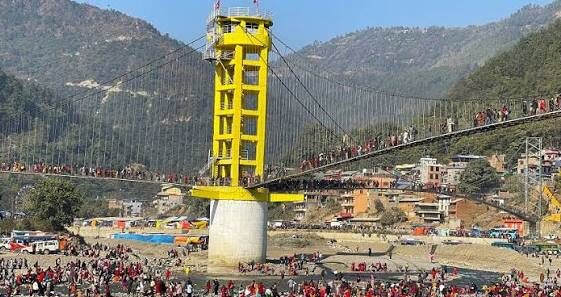
Kathmandu. Preparations have been accelerated for the ‘Ruru Mahasnana’ to be held throughout the upcoming month of Magh at the Rurukshetra Ridi, the confluence of Gulmi, Palpa, and Syangja.
With the aim of promoting the religious glory of the Kali Gandaki River and the historical identity of the Rurukshetra region at national and international levels, Rurukshetra Rural Municipality has proposed the concept of Mahasnan (Mahasnan).
The rural municipality is preparing to celebrate the month of Magh as the ‘Ruru Mahasnana’ to conduct religious baths, worship, darshan, pilgrimages, and religious and cultural activities. Previously, a five-day Maghi fair was held every year on Maghe Sankranti, and now the goal is to increase the movement of devotees and pilgrims throughout the month of Magh.
The Lumbini Province government has also become active in conducting the Mahabath in a grand, organized, and effective manner. In this context, a meeting of the Lumbini Provincial Development Council has been held in the Rurukshetra in the presence of Provincial Minister of Forests, Environment, and Tourism Tulsi Prasad Chaudhary. At the meeting, Minister Chaudhary expressed his commitment to deploy all mechanisms of the provincial government, including the ministry, for the Mahabath.
The chairman of the rural municipality, Yadu Gyawali, stated that the rural municipality is continuously engaged in promotion and preparation with the aim of establishing the religious identity of the Ruru region at the national and international levels. He mentioned that coordination and cooperation are necessary from the local level to the provincial and federal governments to organize the Mahasnahan, and requested the ministry for necessary support and facilitation.
The Rural Municipality has already decided to observe the month of Magh as the ‘Ruru Mahasnan’ month in the policy and program for the fiscal year 2083÷084. Chairman Gyawali stated that the goal of the rural municipality is to expand the connection of religious pilgrimage by connecting Nepal’s four dhams and to further highlight the religious significance of the Ruru region.
The religious significance of Rurukshetra is also linked to the Kali Gandaki River. There is a religious tradition of worshipping the Shaligram stone found in Kaligandaki as a symbol of Lord Vishnu, which is considered sacred to Hindus. Due to the religious significance of Shaligram, Kaligandaki and Rurukshetra have also become centers of faith for devotees coming from Nepal and India.
Devotees come to Ridi throughout the year to bathe in the holy waters of Kaligandaki and to have darshan and worship of Shaligram. Due to the popular belief that bathing here during Magh grants religious merit, special crowds have been gathering during Maghe Sankranti and Magh. Local Sundar Kaju said that if this religious faith could be expanded and Mahabath held throughout the month of Magh, the Rurukshetra could be developed as a center for organized religious pilgrimage.
The Rishikesh Temple in Rurukshetra is the main religious attraction here. Believed to have been built by Palpali King Manimukund Sen, religious sites such as Gayatri Temple, Shiva Temple, Bhimsen Temple, Bhagwati Temple, Hanuman Vatika, Ganesh-Bhairav Temple, Satyeshwar Temple, Ram Temple, Gupteshwar Mahadev Temple, and Rurukanya Temple further highlight the religious and historical significance of the area
{{TAG_OPEN_div_40}Alongside religious heritage, tourism infrastructure and natural attractions have also been added to the Ruru area in recent times. Nepal’s first three-way suspension bridge, built in the Ruru area on the strategically important Kali Gandaki corridor connecting India and China, has become another major tourist attraction here. The bridge over Kaligandki connects Gulmi, Palpa, and Syangja.













प्रतिक्रिया दिनुहोस्