



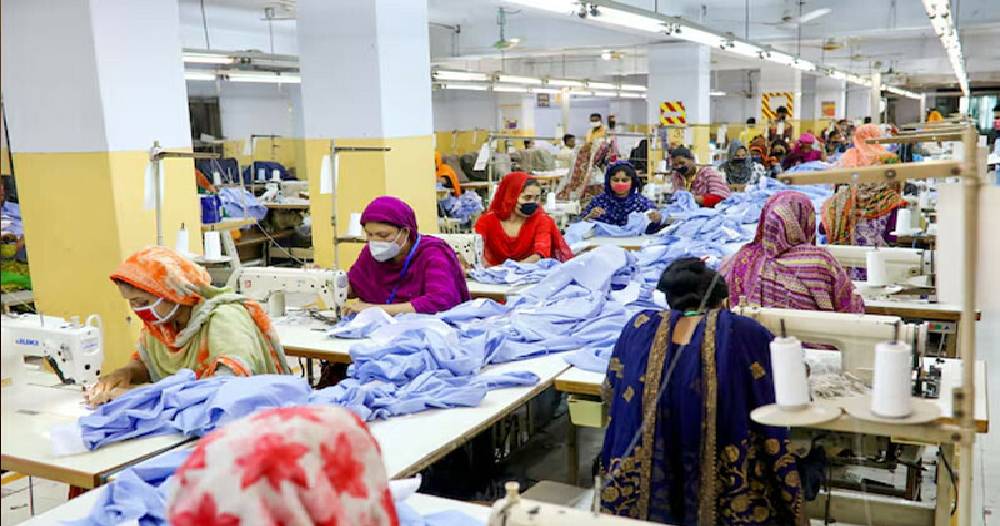
Dhaka. Bangladesh, the world’s second-largest garment maker, hopes to reduce customs duties by 35 per cent imposed by US President Donald Trump, the country’s top commerce official said on Tuesday.
Textile and garment production accounts for nearly 80 per cent of Bangladesh’s exports and is being rebuilt by the student-led revolution that toppled the government last year.
Commerce Secretary Mahbubur Rahman said, “We expect the tariff rate to come down once the USTR (Office of the United States Trade Representative) sends another draft document for review.”
Rahman said the South Asian nation’s national security adviser and commerce adviser were “working on this issue” in the United States.
In 2024, Bangladesh exported goods worth $8.36 billion to the UNITED States and imported $2.21 billion, according to bangladesh bank and national revenue board.
American clothing companies that receive products from Bangladesh range from Fruit of the Loom to Levi Strauss to VF Corp. Their brands include Van, Timberland and The North Face.
Trump had imposed a 37 per cent tax on Bangladesh in his April 2 announcement, but in a letter issued on Tuesday, he said it would now be 35 per cent. This is more than double the 16 percent already placed in cotton products.
To reduce the trade deficit, Dhaka has proposed buying Boeing aircraft and increasing imports of American wheat, cotton and oil. Trump has used the trade deficit as a justification for imposing painful taxes.
Bangladesh Garment Manufacturers and Exporters Association (BGMEA) president Mahmoud Hasan Khan called it a “big challenge for the garment sector”.
“We expected the tax imposed on us to be between 10 and 20 per cent,” he said. He hoped Dhaka’s interim leader Muhammad Yunus would “raise the issue with the United States”.
Former BGAME director Mohiuddin Rubel warned that the situation of customs duty would be dire.
“The new tariffs raise concerns about job losses in Bangladesh because the US is its main export market,” he said, adding that Bangladesh needs to act quickly by engaging American importers to press for policy changes, resume high-level trade negotiations and highlight the importance of its products.


















प्रतिक्रिया दिनुहोस्