

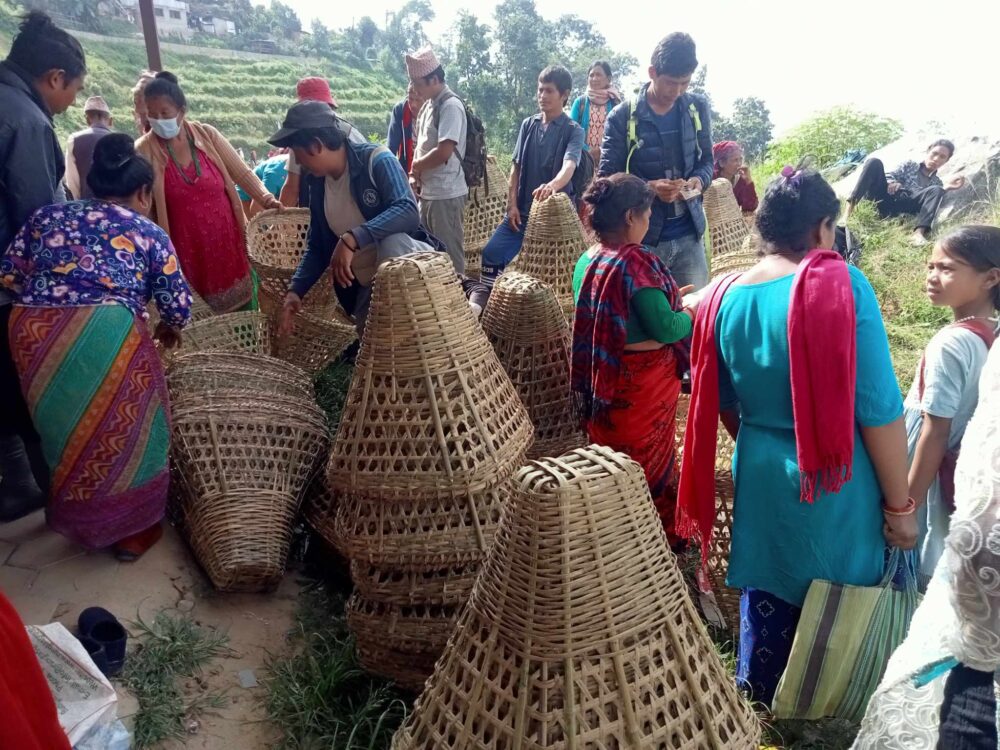
Bhojpur. Chand Bahadur Tamang, 40, of Temkemaiung rural municipality-1, Timma, Bhojpur, has been earning up to Rs 35,000 a month from the sale of doka.
With the development of technology, he has been earning up to Rs 35,000 per month from the sale of doka at a time when materials like nanglo, doko, thunse, fipi, dhaki, mandro and dalo are disappearing in the villages.
Tamang said that there is a lot of demand for doko in the local market, so the doka woven by him is sold in Bhojpur district headquarters as well as in the local market. He said that there is no problem in running the family by weaving doka. Stating that he has been weaving and selling dokas since about 41 years ago, he said that up to 10 dokas would be ready in a day.
“I have been weaving dokas for a long time,” tamang said, adding, “I weave eight to 10 dokas a day. The monthly income from the sale of doka is up to Rs 35,000. According to him, doko is sold in the local market for Rs 350 to Rs 400 per piece. According to him, if you do this profession without doing other household work, you can earn rs 700,000 to Rs 800,000 annually.
“There is a lot of income from doka weaving,” Tamang said, adding, “It is not difficult to earn up to Rs 800,000 annually if we do this business alone.” We earn rs 300,000 to Rs 400,000 annually by weaving in other agricultural activities. ’
He says that if he uses the doka of malingo (bamboo species found in the lake) he has woven, it will last for three years. Apart from malingo, doka can also be prepared from singing, extract, bamboo, etc., he said. Tamang said that there will be demand from different places for doka.
Tamang said there was a problem in procuring raw materials as the community forest would be strict. According to him, the forest is open only once a year for cutting malingo. Tamang said that he has been weaving doka from raw materials including malingo and singane produced in his own private farm.
Tamang said that with the development of technology, the skills of making nanglo, doko, thunse, fipi, dhanki, mandro, dalo etc. are disappearing in the villages. Recalling that only the elderly used to make choya materials in the villages, he opined that it would be easier if such traditional works could be commercialized. He stressed the need for the local government’s support to commercialize the traditional SESA.











प्रतिक्रिया दिनुहोस्