



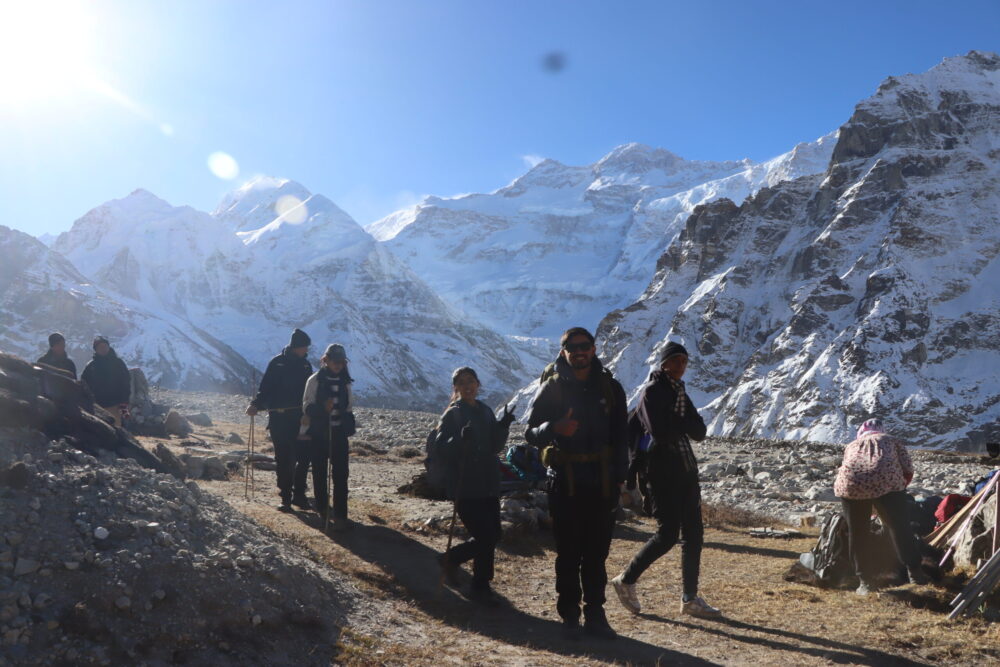
Taplejung. The number of mountaineers has been increasing in recent times. According to the Department of Tourism, rs 638.29 million was collected from climbing various mountains and peaks in Nepal last year.
A total of 41 people, including 26 men and 15 women, successfully scaled the 8,556-metre peak of Mount Kanchenjunga in Taplejung from March 1 to April 21. Revenue of Rs 197,460 has been collected from the expedition.
A total of 66 climbers have successfully climbed Mount Makalu in Sankhuwasabha district. A total of Rs 1.62 crore has been collected from this. A total of 374 climbers, including 302 and 72 women, climbed mt Everest. A total of Rs 554.99 million revenue has been collected from this.
A total of 23 peaks and peaks were successfully climbed this season. According to the Department of Tourism, 869 Nepalis and foreigners, including 678 men and 191 women, have successfully scaled nepal’s mountains and peaks. According to the Department, revenue of Rs 638.29 million has been collected from this.
China’s Tibet region is on the other side of nepal’s mountains. The rest of the mountains fall in China, India, Pakistan, Bhutan and Tajikistan. There are high peaks in this mountain. There are 10 highest snow peaks in the world. K-2 is the peak in Pakistan.
The ninth peak, Nanga Mountain, is also in Pakistan. There are eight in Nepal from the world’s highest peak Sagarmatha to Annapurna-1. Mt. Everest, Kanchenjunga, Lhotse, Makalu, Choyu, Dhawalagiri, Manaslu and Annapurna-1 are in Nepal. All of them are more than 8,000 meters high, but as the snow line moves, the glaciers are increasing.
Moving snowline
Various studies and local experiences have confirmed that the impact of climate change in the Himalayan region is intensifying. Data from the experience of the International Centre for Integrated Mountain Development (ICIMOD), environmental scientists and local communities shows that Nepal’s himalayan geography is vulnerable to change.
According to a 2021 report released by ICIMOD, the glaciers in the Hindu Kush Himalayan Region show that the snow line in The Kanchenjunga area of Taplejung is moving up by an average of 6.5 meters every year. In the same period, the number of glacial lakes in the region has also increased significantly. There were 27 glacial lakes 15 years ago, which has now reached 49. From this, it can be understood how much impact climate change has had on the geographical nature and environmental structure of the Mountainous region.
Another important study measuring the effects of climate change, isimod’s Himalayan Water Security (2022) report also showed that nepal’s temperature has increased by 0.3 to 0.5 degrees Celsius per decade.
This warming has accelerated the rate of melting of glaciers, accelerated the process of moving over the ice line, and directly affected the lives, agriculture, animal husbandry and drinking water resources of the people living in the mountainous region.
Several reports have shown that if immediate climate adaptation and long-term strategies are not adopted, glacier depletion will intensify and could lead to a long-term crisis in the overall water resources system, biodiversity and food security.

















प्रतिक्रिया दिनुहोस्