


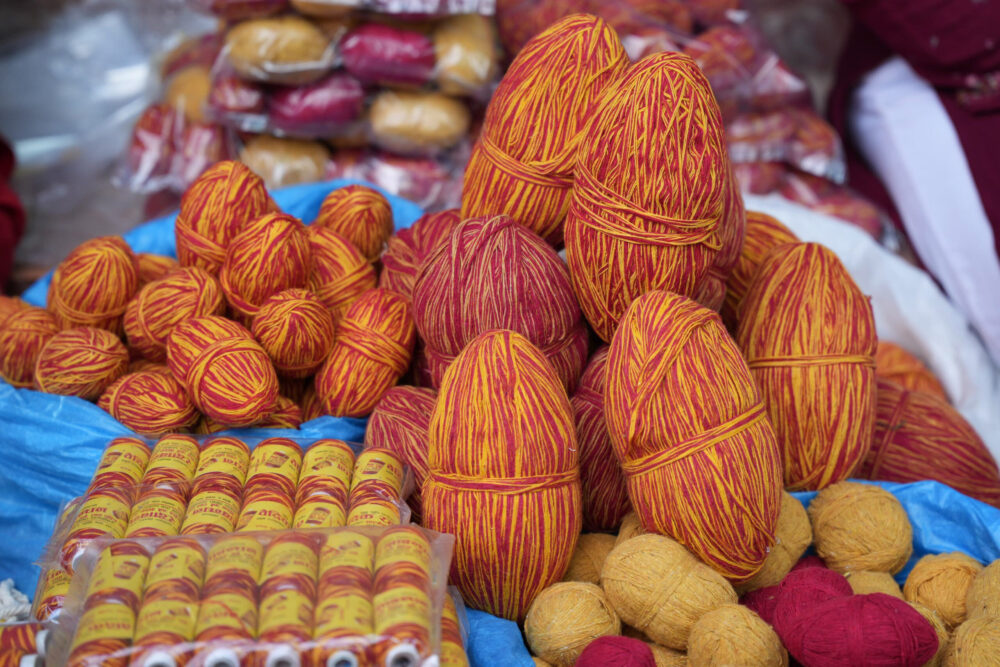
Kathmandu. Rakshabandhan, celebrated every year on the day of Shravan Shukla Purnima, is being celebrated across the country today by wearing new yagnopavit and rakshabandhan.
From the morning on the full moon day, the Vedic Sanatan religion goes to the river, lake, lake, pond and bathe and tie rakshasutra from the guru purohit. It is a religious belief that if the tagadhari wears the yajnopavit and doro (rakshasutra) chanted by the guru purohit, then it will get protection from negative elements.
The tradition of RakshaBandhan, which runs on the basis of the mythological belief that Guru Brihaspati prepared a defense law for the gods chased by the demon in the Satyayug, due to which a very powerful Danavaraj bali was tied, so I bind you, it protected you by tying a rope so that you should be safe, do not get disturbed.
For this reason, there is a Vedic tradition of tying rakshasutra, rakshabandhan or thread by saying ‘Yen badho baliraja danvendro mahabal ten tvam pratibadhnami rakshama chalmachal’ during rakshabandhan, said Prof Dr Ram Chandra Gautam, former chairman of Nepal Panchang Jury Development Committee and theologian.
For the protection of human beings, the Brahmin priest is tied to the right pulse of the host by chanting, chanting the mantra of Rakshabandhan i.e. Doro Vedic tradition, which is chanted, penance and worship.
Tagadhari wearing yajnopavit
On this day, it is mentioned in the statute that the three varna tagadharis of Brahmin, Kshatriya and Vaishya have to change their janai (yajnopavit). For this, from Shravan Shukla Chaturdashi, the hair is shaved and eaten only one meal. On the full moon day, the tagadhari go to the pond, lake, pond, river and pond in the morning and bathe in cow dung, ashes, dattiuna, and saptamritika. It is also known as Shravani Snan.
After bathing, the new janai (yajnopavit) chanted by the Vedic Rudrabhishek method is changed by offering barley sesame seeds and kush to the sages. This day is also known as RishiTarpani as eight sages including Arundhati, Kashyap, Atri, Bharadwaj, Vishwamitra, Gautam, Jamadagni, Vashishtha and Agastya are worshiped and offered.
According to vedic guru tradition, yajnopavit i.e. janai is also called Brahmasutra or thread of knowledge. Devotees throng the Pashupatinath Temple complex, Ashok Binayak at Basantapur, the banks of the Bagmati River and the Kathmandu Valley and other temples across the country since early morning.
Tradition of quanti
On the day of Janai Purnima, eleven pieces of beans are mixed and soaked and eaten. According to religious and Ayurvedic beliefs, food by making quanti does not cause disease in the body, cleanses the stomach and transmits heat from within by removing the cold from the body while doing farming work throughout the rainy season.
Dr Banshdeep Sharma Kharel, a doctor at Ayurveda, said that eating quanti juice made by mixing various types of legumes increases immunity in the body. It will also cure diseases like cold and cold, he said.
Tying rakhi in the Terai region
In the Terai region of Nepal, on this day, sisters and sisters tie rakhi to their brothers. There is a social belief that this will increase the love relationship between sisters and brothers. Now this tradition has started growing in the hilly areas.
The fair is held in Manichud in the northeastern part of Kathmandu, Gosainkunda in Rasuwa, Kumbheshwor in Lalitpur, Panchpokhari in Sindhupalchowk, Janakpurdham, Dhanushsagar and Gangasagar in Dhanusha, Dansadhu in Jumla and Trivenidham in Nawalparasi.
















प्रतिक्रिया दिनुहोस्