


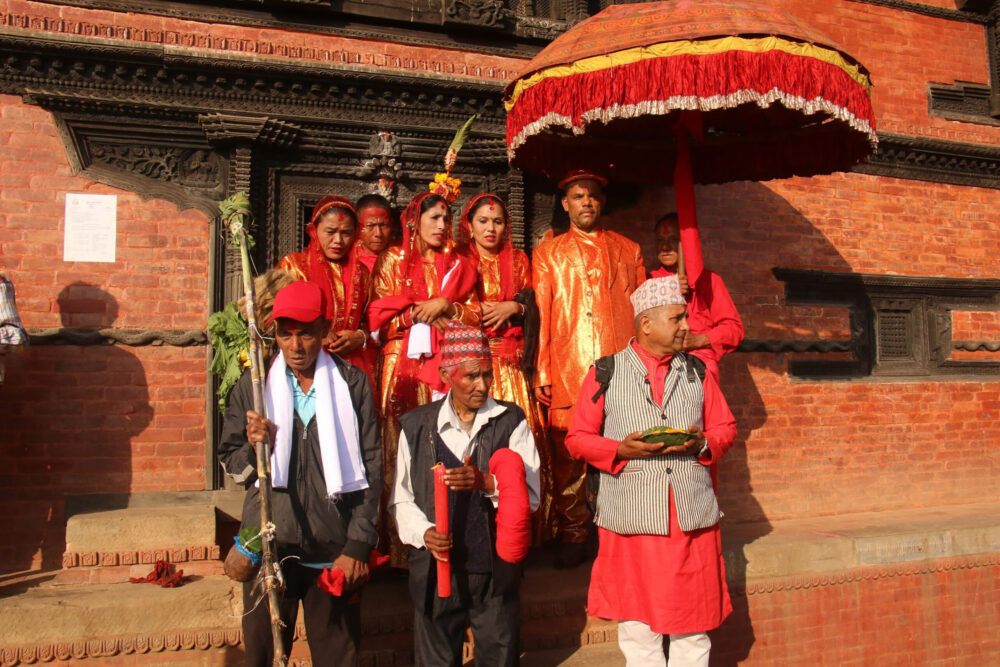
Kathmandu. KATHMANDU: The Phulpati festival is celebrated every year on the occasion of Ashwin Shukla Saptami under the Durga Paksha by bringing ‘Phulpati’, a symbol of auspicious time, to every house as per the classical rituals.
Sugarcane, turmeric, banana plants, paddy ears, bel leaves, pomegranate, Ashoka flowers, Ashoka flowers and Mantree are brought into the Dashain house or worship room as per the Vedic rituals.
Phulpati, also known as Navpatrika, is brought as a symbol of Goddess Navvati and worshipped with the worship of Shakti according to the classical method.
Brahmani is worshiped in banana, Raktadantika in pomegranate, Lakshmi in paddy, Durga in turmeric, Chamunda in Manvriksha, Kalika in sugarcane, Shiva in Belpatra, Shokrahita in Ashoka and goddess Kartiki on Jayanti.
After bringing Phulpati, all the nine goddesses are worshiped methodically. There is no need for an auspicious time to bring Phulpati.
There is a tradition of bringing Phulpati brought from Gorkha district at the Dashain Ghar of Hanumandhoka Durbar. The tradition is that the Fulpati is carried by six men belonging to Magar indigenous nationality from Gorkha Durbar in Gorkha district up to Jivanpur in Dhading.
Phulpati is carried from Jamal to Hanumandhoka with high-ranking civil servants, Gurjuka platoon, band music, panchebaja and cultural pageantry accompanied by a procession.
According to the Hanumandhoka Durbar Museum Development Committee, the King used to be present in the capacity of the head of the state in course of bringing Phulpati to the Dashain Ghar of Hanumandhoka Durbar until the end of monarchy.
This year’s Phulpati will be brought on Monday at four :30 pm. According to the Durbar Care Office, the Minister of Culture, Tourism and Civil Aviation has been invited to the program along with Kathmandu’s provincial assembly members and local level representatives.
Dashain, also known as Durga Puja, is the biggest festival of Nepalis that begins on the day of Ashwin Shukla Pratipada.

















प्रतिक्रिया दिनुहोस्