


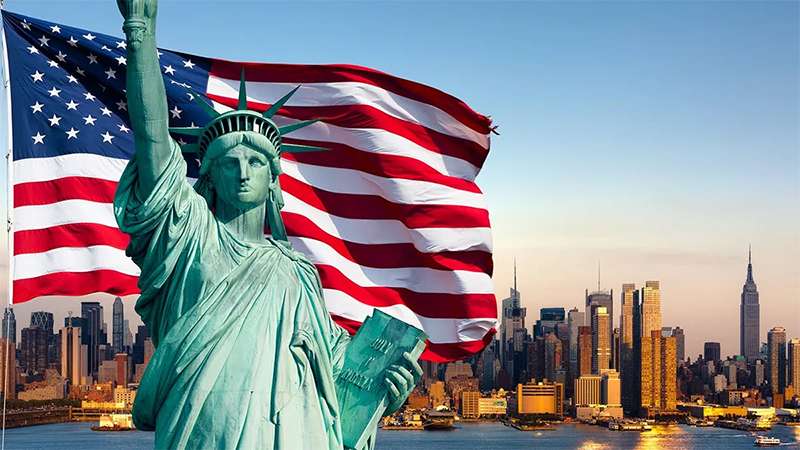
Kathmandu. Until US President Donald Trump returned to power, when the European Union (EU) talked about reducing its economic dependence on foreign powers, China was the main meaning. But with Trump’s return, Brussels’ attention is now turning to American technology.
Trump’s rhetoric, from pressuring trade to threatening to annex Greenland, has raised concerns that he could bring Europe to a digital standstill if he wanted to. Since Trump’s withdrawal from the Greenland issue, top EU officials have warned that the bloc is “vulnerable” to geopolitical shocks and stressed the need for strategic self-reliance in defence, energy and technology.
According to a 2023 EU report, the 27-nation bloc relies on foreign countries for more than 80 percent of digital products, services, infrastructure and intellectual property. In an effort to reduce this dependence, Europe appears to be gradually reducing its dependence on American technology.
The latest example of this was seen last week. France said it would soon instruct government employees to use homegrown options instead of tools such as Zoom or Microsoft Teams. The real warning for Brussels came last year. Washington imposed sanctions on judges of the International Criminal Court. As a result, they were deprived of American technology like Amazon and Google.
This incident underscores how tightly the US controls many of the tools that underpin the European way of life. EU Technology Commissioner Hanna Virkunen said: “Over the past year, we have felt very strongly that we do not depend on any one country or company on very important technologies. He also warned that such dependencies could be used as weapons.
Verkunen is set to unveil a massive package of “tech sovereignty” in March, which includes cloud, artificial intelligence (AI) and chips. The EU wants to build more autonomy in these areas. Sebastiano Toffalatti, Secretary-General of the European Digital SME Alliance, said digital technologies are no longer just a neutral tool. When basic infrastructure such as cloud, AI or platforms is controlled from outside Europe, regulations, data, and ultimately pressure shifts to outsiders, he said.
Among the member states, France and Germany are at the forefront of this campaign. Germany’s northern state of Schleswig-Holstein set an example of digital sovereignty last year by abandoning Microsoft and switching to open-source software. Dirk Schroeder, the state’s digitalization minister, said the move was initially motivated by economic reasons, but political tensions have added to the significance.
Within six months, the state moved more than 40,000 mailboxes from Microsoft Exchange and Outlook to Open-Exchange and Thunderbird. He said that despite some challenges, it has given a message that digital freedom is possible. At the same time, the European Parliament is reviewing its reliance on Microsoft and other devices.
Initiatives are also being taken at the EU level. French company Mistral and Germany’s SAP have agreed to collaborate on European AI-based cloud solutions. France, Germany, Italy and the Netherlands have launched a joint effort led by the Commission to build a common European digital infrastructure.
Today, many of the EU’s policies are seen from the point of view of sovereignty. The digital euro is in the works, which dozens of economists, including Thomas Piketty, have called a necessary safeguard of European sovereignty. In 2024, Vero was launched as an alternative to Mastercard, Visa and PayPal.
But Jacques Meyers of the Brussels-based think tank Serre warned that the goal of technology sovereignty should be clear. If the objective is to withstand political pressure, he argues, it would be better to focus on developing more “pressure-mounting capabilities” against the United States. Strengthening America’s dependence on Europe, such as chip-making machinery, corporate software and telecommunications equipment, could be more effective than reducing U.S. use of U.S. technology, he said.

















प्रतिक्रिया दिनुहोस्