


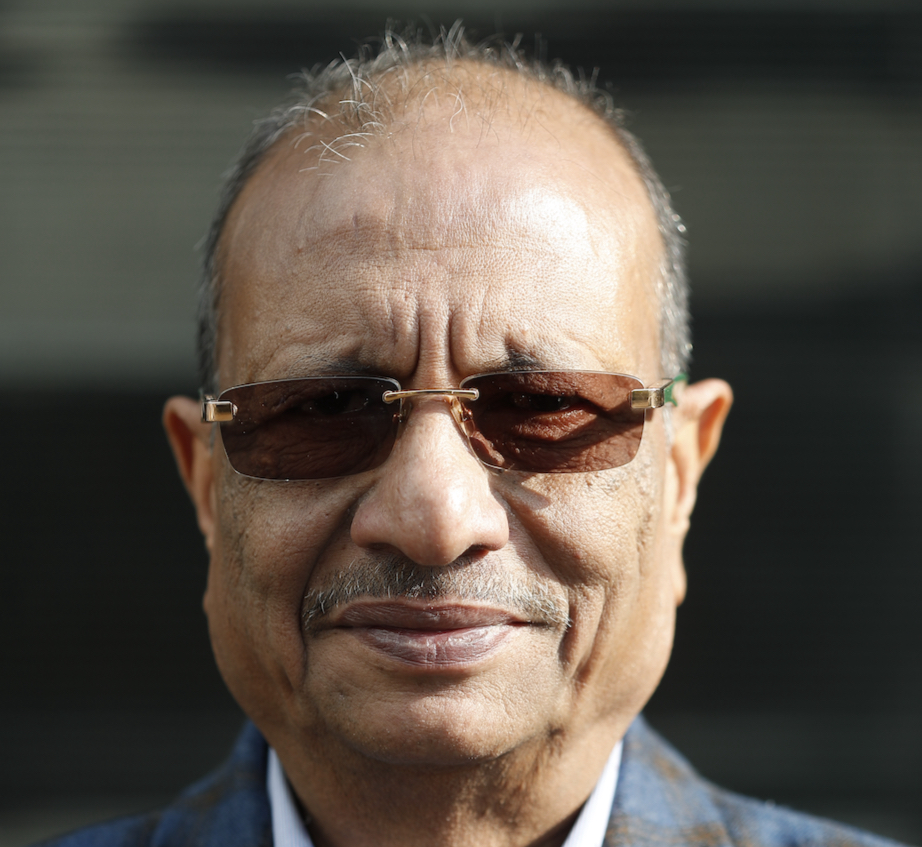
Kathmandu. Former President of Non-Resident Nepali Association (NRNA) Rajendra Kumar Sharma (RK Sharma) has said that the Genji movement that took place on September 7 and 24 should not be taken as just a political incident.
Sharma, who presented his 6-page long opinion on behalf of NRNA to the High-Level Inquiry Commission, has described this movement as a ‘social explosion’ of people’s anger that has been hidden for decades.
In the commission’s report, Sharma has made a ruthless review of the current administrative and political situation of Nepal, linking his 23 years of exile and experience in leading the NRNA. According to him, the roots of this movement are hidden in poverty, unemployment, growing economic inequality and poor state service delivery. “Around 80 lakh Nepalis living abroad are deeply concerned about the situation in the country,” Sharma said. ‘
Sharma said that Nepalis living abroad have become increasingly frustrated with Nepal’s system of governance as they have closely observed the citizen-centric governance system there. According to him, Nepalis living abroad are upset with the state as there is equal implementation of rules and easy service delivery in foreign countries, but Nepalis living abroad are compelled to wait for months or pay bribes even for minor tasks like passport renewal in Nepal.
He has raised the issue of foreign employment with special priority. “Nepali youths are forced to go abroad not because of greed but because of compulsion, and the state has seen them only as remittance machines,” he said. Sharma said that the lack of a clear blueprint for investing in productive sectors like hydropower, agriculture and tourism instead of limiting remittance only to consumption is the culmination of the state’s unproductive policy.
Similarly, Sharma has strongly objected to the rapid politicization of social institutions and service delivery. He pointed out that polarization and mistrust among Nepalis living abroad have increased after purely social organizations like NRNA became sister organizations of political parties. According to him, Nepalis living abroad are being treated as second-class citizens by asking whether they belong to their party or not while going for government services.
Sharma has also proposed some concrete and far-reaching reform plans before the commission. He also suggested giving voting rights to around 25 per cent of the Nepali population living abroad, ensuring at least 20 per cent reservation for those who have returned from foreign employment at the policy-making level and introducing programmes like ‘NRN Bond’ to connect remittances to productive sectors. He has also demanded the implementation of a one-door digital system to make government services hassle-free and to stop the misbehavior against workers at the airport immediately.
Stating that Nepal is now at a historic juncture, Sharma clarified that today’s problem is not the movement itself but the ‘situation’ where the movement is born. He warned that such crises will be even more severe in the future if timely policy reforms, equality in service delivery and employment-oriented development are not followed.















प्रतिक्रिया दिनुहोस्