

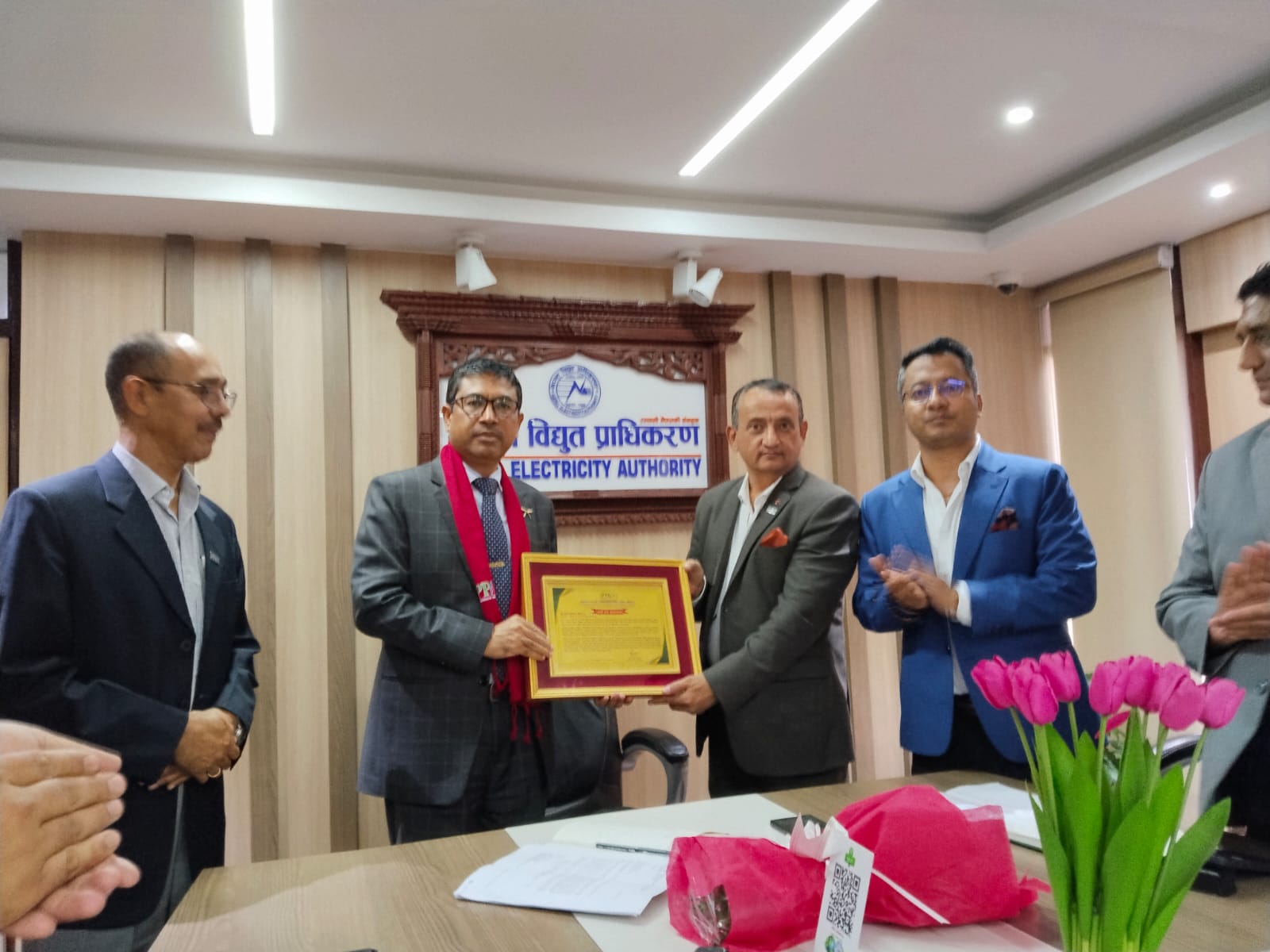
Kathmandu. The Independent Power Producers’ Association, Nepal (IPPAN) has demanded an amendment to the draft of the working procedure on grid connection point and voltage level change of the Nepal Electricity Authority (NEA) saying that it could unilaterally add risk and financial burden to the power producers.
IPPAN made the demand after a discussion led by IPPAN Chairman Mohan Kumar Dangi to congratulate the newly appointed Managing Director of Nepal Electricity Authority (NEA) Dirgha Kumar Shrestha and Chief of the Electricity Trade Department Kamal Acharya. During the meeting, they demanded amendment to the issue of the delay of NEA or other government agencies in the construction of the transmission infrastructure, connection point change, RCOD-COD, Grid Impact Study, transformer and transmission leakage so that the risk would be shared equitably between the producers and the grid operator.
IPPAN has demanded to remove the proposed provision that the project has made at least 30 percent physical progress for the change of connection point or voltage level. IPPAN argues that if the connection change is required due to the construction of the transmission plan or transmission infrastructure of the NEA, forcing the producer to construct 30 percent of the first 30 percent will increase the risk of unnecessary expenditure and project redesign.
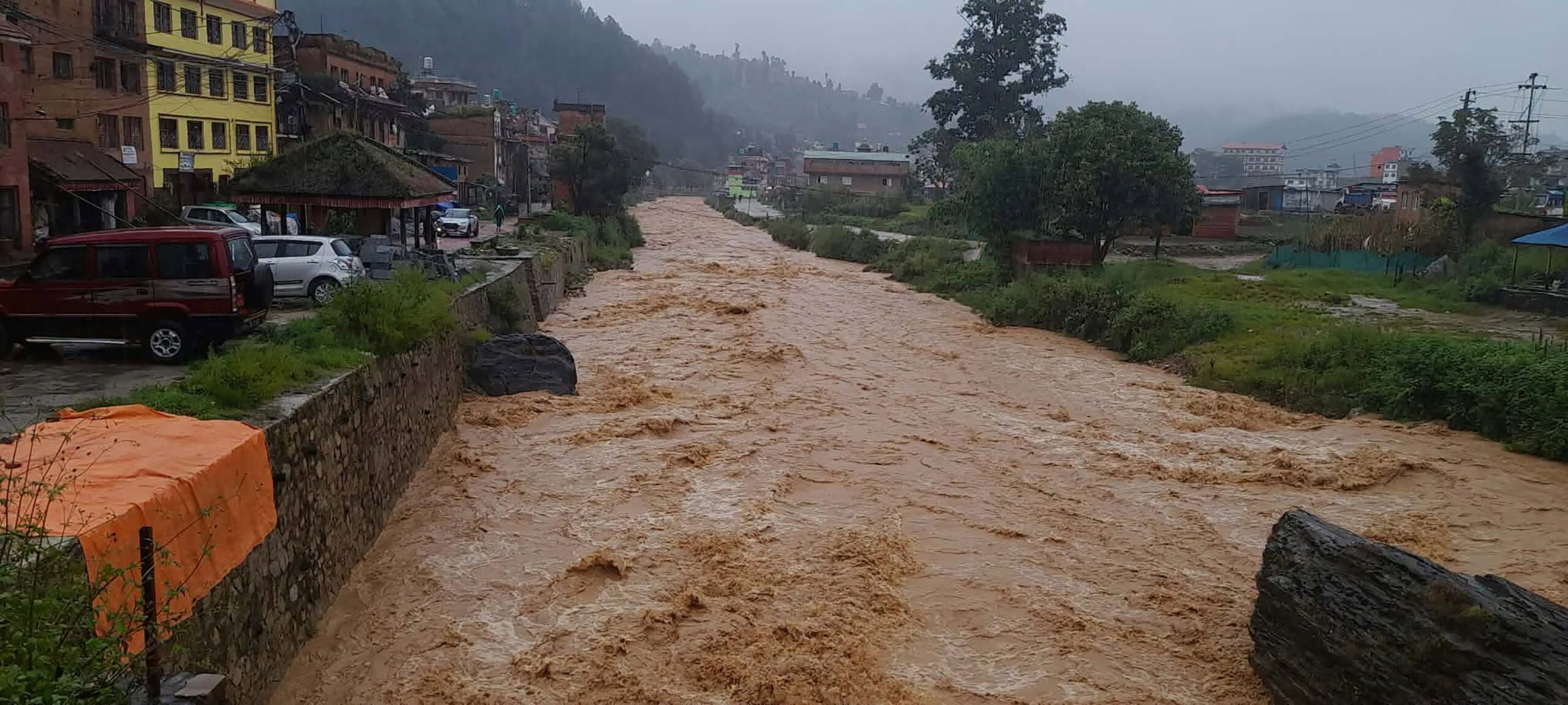
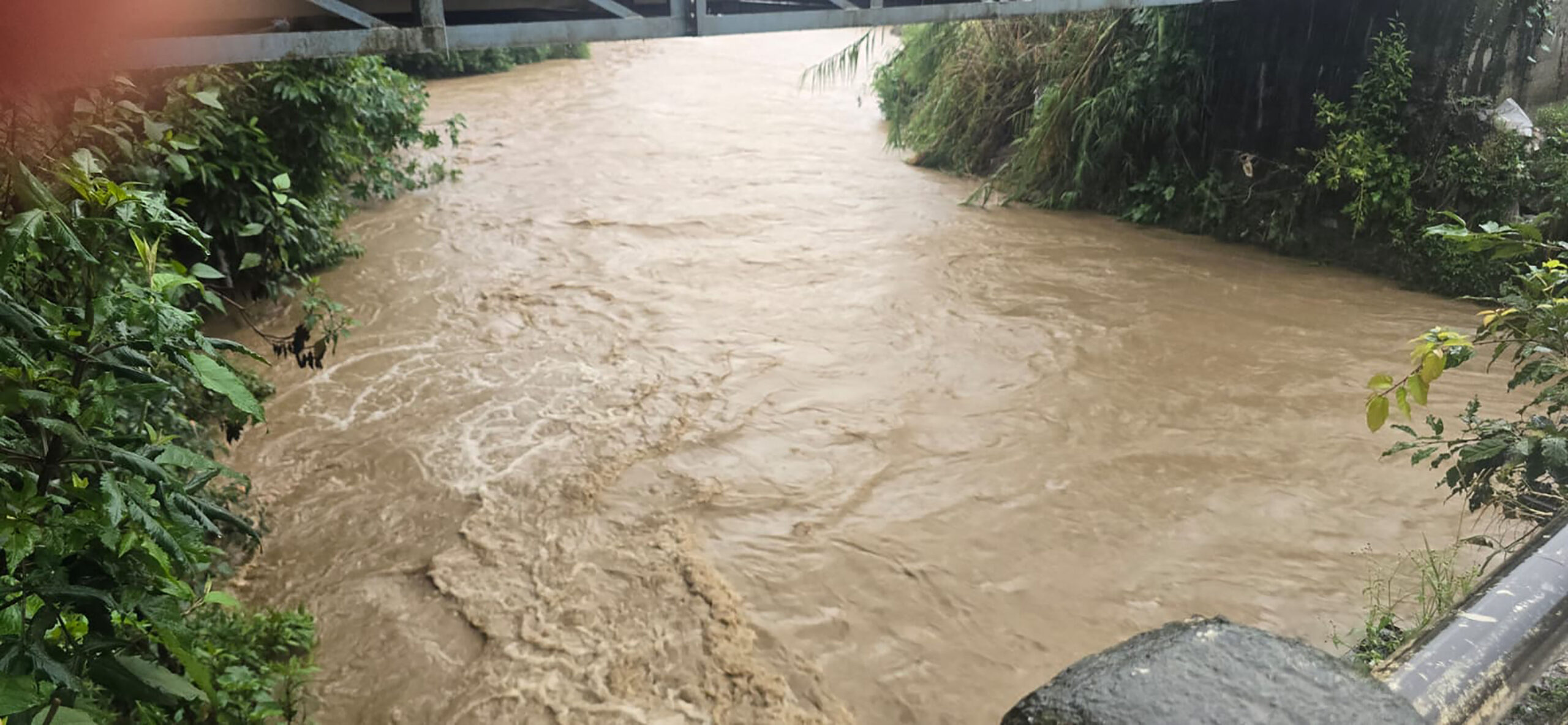
Chairman Dangi said that IPPAN is ready to collaborate with the Electricity Authority for policy facilitation in the development of the energy sector. He also demanded that the power purchase agreement (PPA) which has been stalled for years has been stalled for years even though the government’s target of power generation is big. He also said that the private sector projects are ready to cooperate to start production by managing an alternative transmission line and bringing it into operation immediately as the Bhotekoshi floods have damaged the transmission infrastructure.
IPPAN Senior Vice President Uttam Bhlon Lama stressed that the PPA should be reviewed in such a way that the NEA is not burdened and the private sector is also eligible for bank investment. He said that if the private sector is allowed to trade electricity, the risk of financial burden on the NEA will also be reduced. He also urged the NEA to extend the date of commercial power generation (RCOD) for the last time with conditions. Vice-Chairman Him Pathak said that the problems related to the Forest and Environment and Securities Board are common to the private sector and the NEA should move forward by collaborating to solve it.
Vice-Chairman and coordinator of Nepal Electricity Authority Coordination Committee, Uttar Kumar Shrestha, said that if the substation (connection point) of the projects constructed by the private sector is not easily managed, there will be problems in the transmission system. Shrestha said that many of the ‘reasonable’ issues of the private sector have not been touched by the draft of the ‘connection point’ prepared by the NEA.
Similarly, the provision of changing the connection point or voltage level only once should also be removed. Due to natural disaster, flood, landslide, earthquake or damage to the transmission structure, the connection arrangement of the same project may have to be changed more than once, so the provision should be made that it can be changed again if necessary technical reasons are proved.
Shrestha said that although the proposed work procedure has a provision to change the connection if the transmission structure under the responsibility of the NEA is not built on time, the delay of other government or transmission infrastructure construction bodies should also be included. “There should be a clear provision for alternative connection if the substation or transmission line under the responsibility of the National Transmission Grid Company Limited (RPGCL) is not constructed on time,” he said.
IPPAN has demanded that necessary adjustments should be made in the RCOD-COD if the project is not connected to the grid on time due to delay in the construction of transmission infrastructure which is responsible for the NEA or the grid operator. It has also suggested that such delay should be treated as contract relief or force maj and compensation or ‘deemed generation’ should be arranged.
GIS-GCA priority should not be lost
}
IPPAN has demanded that the old GIS÷GCA priority of the project should be retained if the connection point has to be changed due to the transmission plan or systemic requirements of the authority. It has said that if the priority is changed according to the new connection point, the project which is forced to change due to the decision of the authority will lose its ‘Q position’ unnecessarily.
‘flat’ 1% transformer loss should be removed
IPPAN has also demanded to reconsider the provision of deducting transformer loss of 1 percent of the metered energy on each voltage conversion. It argues that the actual technical leakage of modern transformers can be determined on the basis of the manufacturer’s guarantee, test certificate and prevailing technical standards, so it is not appropriate to deduct the same 1 percent on all transformers. IPPAN has demanded that the actual loss should be determined on the basis of manufacturer guarantee or test certificate to ensure high efficiency of the transformer and related equipment. It has also suggested that the system loss allocation basis should be adopted without imposing the burden of all transmission leakage on a single project in the common transmission system.
Demand not to take capitalization cost from the projects in operation
}
IPPAN has demanded a clear provision that the capitalization cost of the existing transformers, switchgear and other grid assets of the NEA should not be taken from the manufacturer if the voltage level of the existing projects has to be changed due to grid planning or systemic requirements. It has suggested that the cost of new connections or additional infrastructure to be constructed due to the developer’s own needs can be determined separately.
Fixed distance limit should be removed
IPPAN has demanded that the stringent criteria such as being within a certain distance from the existing connection point should be removed while changing the connection to a new substation or transmission line. It has said that the determination of connection points should be based on grid impact study, power flow study, N-1 analysis and long-term needs of the system.
Similarly, for small projects with less than 10-15 MW capacity, alternative connectivity through 33 kV or suitable low voltage should be prioritized.
Request to remove the obligation of Grid Impact Study
IPPAN has also put forward the issue of amending the Nepal Electricity Grid Code, 2080. Its main demand is that the Grid Impact Study (CH-NX) should not be made mandatory again if the delivery point is not changed. It has suggested that GIS should not be required again unless the modification of the existing connection facility is of a normal nature and does not significantly affect the performance of the national grid.
Observing that re-GIS in every modification would add unnecessary time and cost to project development, IPPAN has proposed that such study should be made mandatory only when it has a real impact on grid performance.
Add to the equitable distribution of risk{
Overall, IPPAN said the proposed methodology could create a situation where risks such as transmission planning, delays in infrastructure construction, additional infrastructure costs, transformer loss and transmission loss could be unevenly passed on to power producers. It argues that since hydropower projects are based on long-term financial investment, PPAs, loan agreements and certain COD-RCOD, the risks arising out of the grid operator’s plan or infrastructure construction should not be treated as a developer’s risk.
IPPAN has proposed 19 major suggestions and amendments to the NEA, including removing the mandatory condition of 30 percent construction progress, removing the one-time limit for connection change, making transmission delay of NEA and government agencies the basis for connection change, adjusting RCOD÷COD, providing compensation and contractual relief, maintaining the old GIS-GCA priority and determining the leakage only on the basis of actual technical loss.
During the meeting with IPPAN officials, Executive Director Shrestha said that the suggestions received from the private sector on the working procedure related to grid connection will be studied again. He promised to call the representatives of IPPAN and discuss them at the same table if necessary. He said that some process has already been started on the basis of classification on the issue of adding RCOD and the remaining issues will be discussed again and a decision will be taken after discussing the remaining issues.
He said that cooperation between Nepal Electricity Authority, private sector and government was necessary for the development of the power sector. Stating that the government alone could not develop the energy sector, he stressed that all the stakeholders should move ahead with the same objective and common vision. He said that the proposal to open the power purchase agreement (PPA) of projects up to 10 MW has reached the board of directors of the NEA. He said that the Board of Directors has formed a committee to study which sector, which transmission corridor or which project should be prioritized and the process will be forwarded on the basis of the study report of the committee.
He said that the process of grid connection agreement is also moving forward. Stating that most of the process has already moved forward except for a few issues, he said that the authority should also be made sustainable on the issue of PPA rate review. He said that PPA can be reviewed on a win-win basis in the interest of both the private sector and the authority. He said that he is ready to move forward after discussing this matter with all the parties.
Stating that the NRA has already started works for the reconstruction of the transmission structures damaged by floods in the Matatirtha area, he said that the survey of the transmission line and tower sighting to connect Matatirtha to Chilime hub has started.












प्रतिक्रिया दिनुहोस्