

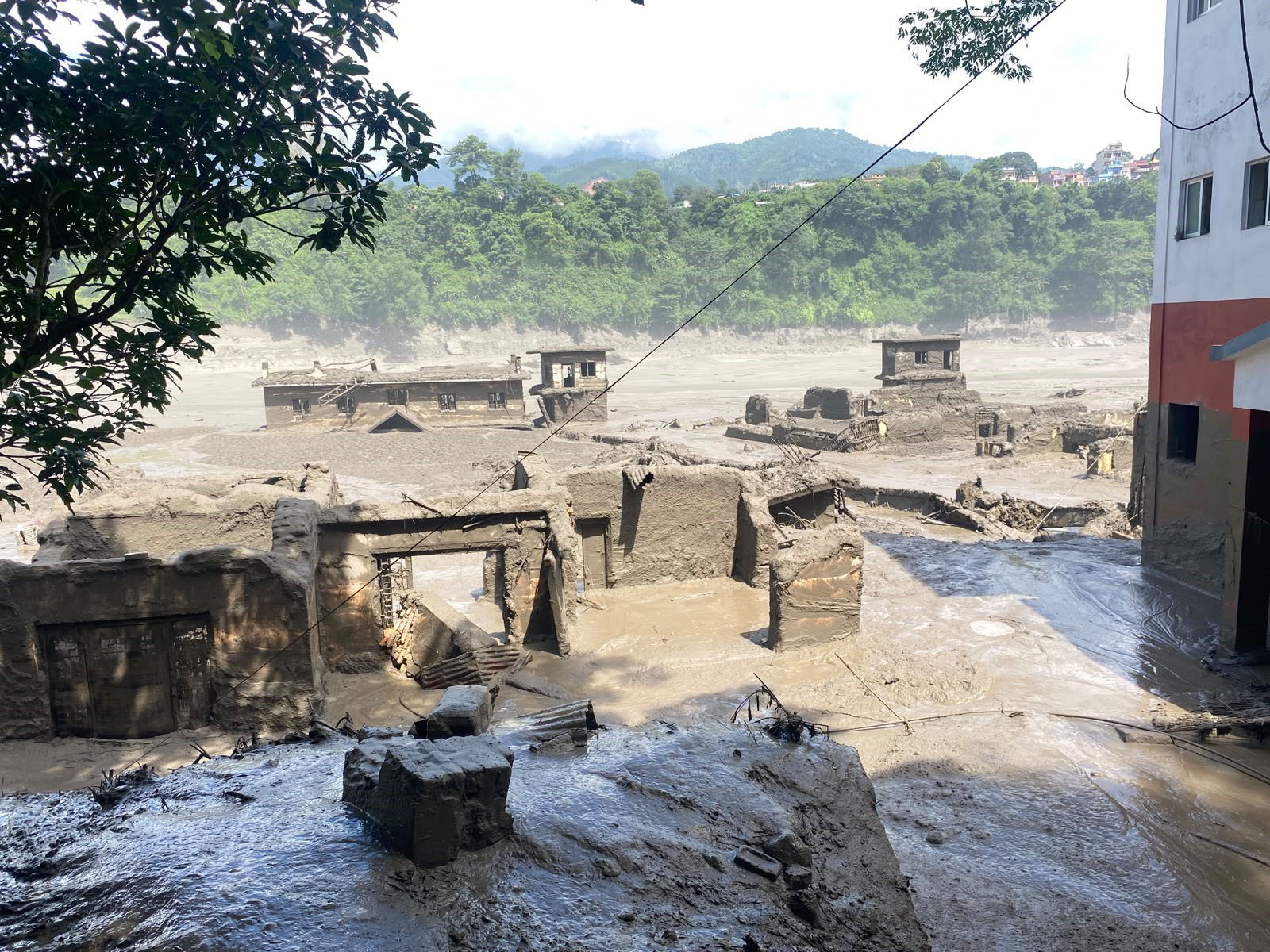
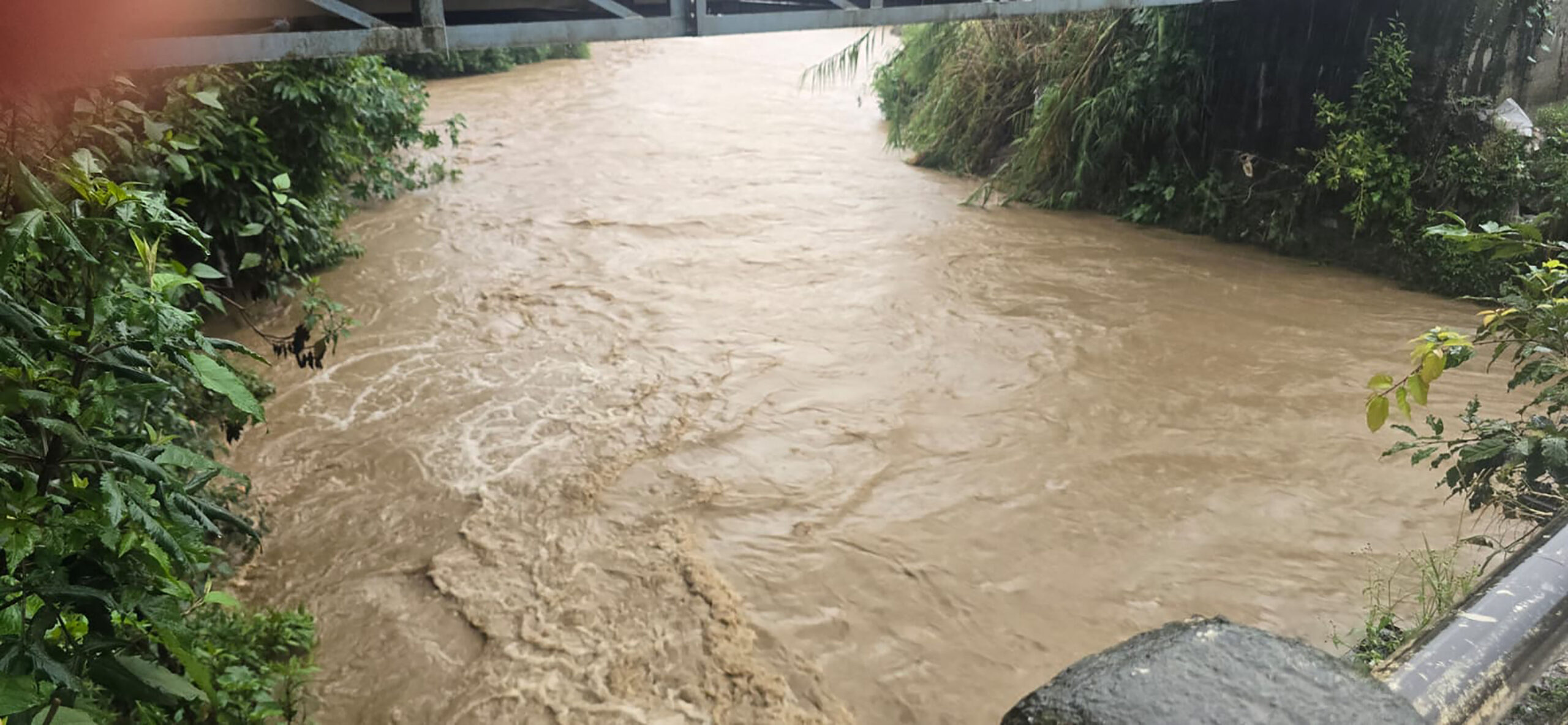
Kathmandu. It has been a month since the sudden flood in the Bhotekoshi River in Rasuwa.
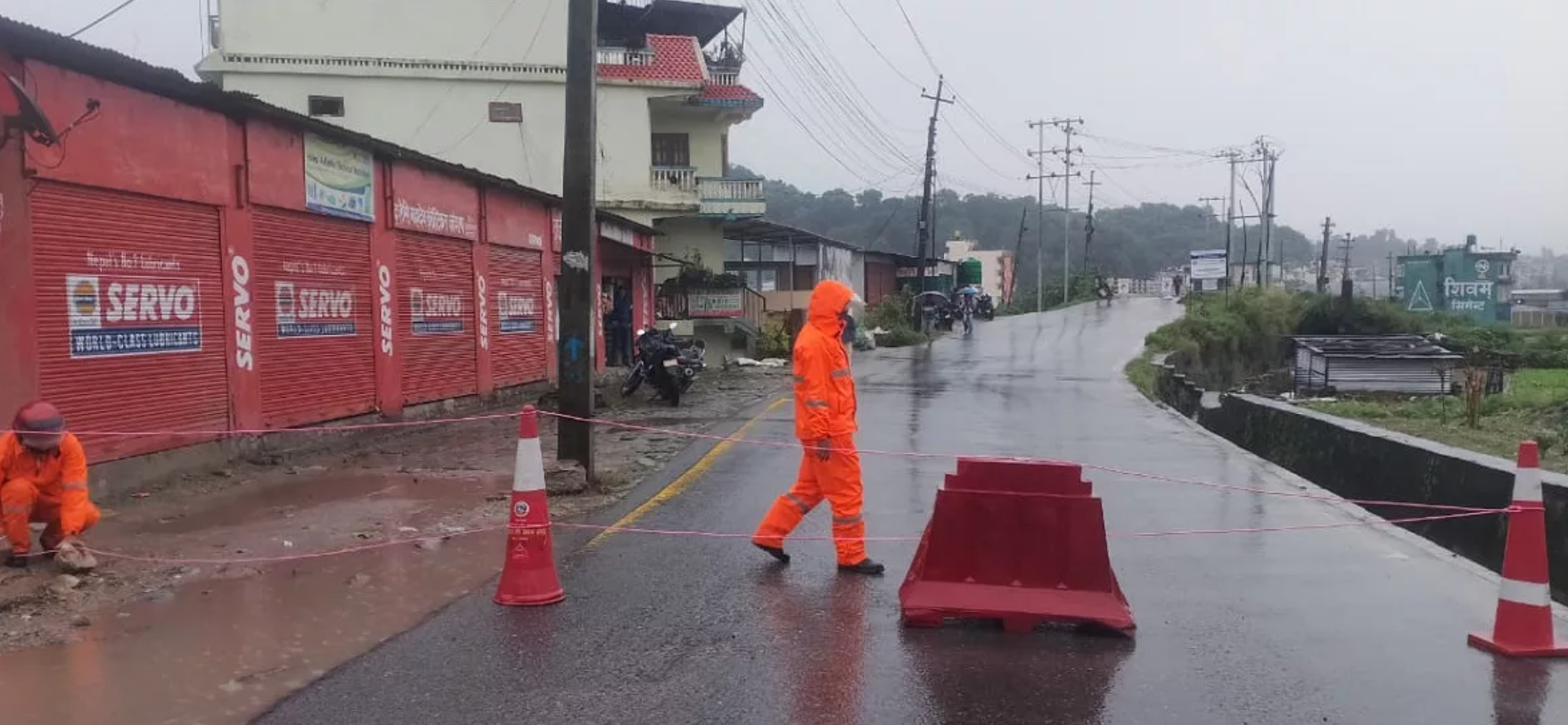
The catastrophe that occurred on the morning of August 24 has caused unimaginable human and physical damages in various places of Rasuwa, Nuwakot and Dhading districts.
According to the latest data of the National Disaster Risk Reduction and Management Authority, 1,453 people have died untimely due to floods so far and 5,550 people are still missing. Similarly, 13,795 people have been rescued. The rescued are also in shelters. A total of 20,477 security personnel from all three security agencies are working round the clock to provide search, rescue and relief services to the flood-affected people.
The damage and damage caused by the floods is estimated to be more than Rs 408.28 billion. According to the Rapid Damage and Needs Assessment (RDNA) report, Rs 723.31 billion will be required for reconstruction and rehabilitation. The devastating floods have damaged 7,570 private houses. Apart from this, 48 public buildings, 18 schools, 7 health institutions and 30 cultural heritage sites have been damaged.
13 hydropower projects with a capacity of 759 MW and five solar plants of 24 MW have been affected, 69 km of road section has been damaged, 37 motorable bridges have been damaged and 33 have been washed away. Similarly, 68 suspension bridges have been damaged. About 7,570 houses have been affected, affecting 8,300 households and about 40,000 people. The floods have affected 1,806 hectares of agricultural crops as well as animal husbandry, poultry and fisheries. Similarly, 17 bank branches and 4,800 business establishments have been affected. Search, rescue and relief distribution is going on for the flood-affected people, while works like rebuilding the damaged suspension bridges and connecting them to the road network are going on at a rapid pace.
Immediately after the devastating floods, Jagan Chapagain, General Secretary and Chief Executive Officer of IFRC, International Federation of Red Cross and Red Crescent Societies (IFRC), called upon the volunteers of Nepal Red Cross and IFRC team to get involved in the immediate search, rescue and relief of the flood-affected people by ensuring the approval to spend 12 million US dollars through the Emergency Assistance Fund (DRIF) by ensuring the necessary coordination and initiative.
In addition, the Nepal Red Cross Society activated its Emergency Operation Center and mobilized the concerned district branches and volunteers to search and rescue the flood victims. A team led by the Society’s President Dr. Bishal Kumar Bhandari immediately visited the affected areas and started the flood response operation.
Volunteers are assisting in search and rescue as well as assisting in identifying and coordinating the immediate needs of the affected communities. IFRC’s ‘DRIF’ is making it possible to start immediate rescue and relief for the disaster victims. It has made it possible to send and distribute items and services such as drinking water, tents, tarpaulins, blankets, bed mats, first aid, stretchers, death body-bags, mental health and psychosocial counseling support, emergency health services, hygiene kits, among others.
So far, 1,218 sets, 563 tarpaulins, 701 mattresses and 1,324 blankets have been distributed under the distribution of housing and non-food items, while food items have been distributed to about 2,000 affected families. During the month, 2,200 flood-affected households have been provided with drinking water, sanitation and hygiene services, 18 water tanks have been set up and water has been distributed through tankers to the needy places.
A total of 1,710 flood survivors have benefited from mental health and psychosocial support and primary psychosocial support, 11,239 people have been provided with necessary health check-up, medicines and other essential services from the Red Cross Emergency Health Clinic Service, 2,291 search cases have been provided through family reunification and contact reconstruction, and 2,000 corpse management bags have been provided to various security agencies of the Government of Nepal, the statement reads.
According to the statement, cash assistance has been provided to 198 households of Dhading and 262 households of Nuwakot to meet the immediate needs of the flood-affected communities under the multi-purpose cash and voucher assistance service, necessary information, facilitation and referral services were provided by collecting about 350 complaints, inquiries, requests and suggestions received from the community through various means under the community complaints, suggestions and needs collection services, 587 Maryada kits under protection, gender and inclusion and 1,087 hygiene kits were distributed and 1,189 children were provided services through child-friendly safe places. Maryada kits 587 and hygiene kits 1,087 were distributed and 1,189 children were provided services through child-friendly safe places.
The information and help desk has been set up at 17 ÷different places to provide information, necessary assistance and facilitation to the affected communities, and under the information, education and communication material service, the information materials have been developed and disseminated through social media and radio for the flood-affected communities to be safe from floods and landslides, early warning and safety messages related to heavy rains, water purification, health and sanitation, health and sanitation, family reunification and reconstruction, access to relief and services, multi-purpose cash assistance and the process of registering complaints of the community.
The Nepal Red-Cross Society (NRCS) has prioritized continuing relief and humanitarian assistance based on the situation of the displaced and vulnerable families, disaster-induced disaster and local needs, managing the necessary materials in time and further strengthening the response as per the needs and priorities of the affected communities.
In addition, the Government of Nepal plans to implement need-based programs in the areas of housing, health, livelihood, drinking water and sanitation to support the rehabilitation and rehabilitation of the affected families.











प्रतिक्रिया दिनुहोस्