



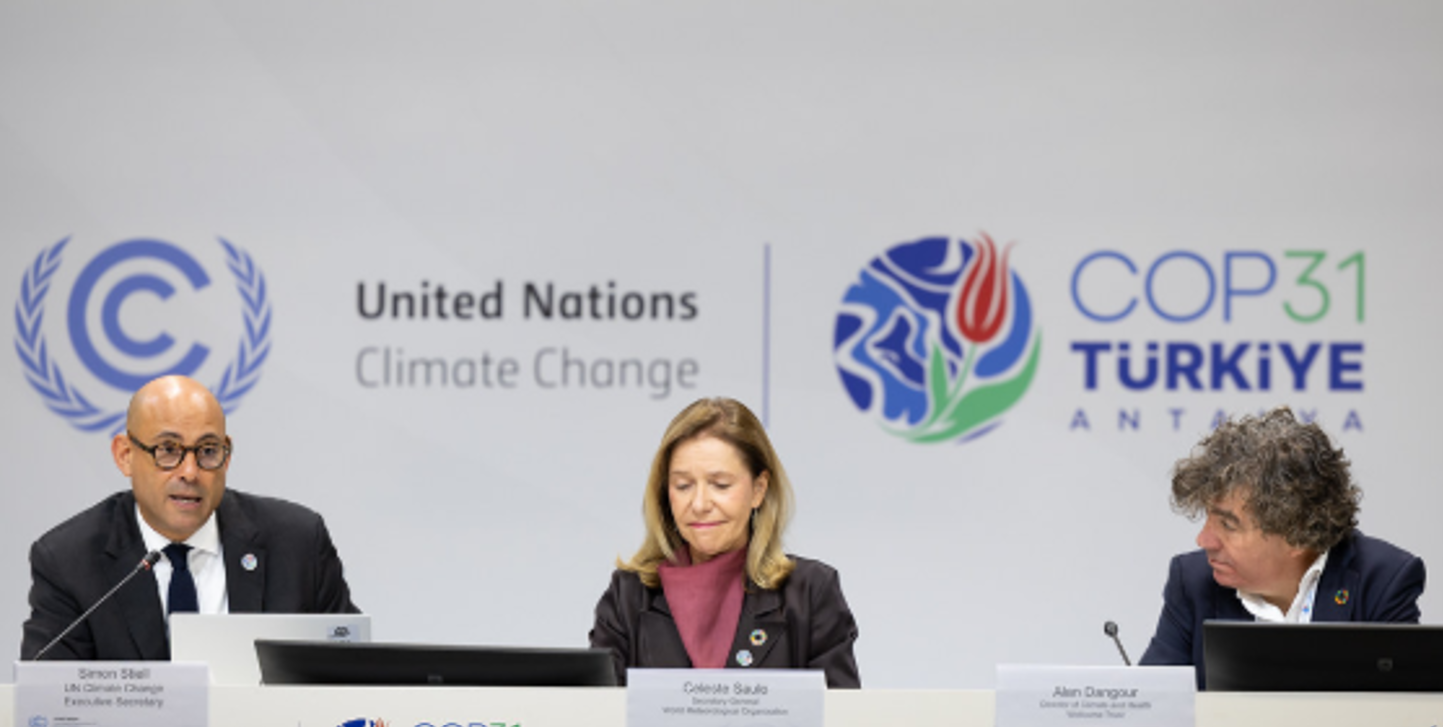
Kathmandu. At this year’s United Nations Climate Conference (COP31), there is a difference of opinion on the goal of limiting global warming to 1.5 degrees Celsius.
There has been growing confusion among countries about the limit of 1.5 degrees, which has been a major goal of controlling climate change for a decade.
The United Nations declared last September that global temperatures would rise by 1.5 degrees Celsius above pre-industrial levels were imminent and unavoidable. So far, the Earth’s average temperature has risen by about 1.4 degrees Celsius.
At the ongoing COP-31 conference in Antalya, Turkey, some countries have taken a stand that the 1.5 degree target should be maintained. Small island countries, especially those at direct risk of climate change, have linked it to their existence.
President Surangel Whipps Jr. of Palau in the Pacific Ocean said the 1.5-degree goal was “linked to food security, economy and sovereignty”.
According to Australia’s priorities report, some countries have demanded that 1.5 degrees should still be accepted as a correct goal in the final agreement.
However, some countries are said to be trying to remove this goal from the agreement. It includes the Arab grouping, which includes Saudi Arabia and India, and a group of like-minded developing countries, according to sources close to the talks.
Jasper Inventor, a representative of Greenpeace, said some developing countries are worried that without economic support, there will be more pressure to reduce emissions.
Meanwhile, outgoing UN Secretary-General Antonio Guterres has said that even if temperatures rise above 1.5 degrees Celsius, this situation should be as short as possible.
According to scientists, crossing the 1.5 degree threshold will increase the risk of severe flooding, heat waves and permanent destruction of coral reefs.
According to Pierre Friedlingstein, a climate scientist at the University of Exeter, dropping temperatures back to 1.5 degrees Celsius will require drastically reducing emissions, plantation, wetland protection and the extensive use of new technologies. He said this goal is not impossible, but extremely challenging.















प्रतिक्रिया दिनुहोस्