



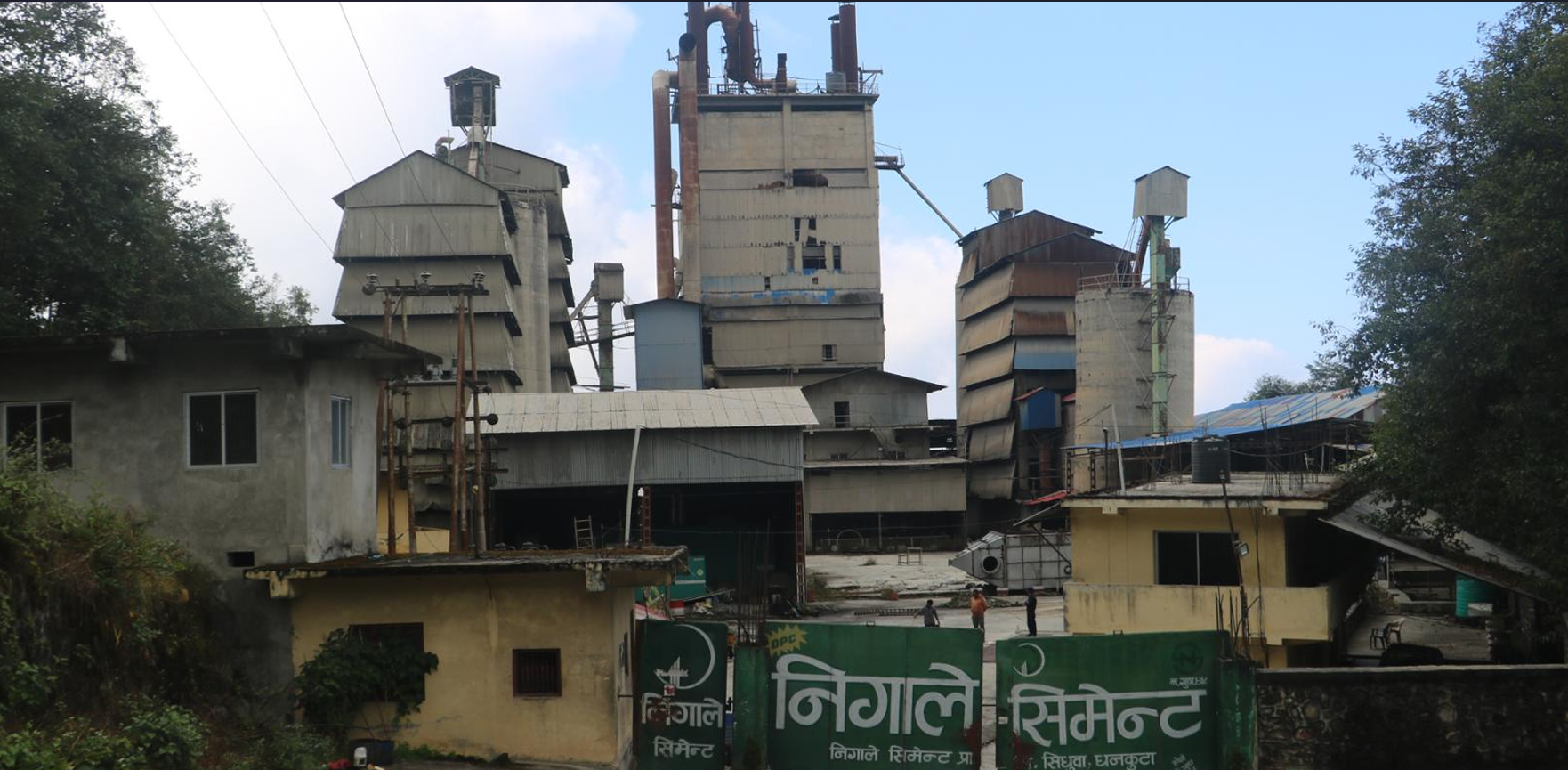
Dhankuta. Due to economic crisis, shortages of raw materials, and rising production costs, Dhankuta’s only major cement industry, ‘Nigalale Cement,’ has not been able to resume operations even after a long time. Even the government has shown no interest in this.
With the industry shutdown, more than 150 employees and laborers have become unemployed, and the supply of cement in the hilly districts of Koshi Province has also been affected.
The industry operating in Chhathar, Jorpati Rural Municipality–6, Sidhuwan, had a daily capacity to produce six thousand bags of cement. Due to economic recession, reduced demand for cement in the market, and rising raw material prices, production capacity was limited to three thousand bags daily.
After continuous losses, the industry had to be shut down, according to director Dinesh Paudel. He said there is no immediate readiness to start the industry and there is no possibility of reopening it. Paudel said that because the industry is small, it cannot compete with the large cement industry, forcing it to shut down.
Since the establishment of
industry, the operator stated that due to its geographical location and cold weather, it has not been able to operate according to production capacity. Although it had a daily production capacity of 300 tons, actual production was limited to 150 tons per day.
The industry has reported that due to a sharp rise in the prices of raw materials such as coal, bauxite, laterite, and gypsum to be imported from India, production costs have also risen. On one hand, rising production costs and on the other, a decline in cement sales have led to continuous losses in the industry, said Paudel.
While the industry was operating, it supplied about 80 percent of the cement demand from Dhankuta, Tehrathum, Bhojpur, and Sankhuwasabha. After the industry closed, the markets of these districts had to supply cement from other districts.
Local economy affected when industries shut down
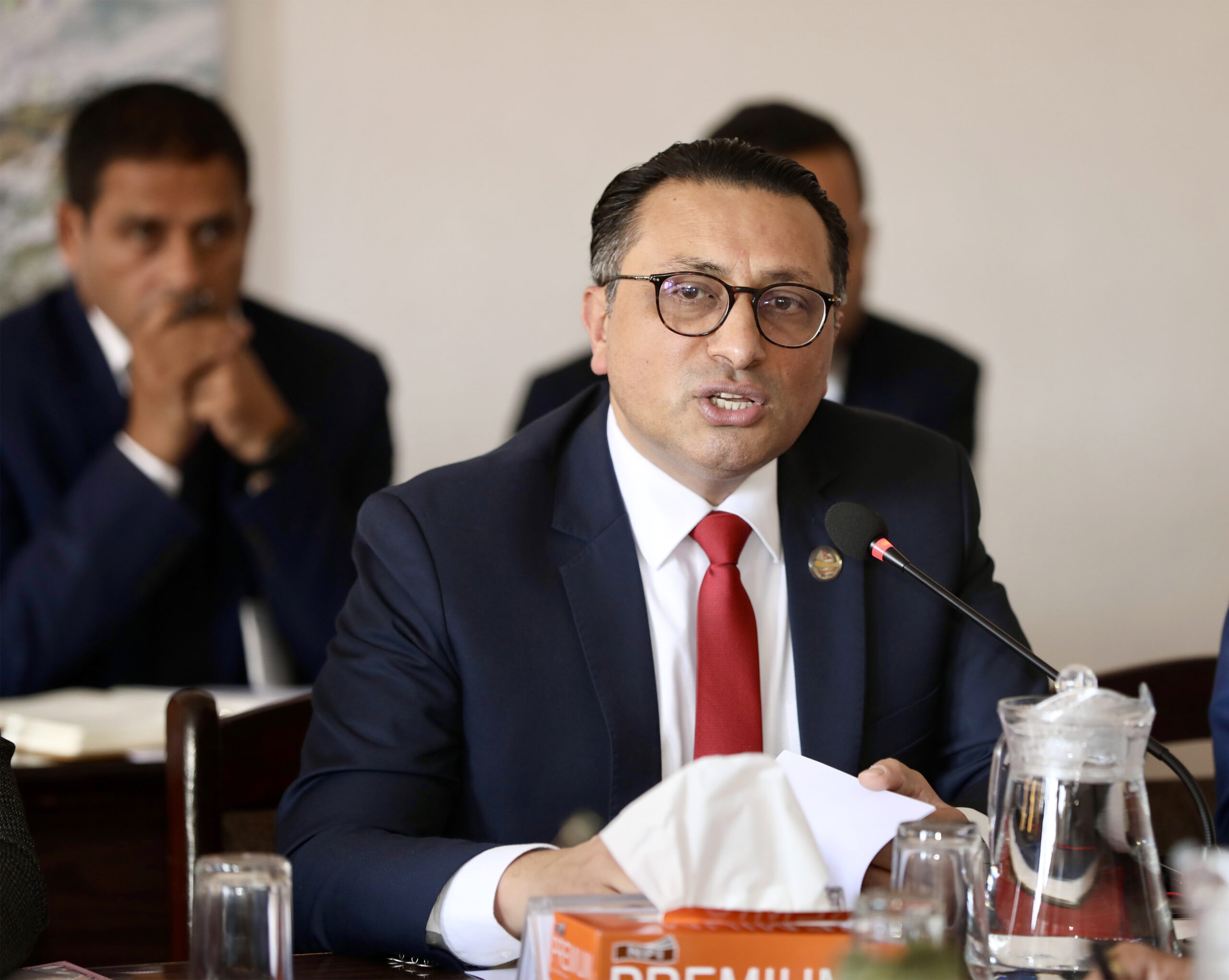
The closure of Nigalle Cement has become not only a problem for industry operators but also a concern linked to the overall local economy. After the industry shutdown, not only workers and technical staff who work directly, but also transport operators, local traders, and other businesses dependent on the industry have been affected. Shriram Rayamajhi, president of the Dhankuta Industry and Commerce Association, said that the economic crisis seen across the country after the coronavirus pandemic has affected small and medium industries in Dhankuta.
The association has identified problems and is preparing to take necessary steps to restart the industry, Rai informed. He said that if problems can be resolved locally or issues related to raw material supply, initiatives can be taken to resolve them. However, if the problem is related to internal causes of the industry operator, the association cannot directly resolve it, he said. Although governments at all three levels should coordinate and take initiatives to operate the industry, Rai said that so far no concrete initiative has been made from the government side.
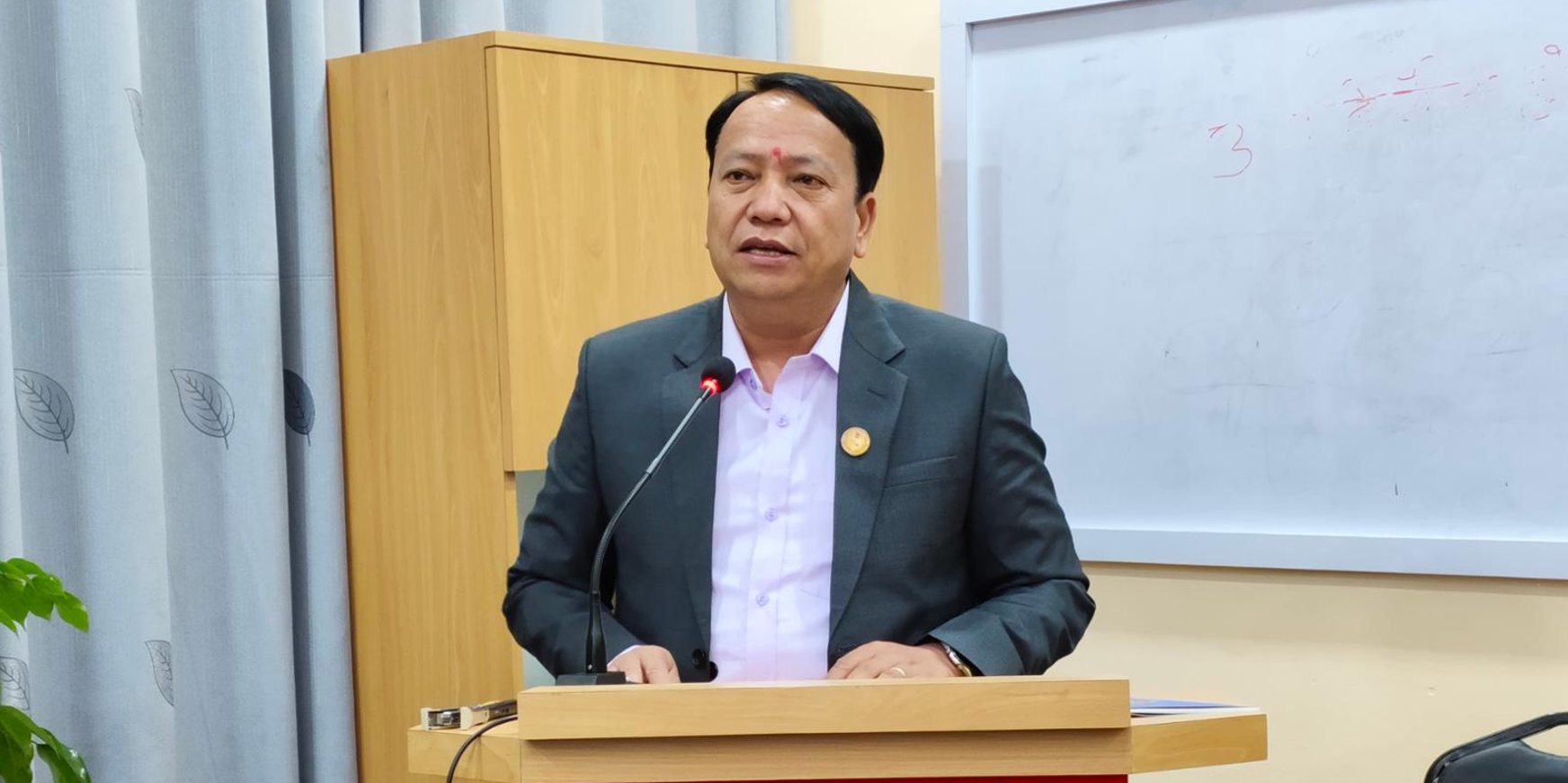
{{TAG_OPEN_div_38}The closure of the industry was due to internal reasons by the operator, said Chhatra Kumar Subba, chairman of Chhathar Jorpati Rural Municipality. He said that since the closure was due to internal reasons, no initiative could be taken, and he was not aware of any other reasons for local or other reasons. He stated that the closure of the industry has greatly affected local employment and economic activities. Laborers, technical staff, transport operators, and local shops and businesses connected to the industry have also been affected.












प्रतिक्रिया दिनुहोस्