



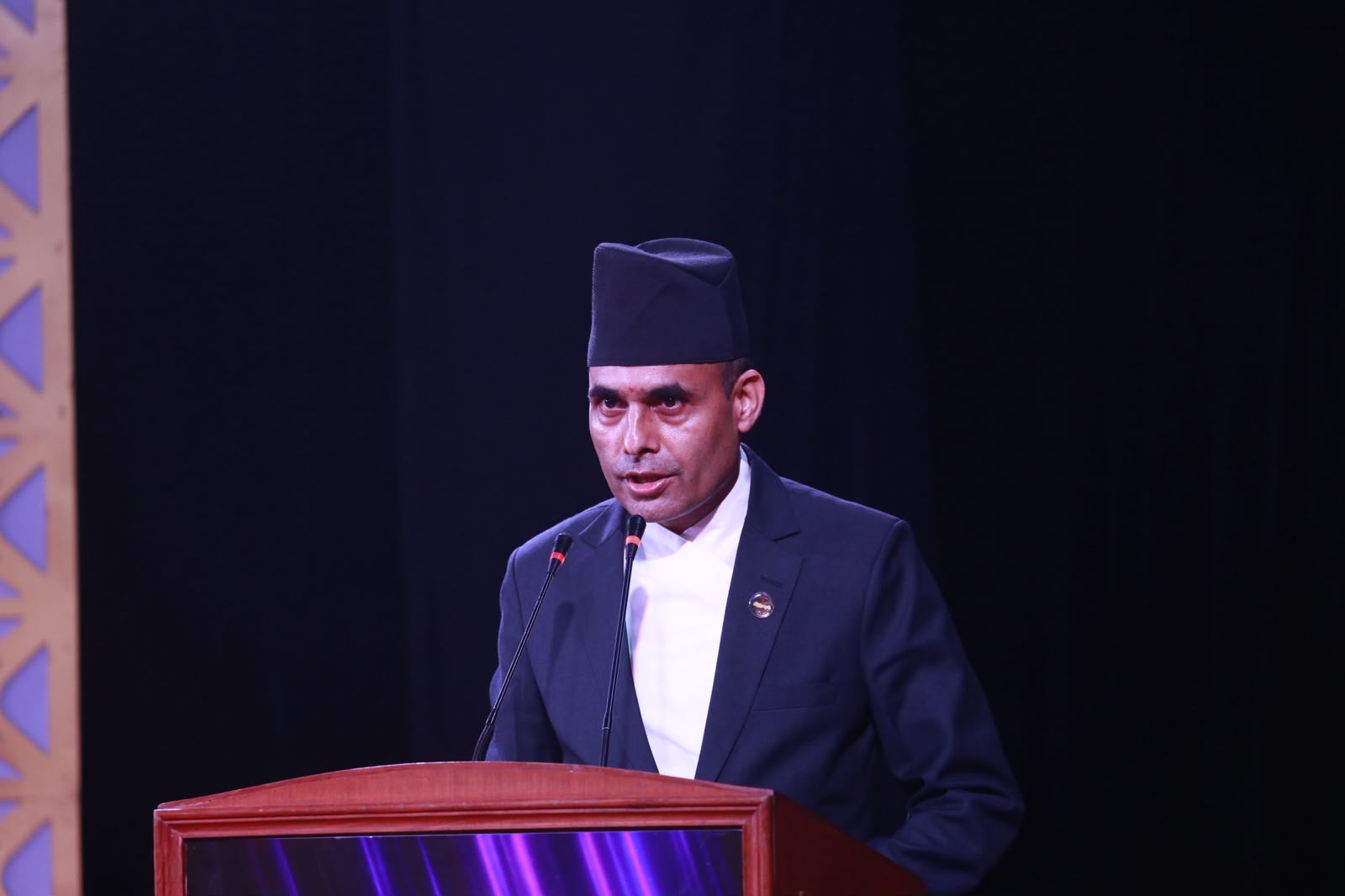
Kathmandu. Information and Communications Minister Dr. Vikram Timilsina has instructed service providers and regulatory bodies not to compromise on the quality of telecommunications services.
At an interaction on ‘Current State of Telecommunications Services and Quality of Service’ organized by the Nepal Telecommunications Authority here today, he stated that since telecommunications services are linked to the basic needs of citizens, no party can shirk the responsibility of providing quality service.
Minister Timilsina noted that the long-term focus of the telecommunications sector on service expansion and accessibility has overshadowed the quality aspect. He stated that the inability to establish regular telephone contact in the capital Kathmandu and the inability of consumers to achieve the promised internet speed is a serious issue.
Noting that the government is prioritizing digital transformation and advancing a campaign to connect citizens to digital media, he stated that quality internet and telecommunications services are essential for this purpose. He clarified that quality service is not a luxury but a minimum need for citizens.
Minister Timilsina emphasized that service providers should not prioritize only reducing costs and increasing profits, emphasizing that services must be provided to consumers in accordance with the commitments made in licenses and agreements. He stated that businesses should earn profits only by providing quality services.
He emphasized the need to develop a culture of accountability among both service providers and regulatory bodies, emphasizing that those who make mistakes must take responsibility and be accountable for their actions. He urged the authority to exercise legal powers and implement effective regulation, stating that improvements cannot be made solely through requests and correspondence.
He stated that taking necessary action against service providers who violate the law is not only the authority but also the responsibility of the regulatory body. He stated that it must be ensured that service providers face penalties if they act against the law.
Minister Timilsina emphasized that the commitments and conditions made when obtaining licenses must be manipulated, stating that the tendency to manipulate the market by challenging the law and regulatory directives is unacceptable.
He expressed dissatisfaction with the tendency in the telecommunications sector to not pay billions of rupees in dues owed to the government, expanding services and business even after license periods have expired, and failing to fulfill legal obligations. Emphasizing the need to seek timely solutions if there is legal or policy ambiguity, he said it is not appropriate to make various excuses later without fulfilling their obligations.
Clarifying that the government is not in favor or against any one company, he noted that improving the overall telecommunications sector, a clean business environment, and the interests of consumers are the government’s priorities. He believed that service providers should first fulfill their legal and commercial obligations, and then regulatory bodies should take effective action against cases of weakness and legal violations.
Minister Timilsina emphasized the need for regular dialogue, cooperation, and coordination between service providers and regulatory bodies, emphasizing that the authority must operate independently within its legal authority. He said that rather than directing whom the ministry should take action on, regulators should make decisions according to their authority and responsibilities.
Noting that the telecommunications sector has come to be seen by the general public as a hotbed of corruption and irregularities, he said all parties must be responsible for improving the sector’s image. He also stated that spreading misinformation about rising internet prices, creating rumors in the market, and misleading consumers will not be tolerated.
Minister Timilsina clarified that the government is ready to implement necessary policy and legal reforms and provide positive support, clarifying that government support does not mean protecting activities that are against the law. He stated that all parties must work responsibly for the overall improvement of the sector and the country’s interests.
At the event, Arjun Ghimire, Chairman of the Nepal Telecommunications Authority, stated that improving the quality of telecommunications services is a shared responsibility of service providers, regulatory bodies, and the government. He noted that effective coordination and cooperation among all three parties are necessary to resolve the issue.
Despite instructions and decisions, the expected improvement in service conditions has not been achieved, and Chairman Ghimire expressed the view that a results-oriented action plan is now necessary. He stated that a report should be prepared clearly identifying problems, resolving measures, and timelines for improvement.
Although the authority is said to issue directives and service providers implement them, there is no justification for service conditions not to improve, and he said that citizens should directly benefit from the decision.
Chairman Ghimire urged the service providers to clearly present the problems they encounter in expanding services and improving quality, stating that the authority is ready for necessary coordination, support, and facilitation to make telecommunications services efficient, high-quality, and reliable.















प्रतिक्रिया दिनुहोस्