

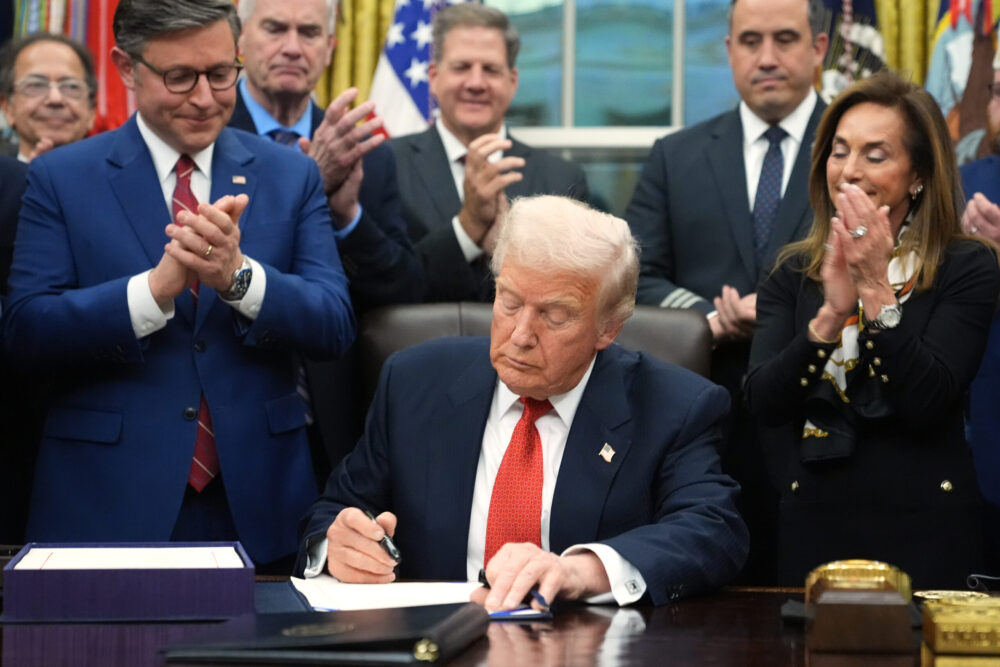
Kathmandu. WASHINGTON (AP) — President Donald Trump restructured his trade policy on Tuesday to impose new tariffs on imported goods after the Supreme Court struck down a landmark global tariff.
Initially set at 10 percent, the tax was described by the White House as “a measure to address the severe balance of payments deficit in the United States”.
President Trump announced plans to raise the rate to 15 percent. However, products under sector-specific research and those covered by the U.S.-Mexico-Canada trade agreement are expected to be exempt. The new tariffs will only last 150 days until Congress extends the deadline and is seen as a transitional step toward a long-term trade policy.
On Friday, the Supreme Court struck down old global tariffs, ruling that unilateral taxation of countries was beyond the president’s authority to impose unilateral taxes in a 1977 law. However, sector-specific taxes on sectors such as steel and automobiles remain unchanged. U.S. Customs and Border Protection said it had stopped collecting the tax that had been struck down by the court and began collecting the new 10 percent tariffs on Tuesday.
Erica York, vice president of the Tax Foundation, said the new tax would apply to about $12 trillion worth of imports annually. This is about 34 percent of the total imported goods. He said that in 2025, it would put an additional burden of about $1,000 on the average American household, and by 2026, household expenses could increase by about $700 due to existing and proposed taxes.
After the Supreme Court’s decision, President Trump said that his authority was “severely limited”. He indicated that alternative legal remedies would be used if necessary. Wendy Cutler, a former U.S. trade official, said the court ruling would force the president to find a new tool to voice his trade discontent. He said measures such as a higher licence fee could be a possible option, but added that they would not deliver the quantitative impact of traditional taxes.
President Trump warned trading partners not to “play games” after the court’s decision, saying he could raise additional tariffs if necessary. U.S. Trade Representative Jamieson Grier said in a televised interview that current tax agreements remain in place and partners are expected to fulfill their commitments.
But some countries, such as the UK and Australia, may now face the prospect of tariffs of up to 15 per cent, up from the previous 10 per cent. Analysts have warned that the move could fuel discontent among some partner countries and intensify efforts to diversify supply chains outside the U.S. in the long run.


















प्रतिक्रिया दिनुहोस्