

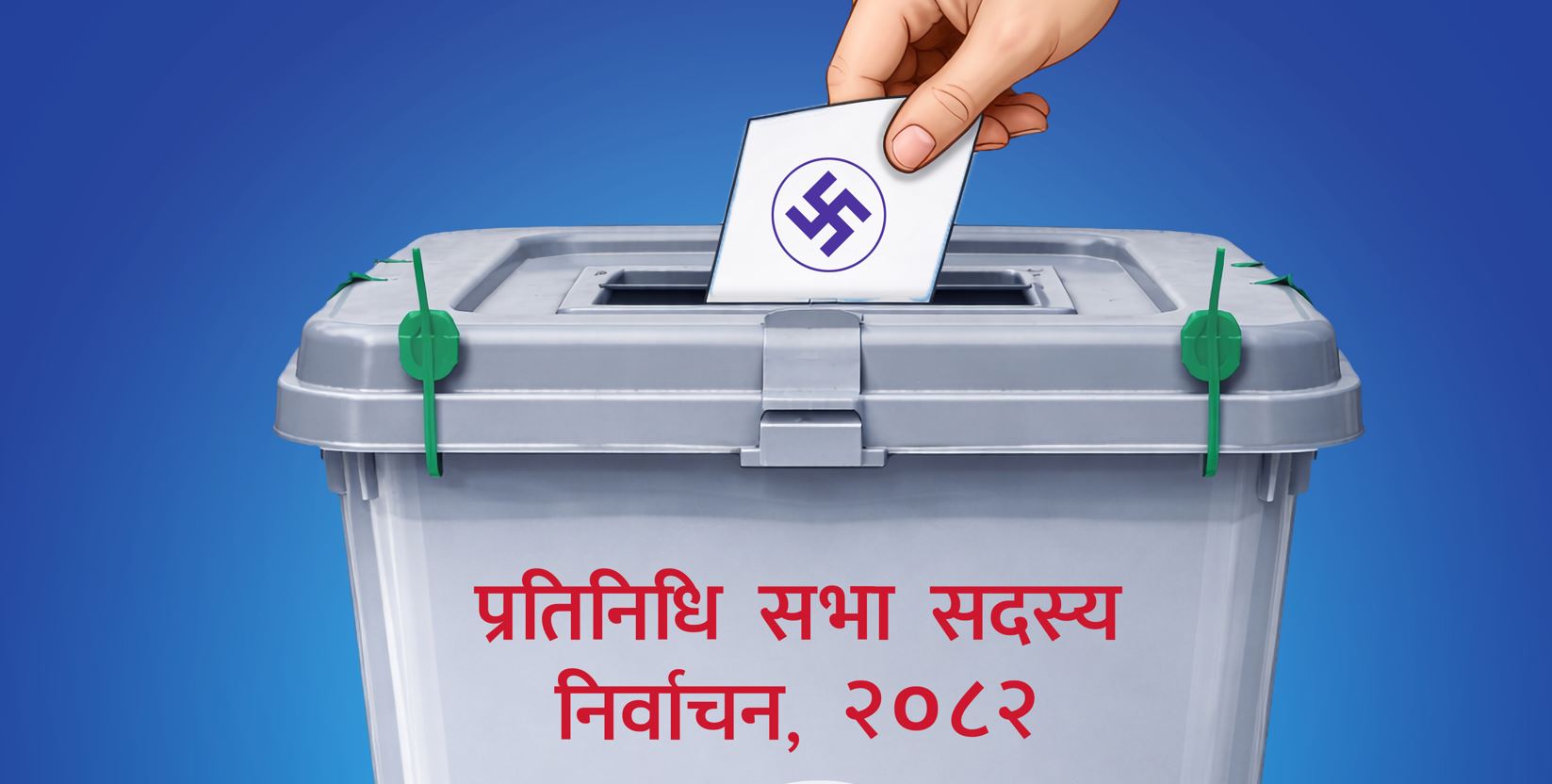
Kathmandu. The election of the members of the House of Representatives is expiring from midnight today. The Election Commission has set the deadline for the election publicity of the political parties and candidates from February 17 to 12:00 midnight tonight.
No activities like campaigning, speeches, assembly, discussions, reviews and other activities affecting the election will be allowed during the silence period from 48 hours before the date of voting until the conclusion of the voting. The EC has stated that no activities like asking for votes, posting votes and moving around affecting the election are prohibited during the silence period.
Acting Chief Election Commissioner Ram Prasad Bhandari said that the candidacy would not only be scrapped but also barred from taking part in any election process for six years if financial transactions were carried out in a way to influence the election during the silence period.
The EC has made it clear that a zero-tolerance policy would be adopted on activities influencing the elections.
The silent period is expected to create an opportunity for voters to vote wisely in a free and fair environment. The silent period is important for the election management bodies to conduct the election in a fearful environment with peace, security and order.
The silent period has been conceptualized to create a situation where voters can go ‘fresh’ to vote for the right person by deliberating on everyone’s point of view as they continue to receive various types of stress, pressure and assurances during the election campaign.
It is taken as the time for the candidates and political parties who reach out to the voters with their visions, plans and programs to review their campaigning with a cool mind and go to vote happily and wait for the election results.
The silence period will also be very important from the election managerial point of view. The silent period provides an opportunity to manage the election in a peaceful environment by relieving the human resources and security forces conducting elections from all kinds of work. During this period, the construction of polling stations, the management of the voter line and the law and order situation are assessed. In some countries, the silence period ranges from 24 to 72 hours.
Former chief election commissioner Dinesh Kumar Thapaliya said the silence period would be taken as the time provided to the voters to reach to a decision to vote the ‘deserving and chosen’ candidates with an open mind.
The Election Commission has stated that the candidates, political parties and individuals concerned should observe special conduct during the silence period. The election code of conduct states that the election symbols and the election publicity materials placed within 300 meters of the polling centres should be removed before the beginning of the silence period.
During the period, votes are not allowed to be solicited through social networks such as SMS, Facebook and Viber. Similarly, no news or information is published or disseminated in such a way that the candidates or political parties are publicized.
A total of 65 political parties are competing under the first-past-the-post (first-past) election system for Thursday’s election. A total of 3,406 candidates including 3,017 male, 388 female and one other are contesting in the first-past-the-post election.
Similarly, a total of 3,135 candidates including 1,363 male and 1,772 female are contesting under the PR system. The elections will be held for 165 constituencies under first-past-the-post (FPTP) and 110 constituencies under proportional representation.
A total of 189,03,689 voters including 9,663,358 male, 92,40,404,131 female and 200 others are eligible to cast their votes in the election. Likewise, 186,142 temporary voters have been enlisted, according to the EC.
A total of 23,112 polling stations have been set up at 10,967 polling stations across the country. A total of 143 temporary polling stations have been set up. A total of 79,727 Nepal Army, 75,797 Nepal Police, 34,567 Armed Police Force, 1,921 National Investigation Department and 149,090 Election Police personnel have been deployed for election security.
As many as 2 lakh 15 thousand employees will be deployed for the election. The EC has already printed a total of 422,51,200 ballot papers under the first-past-the-post and proportional representation category. Four international organizations and 39 national organizations have been mobilized to observe the elections.
















प्रतिक्रिया दिनुहोस्