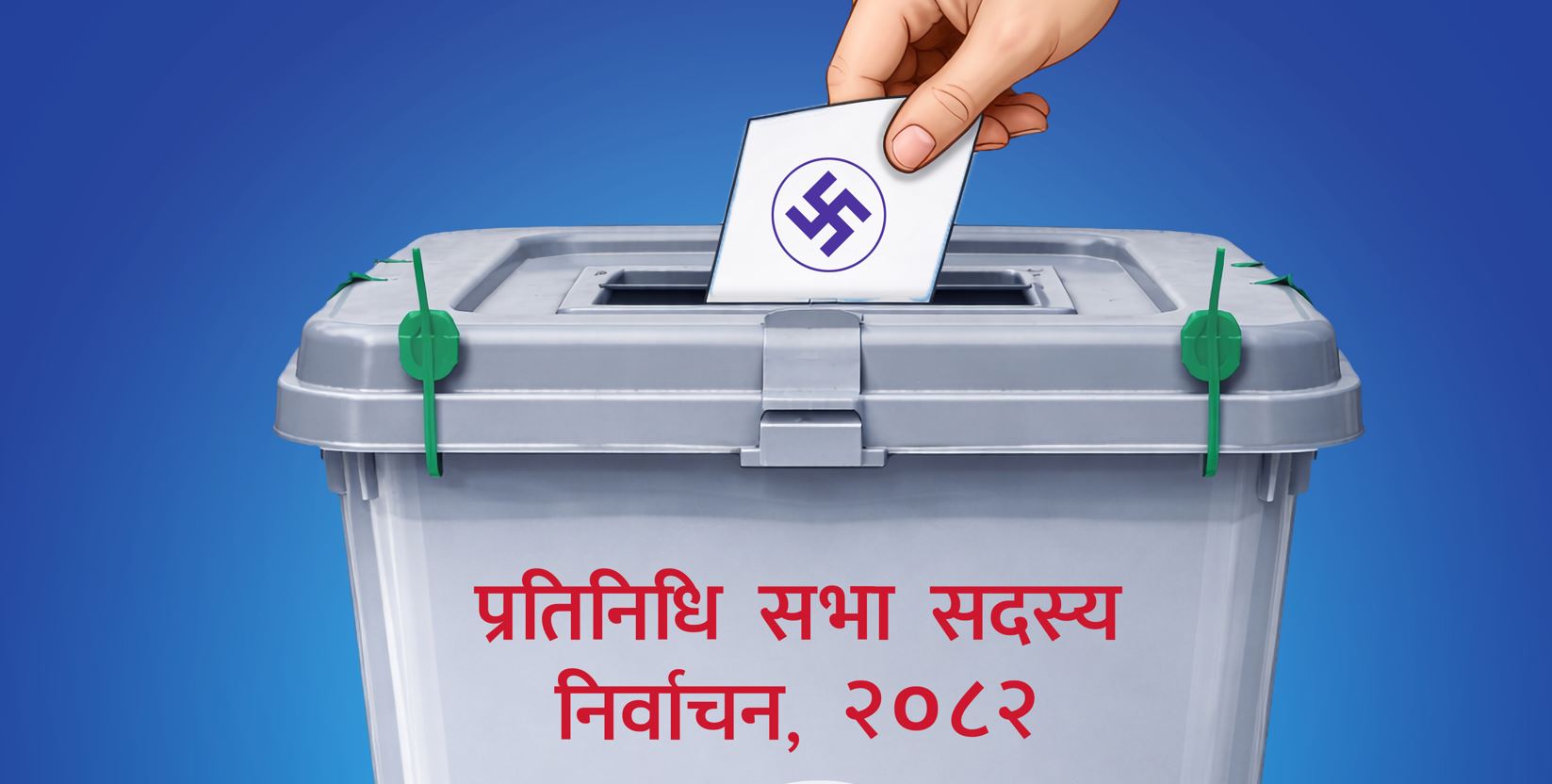
. The entry of medium-sized businessmen in the House of Representatives election held on March 4 has increased significantly compared to billionaire industrialists and businessmen.
According to the election results, more than 35 industrialists and businessmen have become lawmakers under the first-past-the-post (FPTP) category.TAG_OPEN_div_155 Most of them are from mid-level business backgrounds. The Rastriya Swatantra Party (Rastriya Swatantra Party) has the highest number of industrialists and businessmen in the FPTP category. The party has more than 30 lawmakers from business background. Similarly, 4 representatives from Nepali Congress and 1 businessman from Nepal Communist Party have been elected.
The Rastriya Swatantra Party (RSP) has secured a single two-third TAG_OPEN_div_153 s majority in the election. This has ensured the possibility of the formation of a single government immediately. As per the ‘commitment’ made public by the RSP before the elections, it had pledged to give priority to business participation in the formulation of economic policy. In this context, the party’s 30 business lawmakers are expected to play an important role in economic development and promotion of medium enterprises.
In the eyes of experts, the entry of medium-sized businessmen into parliament will bring a pragmatic approach to policymaking. This will provide an opportunity for small and medium enterprises to directly benefit from government policies and budgets. Lawmakers with professional experience can take active initiatives in investment, job creation, and expansion of productive sectors.
{{TAG_OPEN_div_149} The promise made by the RSP is confirmed by the commitment made by the RSP that it will focus on fiscal policy, tax system reform, and creating a conducive environment for industry and business after the business lawmakers come to the parliament.
Charter of the National Assembly for Economic Zone
}
In the first point of its commitment letter, the RSP has mentioned about productivity increase and enterprise-friendly environment.TAG_OPEN_div_145
The point has mainly committed to formulate a policy to increase productivity as the basis of economic prosperity, to increase high quality and competitive production by optimizing the use of limited time, capital and resources, to increase coordination between private investment and public sector, to make the private sector the main driver of employment, production and investment ।
Similarly, the first point of the manifesto of the Rastriya Swatantra Party (RSP) has made commitments that the role of the government will be only a regulator and facilitator, to encourage innovation, entrepreneurship and healthy competition.TAG_OPEN_div_141
Similarly, the RSP has also made commitments such as youth demographic dividend and economic transformation, transforming the youth population into economic opportunities, bringing about structural economic transformation within 10-15 years, and prioritizing productivity growth, skill development, capital formation and technology-based industrialization.TAG_OPEN_div_139 The role of the industrialists and businessmen of the RSP is seen to be the main in fulfilling the promises made here.
Thirdly TAG_OPEN_div_137, the RSP has pledged to bring about regulatory reforms and control of social market economy, cartels, unhealthy competition and rent-seeking, to create a transparent regulatory body free from political interference, to adopt the model of social market economy, to bring a balance between liberal economic policy and social services (education, health, housing) and to create long-term economic, social and environmental balance ।
Similarly, the Rastriya Swatantra Party (RSP) has included point 4 of the economic growth target and a commitment to legal reform.TAG_OPEN_div_135 In the point, the RSP has pledged to repeal or amend about two dozen irrelevant Acts. In this point, the RSP has pledged to create investment-friendly environment by reducing business hassles, to achieve the target of 7 percent annual economic growth in the next five years, to increase per capita income to $ 3,000 within 5-7 years and to take the size of the economy closer to $ 100 billion in five to seven years.
The party has also pledged to reduce the tax burden on tax policy and exchange rate, not to implement the tax law in a retrospective manner, to review income tax for the middle class on the basis of family burden, to give tax exemption for education and health expenses, and to study and review the exchange rate system with the Indian rupee.TAG_OPEN_div_133
Similarly, the RSP has also pledged to facilitate investment in public corporations and project management through one-stop service centre, register business quickly through digital medium, restructure public corporations and complete national pride projects within the deadline and initiate 10 new national pride projects within five years TAG_OPEN_div_131 ।
Likewise, the Rastriya Swatantra Party (RSP) has pledged to bring cooperatives and microfinance under strict regulation of Nepal Rastra Bank, direct regulation of institutions with more than 500 million transactions, control the problem of excessive loans by linking the second-tier regulator for small institutions with the Credit Information Center and keeping the interest rate based on the base rate TAG_OPEN_div_129 ।
The RSP has pledged to end the meter interest, return the money of small savers within 100 days, establish an integrated savings security fund, declare the meter interest as an economic offense and form a speedy justice task force to return the property of the victims.TAG_OPEN_div_127 The Rastriya Samachar Samiti (RSP) has pledged reforms in the Nepal Stock Exchange (NEPSE) and a transparent capital market, zero tolerance against insider trading, development of bond market and debt market and ease of investment in NEPSE for Non-Resident Nepalis.
Similarly, the party’s manifesto also mentions the development of information technology (IT) and digital development sectors.TAG_OPEN_div_125 The RSP has pledged to export 30 billion dollars in 10 years, form a promotion board, provide tax concessions and investment facilities to the companies, create digital parks and create employment opportunities, construct digital parks in all seven provinces and create 500,000 jobs in the IT sector. The RSP has pledged to make Nepal a digital-first country, build a cashless society and remove the problem of payment gateway to connect startups to the international market.
Similarly, the RSP has also pledged AI, data center and crypto policy, setting up a data center near hydropower, a plan to export AI computer services, clear policies and regulations for cryptocurrency, and a crypto mining pilot project.TAG_OPEN_div_123 The promise includes legal provisions for digital employment and remote work for foreign companies to work in Nepal, amending the Labour Act to recognize remote work and implementing digital nomad visa policy.
Industrialists and businessmen
Entrepreneur Dol Prasad Aryal has been elected to the House of Representatives from Kathmandu-9 on March 4.TAG_OPEN_div_119 Earlier, he was a proportional representation member of the Rastriya Swatantra Party (RSP) in the 2079 elections. He is a tourism, education consultancy, cooperative and remittance entrepreneur.
Similarly, Hari Dhakal, who was elected as a member of parliament from the first-past-the-post election in 2079 BS, has been elected from Chitwan-1 this time as well.TAG_OPEN_div_117 He is an investor in the stock market. He has also played a role in formulating policy on the stock market in the previous parliament.
Similarly, Sunil Lamsal, who won the election from Rupandehi-1, runs the Crown Design and Research Center Pvt Ltd.TAG_OPEN_div_115 Badan Kumar Bhandari, who was elected from Kavre-2, is an e-commerce entrepreneur. He is running ABZ Online Shopping.
Sunil KC, who was elected to parliament from Kathmandu constituency-2, also has a business background.TAG_OPEN_div_113 He is the proprietor of KC Enterprises. Rukesh Ranjit, who won the election by dismantling the stronghold of Nepal Workers and Peasants Party in Bhaktapur-1, is the general secretary of Bhaktapur Chamber of Commerce and Industry.
Jagdish Kharel, who won the election from Dolakha, is an energy entrepreneur.TAG_OPEN_div_111 He has investments in a hydropower company in Bhaktapur. Similarly, Parashmani Gelal who was elected from Udayapur-1 is an automobile entrepreneur.
Ramesh Kumar Sapkota, who won from Surkhet-2, has become a transport worker and entrepreneur.TAG_OPEN_div_109 Prashant Upreti, who was elected as parliamentarian from Makawanpur-2, is a tourism entrepreneur. He has studied tourism and runs a travel and tours company in Kathmandu.
Dhananjay Regmi, who was elected from Syangja-1, is the former CEO of the Nepal Tourism Board.TAG_OPEN_div_107 He is a hotel and tourism entrepreneur. Jhabilal Dumre, who won the election from Syangja-2, is an internet service provider.
Nitima Bhandari, who won the election from Sarlahi-1, is the Director General of the popular restaurant ‘Bajeko Sekuwa’.TAG_OPEN_div_105 Manish Jha, the spokesperson of the RSP elected from Dhanusha-3, is the director of Data in Nepal, a research-oriented organization.
Arvind Shah, who was elected from Bara-3, had established a company named ‘Janaki Technology’ in partnership.TAG_OPEN_div_103 He has been associated with the digital service provider through ‘Sparrow SMS’ Khalti app. He is also associated with the health sector. Narendra Sah Kalwar, who won from Sarlahi-3, is a construction entrepreneur. He came to the RSP from the CPN (Maoist Centre).
Buddhi Prasad Panta, who won from Parsa-1, is a hotel and tourism entrepreneur.TAG_OPEN_div_101 He has been running classic and country inn hotels in Birgunj. Pramod Kumar Mahato, who was elected from Mahottari-1, is active in trade, agriculture and politics simultaneously.
Ramji Yadav, who won from Saptari-2, has been working as the managing director of Easy World Engineering Pvt Ltd for the past seven years.TAG_OPEN_div_99 Madhav Bahadur Thapa, who was elected from Palpa-2, has a homeopathy service in Butwal.
Bharat Prasad Parajuli, who won from Sindhupalchowk-1, is a hydropower entrepreneur.TAG_OPEN_div_97 Komal Gyawali, who was elected as a lawmaker from Kailali-1, has been selling agricultural equipment and seeds in Kathmandu and Kailali for the past five years.
Dhanendra Karki, who won from Sindhuli-1, is a transport entrepreneur.TAG_OPEN_div_95 Shreedhar Pokharel, who was elected from Bardiya-2, is a tourism entrepreneur. Krishna Kumar Karki, who was elected from Morang-2, is a hotelier who returned to Nepal after staying in Japan for 12 years.
Sushil Khadka, who was elected as a lawmaker from Baglung-1, has been active in business, green entrepreneurship and social service for the last 12 years.TAG_OPEN_div_93 Som Sharma, who was elected from Baglung-2, was the chief computer technician at E-Shop, a computer repair organization until recently.
Hari Prasad Bhusal, who won from Arghakhanchi-1, is the general secretary of Arghakhanchi Chamber of Commerce.TAG_OPEN_div_91 He is also a media operator. 26-year-old K.P. Khanal, who won from Kailali-2, has been running a tea shop in Kathmandu.
Industrialists who won from Congress
Mohan Acharya, a construction entrepreneur and a central member of the Nepali Congress, was contesting from Rasuwa-1.TAG_OPEN_div_87 He won the election from that constituency. He defeated Basanta Bhatta of Rastriya Samajwadi Party (RSP) from the same constituency. Tek Bahadur Gurung, who was elected from Manang-1, is also a businessman.
Bishnu Bahadur Khadka, who won from Surkhet-1, is a transport entrepreneur.TAG_OPEN_div_85 He is the founder of Mid-Western Transport Entrepreneurs Association in Surkhet. Similarly, businessman and Nepali Congress leader Prakash Singh Karki has been elected from Solukhumbu. He defeated NCP’s Ashim Rai.
Nepali Congress candidate Yogesh Gauchan has also been elected from Mustang.TAG_OPEN_div_83 An industrialist from NCP has won the election. Dhan Bahadur Budha, who was elected from Dolpa, is a tourism entrepreneur and construction entrepreneur.
















प्रतिक्रिया दिनुहोस्