

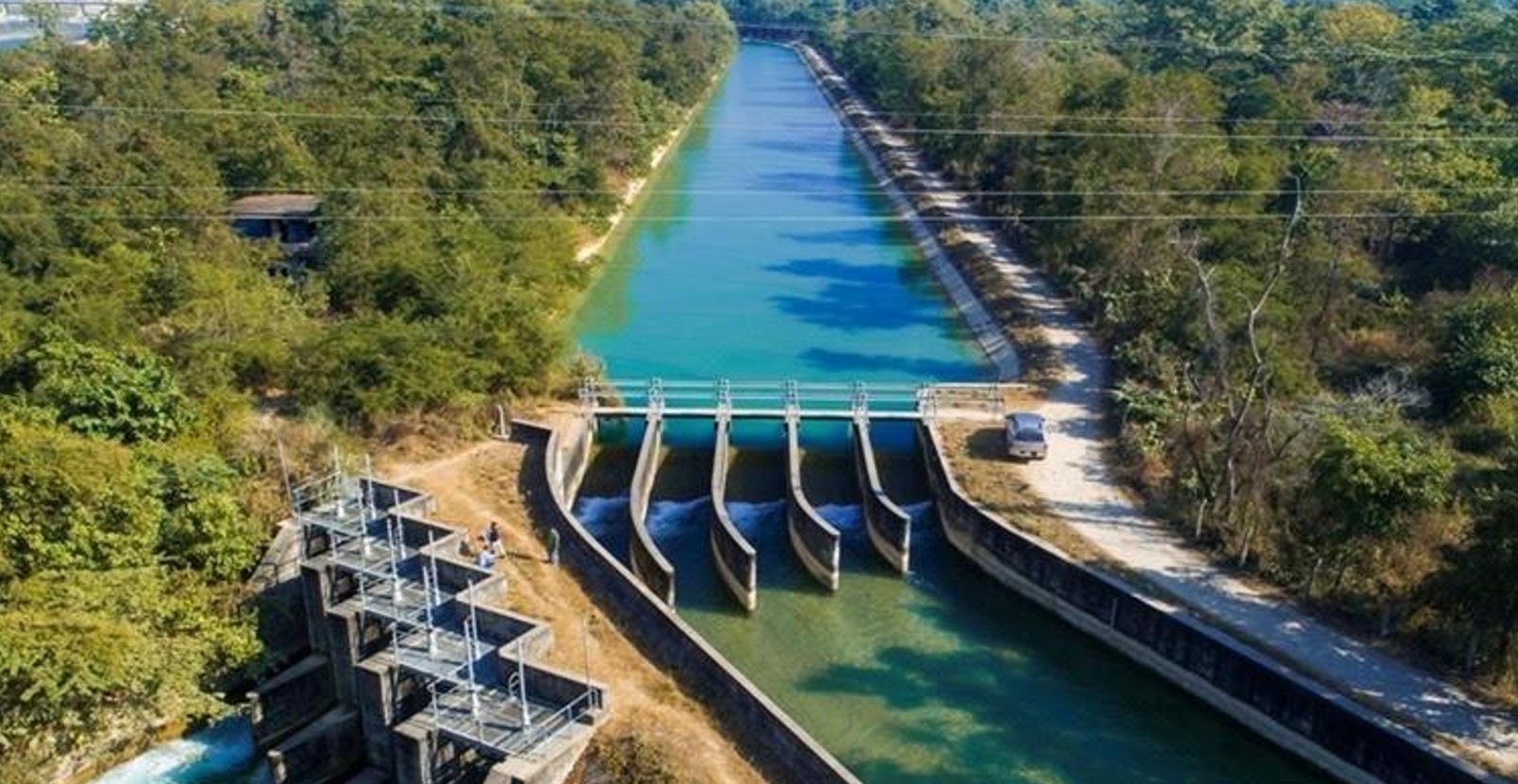
Kathmandu. The Irrigation Day and the establishment day of the Department of Water Resources and Irrigation are being marked today with the slogan ‘Systematic use of water resources, help in building a prosperous nation’.
The then government had started irrigating the agricultural land by establishing the Department of Canal in 2009 BS. The government has been celebrating the Irrigation Day in the context of this occasion. In course of the institutional development of irrigation, the Department of Irrigation, Irrigation and Water Supply Department, Irrigation and Climatology were transformed into Irrigation Department in 2044 BS.
Following the promulgation of the Constitution of Nepal in 2072 BS, the Department of Irrigation and the Department of Water Induced Disaster Management were dissolved and the Department of Water Resources and Irrigation was established in 2075 BS.
The construction of Chandra Canal was started in 1979 BS and completed in 1985 BS for the first time in Nepal’s history. It is considered to be the first modern and oldest irrigation system. The canal was constructed at the initiative of the then Rana Prime Minister Chandra Shumsher JB Rana and the technical leadership of the canal was given by Colonel Dilli Jung Thapa of the Royal Army.
Reconstruction and improvement of 32 major structures of the canal had been completed recently with financial and technical assistance of Japan International Cooperation Agency (JICA). The 28-km main canal, 11 branch canals and additional branch canals have been constructed to provide irrigation to 10,500 hectares of land in Saptari district. Farmers from 35,000 households have been benefited from this.
Although the access to irrigation facilities to arable land is gaining momentum in recent years, there is still a need to provide irrigation to 10 million hectares of land. Director General of Department of Water Resources and Irrigation, E Mitra Baral, said, “Irrigation facility has been expanded to some 1,587,910 hectares of land out of total area of 2.536 million hectares.” Average hectare yield has increased in the areas where irrigated by surface, underground, reservoir and lift irrigation has increased. ”
The arable land in Nepal is 3,557,700 hectares. “Nepal’s economy is mainly based on agriculture. About 62 percent of the population is directly or indirectly involved in agriculture. Agriculture modernization, production growth, and food security are not possible without sustainable, reliable and effective irrigation systems. Keeping this in mind, the Department has been working with high priority to provide irrigation facilities to the arable land. ”
National Pride Projects: Progress Accelerated
Six national pride projects under the Department have gained momentum in recent period. Director General Baral said the Department was working with high priority to complete the projects within the deadline.
Currently, the Department has six national pride projects like Mahakali Irrigation Project (Kanchanpur), Rani Jamara Kulariya Irrigation Project (Kailali), Babai Irrigation Project (Bardiya), Bheri Babai Diversion Multipurpose Project (Surkhet), Sikta Irrigation Project (Banke) and Sunkoshi Marin Diversion Multipurpose Project (Sindhuli).
Out of these, three projects have achieved good progress following the Department’s untiring efforts in the current fiscal year. The Sikta Irrigation Project has so far reached 22,500 hectares of land where the irrigation infrastructure has been expanded. The irrigation area of the project is 42,766 hectares while the expansion of the irrigation infrastructure of the Babai Irrigation Project (Bardiya) has reached 27,330 hectares. The irrigation area of the project is 36,000 hectares.
Likewise, the area under the Rani Jamara Kulariya Irrigation Project (Kailali) has reached 14,300 hectares. The project is expected to irrigate 38,300 hectares of land and the third phase of the Mahakali Irrigation Project has also gained momentum. Director General of the Department Baral said, “The Sunkoshi Marin Diversion Multipurpose Project and the Bheri-Babai Diversion Multipurpose Project will also take momentum now.” ”
Terai Madhes Underground Water Irrigation Program
The Department has been implementing Tarai Madhes Underground Water Irrigation Programme to provide underground irrigation facility to around 318,000 hectares of land in the Tarai and inner Madhes. According to the Department, the programme aims to create a base for a refined and dignified living by increasing agricultural production and productivity, ensuring food security, ending hunger and contributing to the increase in the Gross Domestic Product by developing underground irrigation system in the arable land.
The programme is being implemented in 19 districts of the Tarai Madhes, Udayapur, Makwanpur, Surkhet, Chitwan and Dang as well as in the hilly districts of Ilam and Sindhuli. Director General Baral said, “We are trying to address the problems of the consumers to operate the irrigation system on a regular basis due to the lack of basic technical knowledge of the operation of underground irrigation system.” ”
The Department had worked expeditiously to address the problem surfaced due to dry spell in Madhes Province even during the prime period of last year’s rainy season. Efforts were made to continue groundwater irrigation to protect rice crops.
The government on July 20 had declared Madhes Province as a drought-hit zone for three months. The Department had forwarded works related to groundwater irrigation on the basis of the report of the task force formed to identify the problems related to drinking water, irrigation and agriculture and submit action plan for resolving them.
Water Resources Conservation
The Department has been implementing integrated river basin irrigation and water resources management programme. The programme aims to irrigate twenty-five thousand hectares of land.
The Department has been carrying out works related to water resource conservation, river control and water-induced disaster management in a planned manner. Director General Baral said, “The canal operation and management of the constructed irrigation systems has also been carried out. ”
According to him, the Department has completed the construction of embankments on 1,477 kilometres, 13,671 hectares of land and 635 check dams. Director General Baral said, “The government has been working on water resource conservation, river control and water-induced disaster management. ”













प्रतिक्रिया दिनुहोस्