

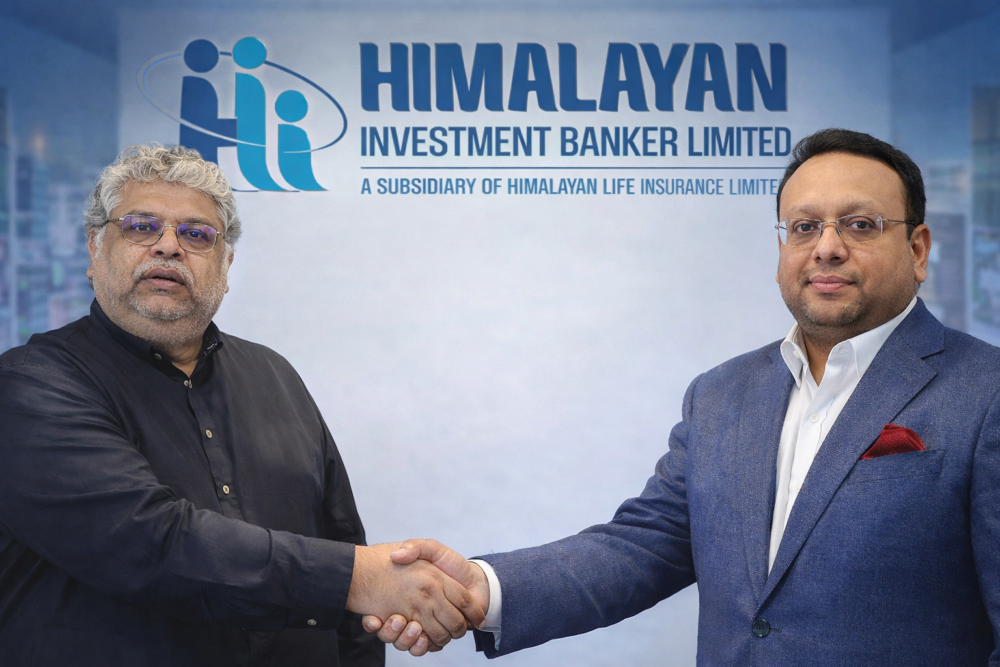
. On May 29, 2020, Prime Life Insurance, Gurans Life Insurance and Union Life Insurance had decided to go for merger. A year later, on Baisakh 26, 2080 BS, a new company, Himalayan Life Insurance, started its business by completing the merger on equal swap ratio.
At the time of the merger, Prime Life Insurance had paid-up capital of Rs 2.77 billion, Gurans Life Insurance had a paid-up capital of Rs 2.08 billion and Union Life Insurance had a paid-up capital of Rs 2.15 billion.TAG_OPEN_p_19 Three companies were forced to go for mega merger after the Insurance Authority demanded that the paid-up capital of the life insurance company be increased to a minimum of five billion. However, the swap ratio was kept equal to everyone — which raised controversy and question.
Although there is a principle of determining the swap ratio after the valuation of assets and liabilities, mergers in the bank and insurance sector are often done on the basis of bargaining and interest in Nepal.TAG_OPEN_p_18 This was also seen in the Prime-Gurans-Union merger.
Life insurance funds are the basis for future profits.TAG_OPEN_p_17 At the time of the merger, Prime had insurance fund of Rs 17.63 billion, reserve of Rs 500 million and insurance premium of Rs 26 billion. The insurance fund of the rhododendron was Rs 12 billion, the reserve fund was Rs 540 million and the insurance premium was Rs 16 billion. Union’s insurance fund was Rs 10 billion, reserve was Rs 1 billion and insurance premium was Rs 20 billion. The bonus rate was also weak as the union had run an aggressive but loss-making product.
Prime was also strong in dividend distribution.TAG_OPEN_p_16 Gurans had paid double-digit dividends only twice since its inception, while the union had paid single-digit dividends only once. Prime was a company that paid regular dividends. However, Himalayan Life, which was formed after the merger, paid only 14 percent and 8 percent dividends, which directly added to the losses of Prime’s shareholders.
Rajendra Khaitan, who is considered to be a smart investor in the business world, is said to have accepted the swap ratio with a weak union despite the strong position of Prime.TAG_OPEN_p_15 Sulabh Group had assured Khaitan of an attractive share stake. However, the process of new stock exchange did not move forward.
Sulav Agrawal and his partner Deepak Bhatt are currently in jail after they were accused of using money from Himalayan Re and Himalayan Life to take over Nepal’s Re-Insurance Corporation.TAG_OPEN_p_14 Sulabh has also been removed from the chairmanship of Himalayan Life.
Sulabh did not fulfill the dream of buying Nepal Ree, taking advantage of it, and finally doing Himalayan Rematuration. Similarly, the path of the new stock exchange called ‘Dream Project’ was also closed. His autonomous decisions and miscalculations have troubled the ordinary investors and insurers of Himalayan Life.
The biggest loser seems to have been the old shareholders of Prime Life, whose strong base was weakened by the merger.
Rajendra Khaitan Group is the main investor of Himalayan Life.TAG_OPEN_p_11 Laxmi Bank, which owns 30 percent of the company, has 7.19 percent stake in Himalayan Life. Similarly, Rajendra Khetan owns 5.87 percent of the property, Pooja Agarwal Khetan owns 4.66 percent and Rasneya Khetan owns 1.04 percent.














प्रतिक्रिया दिनुहोस्