

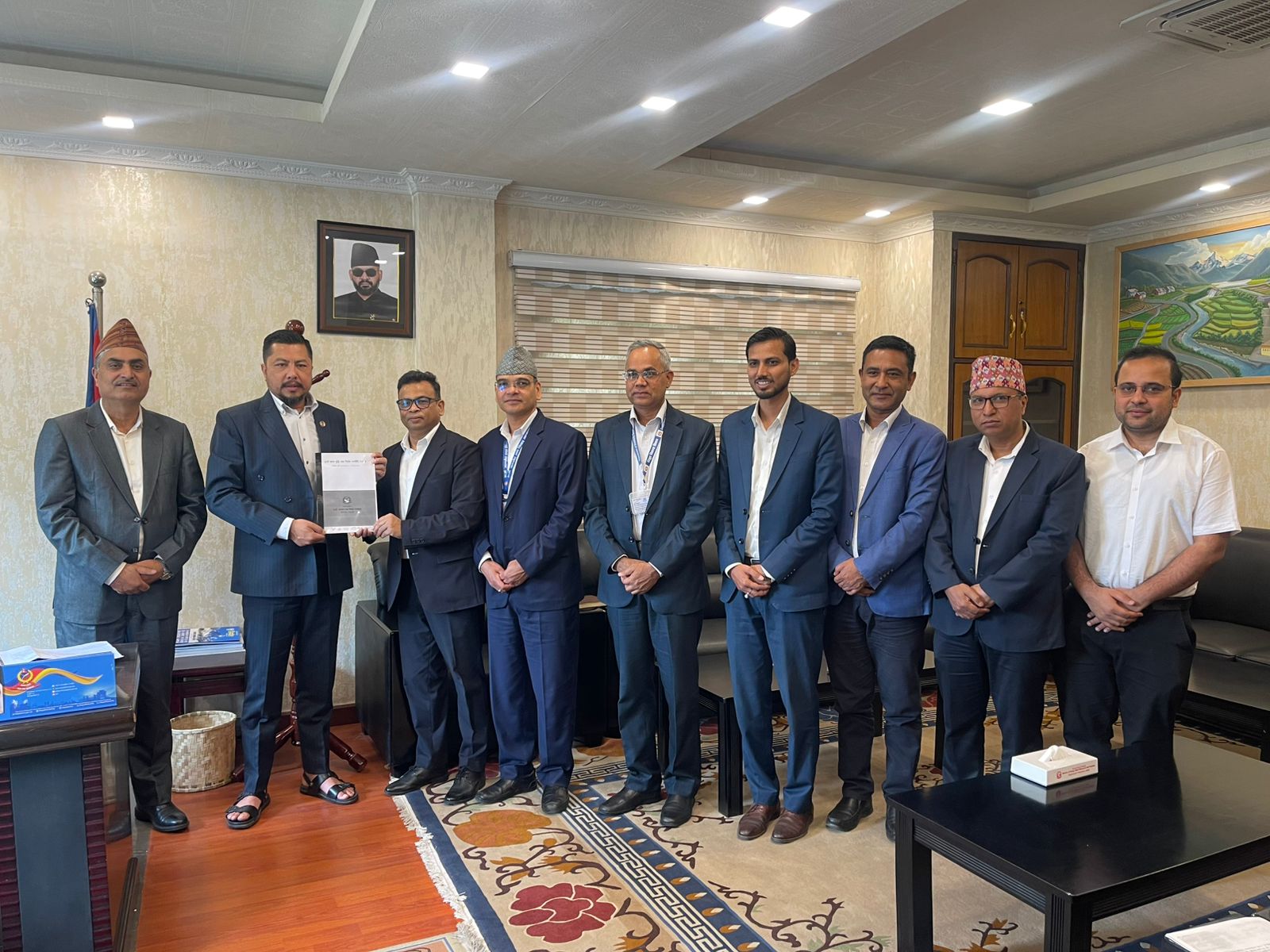
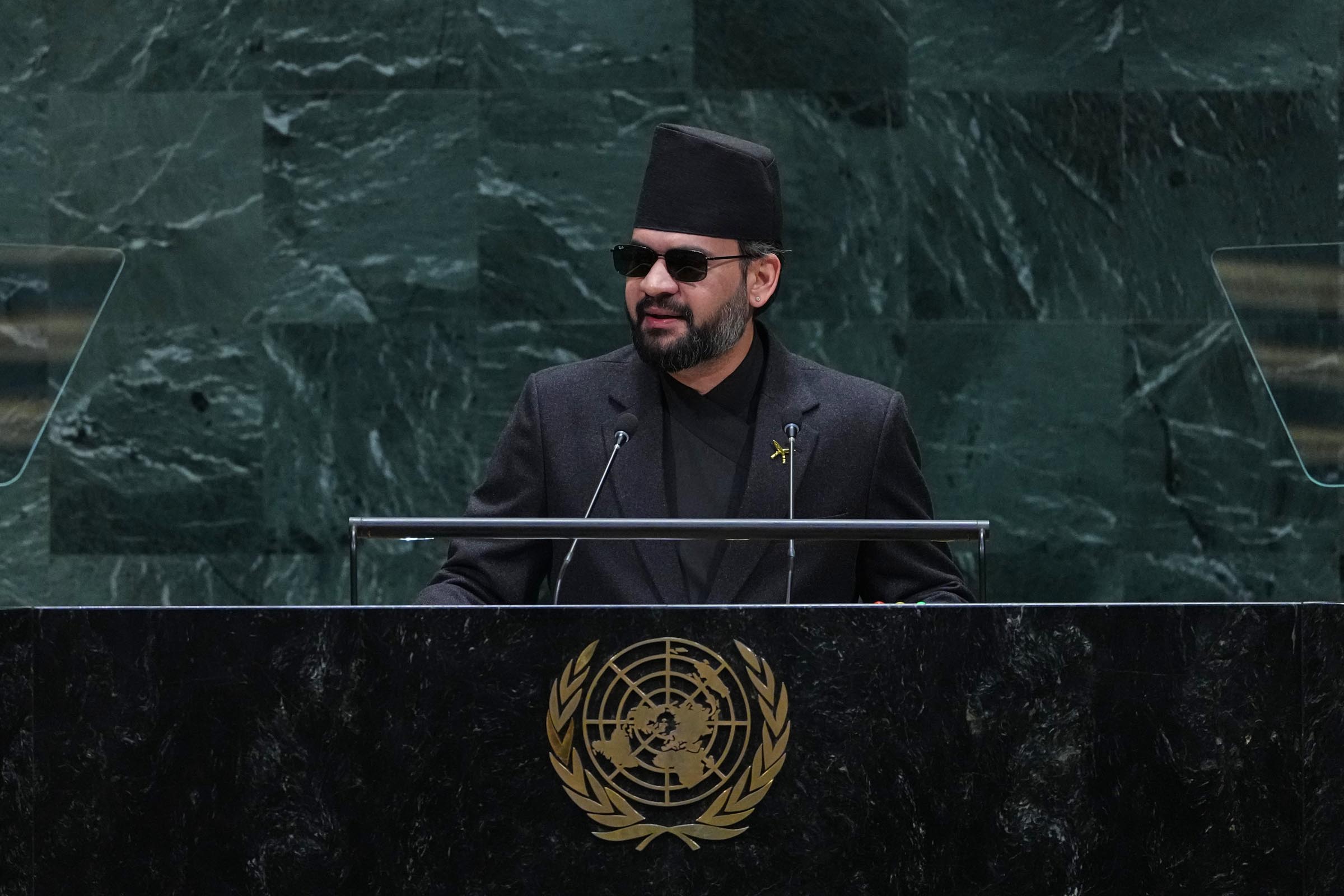
Kathmandu. The report of ‘Energy Consumption Growth and Export Strategy-2083’ has been submitted to Minister for Energy, Water Resources and Irrigation Biraj Bhakta Shrestha.
The Ministry’s Joint Secretary and Spokesperson Sandip Kumar Dev has submitted the ‘Energy Consumption Enhancement and Export Strategy-2083’ prepared with the objective of making the energy sector the main base for economic transformation.
A high-level study committee was formed under the coordination of Joint Secretary Dev to address energy consumption and export strategy as per point 74 (a) and (c) of the 100-point agenda for governance reforms approved by the Council of Ministers on March 27.
The strategy lays down a long-term roadmap to significantly increase the internal consumption of electricity and promote the export of electricity saved after consumption. The report states that there should be extensive improvement in the transmission and distribution system by electrifying 100 percent households.
Likewise, it has been stressed on gradually reducing the use of LP gas by attracting electronic goods, improving the capacity of meters and transformers.
Similarly, the per capita energy consumption is about 450 kWh at present, which can be increased to 1,500 kWh in the next 10 years. In the public transport sector, it has been suggested to give priority to electric vehicles and expand the network of charging stations. The policy has been taken to replace the coal and petroleum-based boilers used in the industry through the electric system.
The strategy also includes a plan to set a consumer-friendly ‘seasonal’ rate for electricity tariff to increase energy consumption. It is believed that this will increase the efficiency of energy use, reduce the trade deficit and strengthen foreign exchange reserves.
Likewise, it aims to address the production imbalance between dry and rainy season by increasing the share of reservoir-based and semi-reservoir hydropower projects in the generation category.
With the expansion of the countrywide transmission system, a plan has been put forward to increase the export of electricity to the regional market through the inter-country transmission line. The strategy has been made to focus on exports, especially during the peak peak hours, to get more economic benefits. The target is to export 15,000 MW of electricity in the next 10 years.
The strategy identifies potential risks and proposes clear measures to manage them. In addition, the priority is to increase the participation of the private sector in the electricity trade and to improve the efficiency of the Nepal Electricity Authority by making structural reforms.
Deputy Director General of the Department of Electricity Development Gokarna Panta, Joint Secretary at the Ministry of Law Janga Bahadur Dangi, Secretary of the Electricity Regulatory Commission Nabin Raj Singh, Officiating Deputy Executive Director of Nepal Electricity Authority Rajan Dhakal, Director Tharka Bahadur Thapa and CDEs Raju Maharjan and Sanjeev Raya are the members of the committee.













प्रतिक्रिया दिनुहोस्