
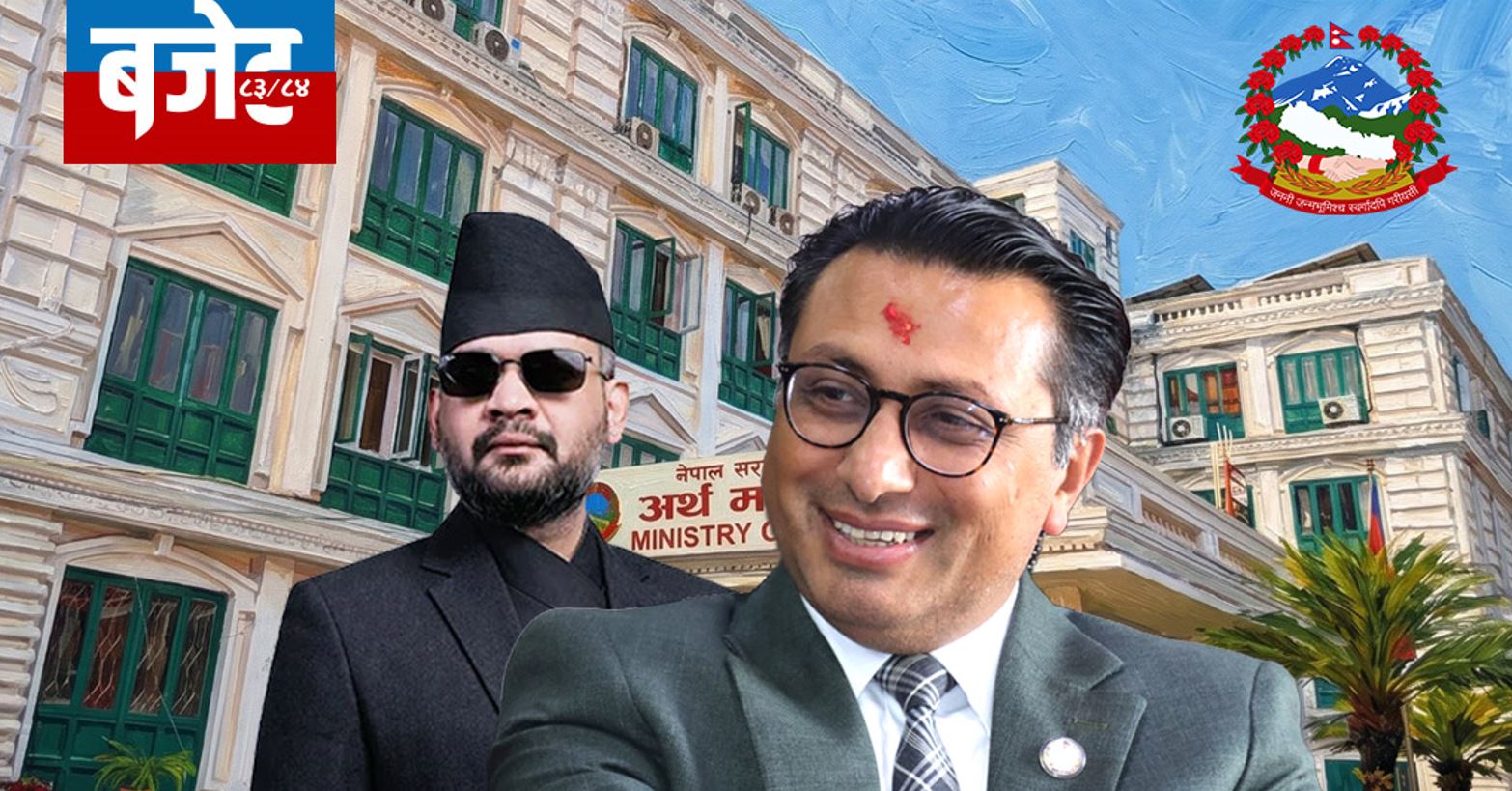
. In previous years, tax issues used to come at the end of the budget speech. However, this time, in the budget speech, the Finance Minister announced tax relief at the very beginning of the program.
While presenting the budget, Finance Minister Wagle remembered Subarna Shumsher Rana in the beginning and remembered that the then objective of ‘improving the living standard of the people’ is equally relevant even today.TAG_OPEN_p_45
The tax policy change announced at the beginning of the budget speech to the large middle class working on a monthly salary has come as a big relief to the employed.
“In order to reduce the tax burden, I have doubled the income tax exemption limit to Rs 10 lakh for individuals.TAG_OPEN_p_43 The tax on income above Rs 5 million has been reduced from 39 per cent to 29 per cent.
Nepal has the highest tax on income tax in South Asia.TAG_OPEN_p_42 It was a huge burden for those who stayed in Nepal and got a job. Those earning up to Rs 10 lakh will save Rs 56,000 in a year. This is a huge relief in terms of annual income.
Apart from this, the Finance Minister has announced to reduce the customs duty on the import of raw materials to encourage domestic industries and to encourage production made in Nepal.TAG_OPEN_p_41
Finance Minister Wagle seems to have given relief to those who have taken jobs by increasing the salary of the government employees by 10 percent salary and incentive allowance by 10 percent. The Rastriya Swatantra Party (RSP), which got two-thirds majority, has given the maximum relief to the middle class this time.
Wagle, who has given a big concession in income tax, is trying to compensate for it by tightening the middle class in revenue.TAG_OPEN_p_39 The middle class sends their children to private schools. He goes to a private hospital for treatment. In recent times, the consumption of electric vehicles and electronic goods has increased the bill of the electricity authority by the middle class.
This class has been increasing investment in the stock market in recent times. Finance Minister Wagle announced that the capital gains tax of the stock market will be final.
Finance Minister Wagle has increased the bill of middle-class parents teaching in private schools by 3 percent.TAG_OPEN_p_37 They have increased the bill by an additional 3 percent for patients who are ill and get treatment in private hospitals. Finance Minister Wagle has also increased the electricity bill of the middle class by 5 percent.
Finance Minister Wagle has indirectly increased the tax burden on the middle class by giving concessions to the income in this way.TAG_OPEN_p_36 They have given relief in the direct and indirect. However, the middle class will take advantage of the big tax concessions. Those whose children do not go to school and those who do not get sick will be able to avail this discount. However, you will have to pay the electricity bill.
The Finance Minister, who has a very low economic growth rate and is committed to good governance, has set a very ambitious economic growth rate in the coming fiscal year.TAG_OPEN_p_35 At a time when the crisis in the Middle East is not resolved, it seems difficult to meet the target of 7 percent economic growth.
Finance Minister Wagle, who was opposed to a big budget when he was not in the government in the past, has brought a very big budget this time.TAG_OPEN_p_34 This will increase the debt burden and it will be difficult to meet the target accordingly.
Finance Minister Wagle has presented a budget of Rs 2.124 trillion for the next fiscal year.TAG_OPEN_p_33 Of this, Rs 1270 billion is for recurrent expenditure, Rs 431.10 billion for capital expenditure and Rs 422 billion for financial management. The budget has increased by 25 percent compared to the revised estimate of the current fiscal year.
Finance Minister Wagle has estimated that Rs 1,405 TAG_OPEN_p_32.31 billion will come from revenue and Rs 61.74 billion from foreign grants for the size of the budget increased by 25 percent. In this way, Finance Minister Wagle has presented a budget deficit of Rs 6.29 trillion.
To meet the deficit, the government plans to raise Rs 247.28 billion from foreign loans and Rs 410 billion from internal borrowings.TAG_OPEN_p_31 Internal debt raised by banks and financial institutions when they are not issuing loans can help in liquidity management.
















प्रतिक्रिया दिनुहोस्