

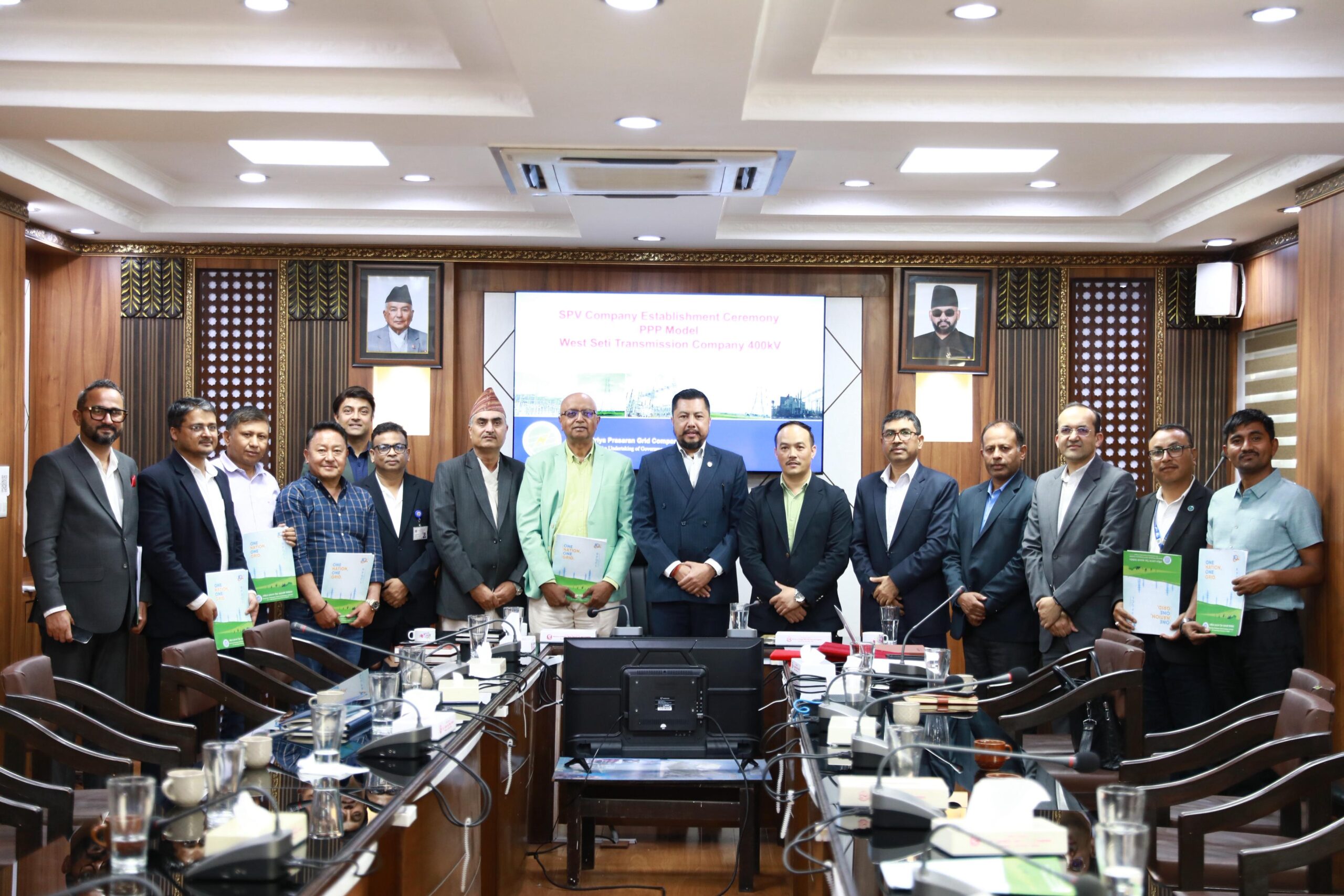
Kathmandu. The West Seti 400 KV Transmission Line Project has been put forward under the public-private partnership (PPP) model to connect the electricity generated from big hydropower projects in western Nepal to the national grid.
A Special Purpose Vehicle (SPV) has been established for the implementation of the project.
The project will be constructed with 30 percent equity and 70 percent loan. The company registration process has been completed after the Board of Directors of National Transmission Grid Company Limited (RPGCL) approved the investment structure.
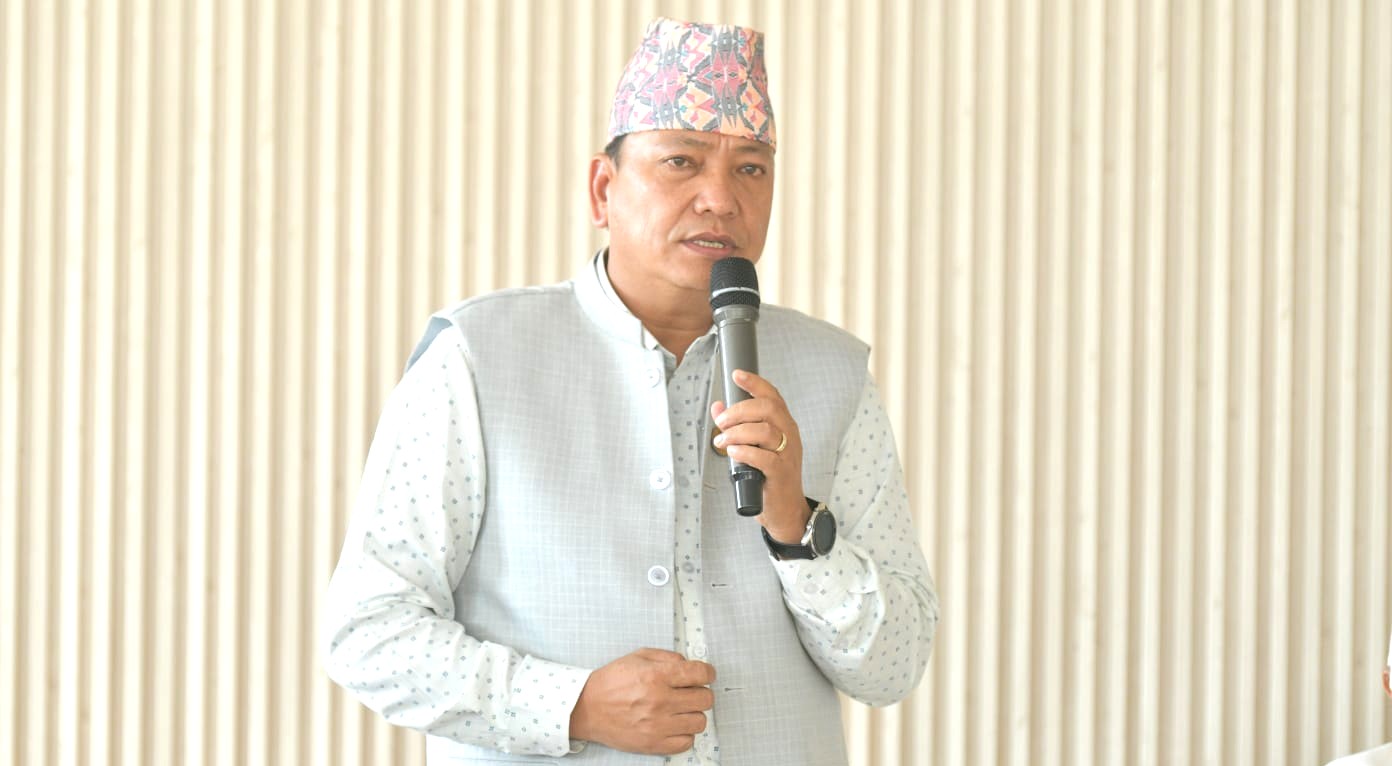
Minister for Energy, Water Resources and Irrigation Biraj Bhakta Shrestha said that the contribution of the private sector in power production has now expanded to the development of transmission infrastructure. Terming the transmission line as the lifeline of the energy sector, he expressed his confidence that such partnership would usher in a new era in energy sector. “Participatory development is also the practice of democracy. Collaboration with private sector in transmission line is a new practice for Nepal and the government will encourage it,” he said.
Stating that review process on Power Purchase Sale Agreement (PPA) was underway, he said necessary decision would be taken on the basis of the report received. He said that the country’s economy would take a new momentum and it would also contribute significantly to the economic development of the Far-West region if sustainable and reliable supply was ensured in the energy sector. Expressing commitment from the government to provide necessary support for the successful implementation of the project, Minister Shrestha said that the government was ready to resolve the problem. “The private sector is taking risks. The government will not back down from its responsibility to complete the project successfully,” he said.
RPGCL’s Chief Executive Officer Sagar Shrestha said the construction work will be expedited after land acquisition, right of way and forest area approval. He said that necessary preparations have already been started for this. Company’s partner Shailendra Guragain described the project as a ‘game-changer’ project in energy sector and said the investment by the private sector was excited due to its long-term importance.
Similarly, Acting Executive Director of Nepal Electricity Authority (NEA) Dirgha Kumar Shrestha said the project was very important from the strategic point of view. As per the shareholding, the government will own 51 percent of the shares. In the combined entity, CPGCL will have 26 percent stake, Chilime Hydropower Company 12.5 percent and Chainpur Seti Hydropower Company 12.5 percent.
In the private sector, Samriddhi Energy Limited will have 25.1 percent share, Ngadi Group Power Limited will have 7 percent and Suri Ngadi Power Limited will have 6.9 percent share. The remaining 10 percent of the shares have been set aside for the general public. Under the project, 400 kV double circuit transmission line is being constructed from Chainpur substation in Jaya Prithvi municipality-1 of Bajhang to Dodhodhara substation of Bardagoriya rural municipality-2 of Kailali district. Under the project, 160 MVA substations at Chainpur and 315 MVA at Banelek will be constructed.
Land acquisition and preliminary survey have already been completed and the construction period has been set at five years. Power generated from the 750 MW West Seti Hydropower Project, 450 MW Seti River-6 Project, 170 MW Upper Seti Project and other hydropower projects in the Seti River system and its tributaries will be evacuated to the national grid through this transmission line.
The project, which is envisaged to develop power export capacity of around 2,500 MW, is expected to enhance the reliability of the national electricity system, strengthen the cross-border power trade, energy security and long-term energy development strategy. It is expected that the project would be a milestone in the 400 kV level transmission line sector of the country. West Seti Transmission Limited has been formally registered on May 27, 2083 and the construction process will be initiated after necessary regulatory approval.











प्रतिक्रिया दिनुहोस्