

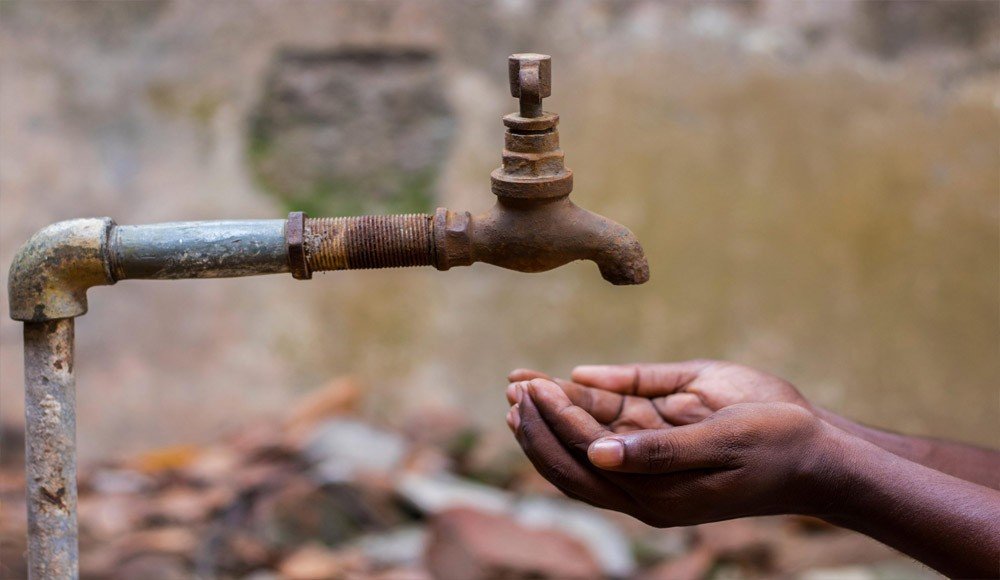
Kaski. Hoteliers have drawn the attention of Nepal Drinking Water Corporation Pokhara to the shortage of drinking water in Lakeside, the main tourist destination of the tourism capital Pokhara.
A team led by Hotel Association Pokhara Nepal’s Chairperson Laxman Subedi reached the corporation on Friday and apprised the corporation about the drinking water problem at Lakeside area and demanded immediate solution.
Subedi said the lack of drinking water in the major tourist destinations of the country was worrisome. “It is a matter of regret that the basic needs of Pokhara have not been fulfilled in the main tourism sector of Pokhara,” he said.
Similarly, central member of Hotel Association Bharat Raj Parajuli, who is also a tourism entrepreneur, complained that they have not received the expected service despite the Japan International Cooperation Agency (JICA) having completed the project with the investment of around five billion rupees.
“The project was constructed with an aim to ensure no shortage of drinking water in Pokhara for the next 20 years. But now both entrepreneurs and the general public are facing problems due to lack of water in taps,” he said, adding, “We have to buy water from tankers every day to run hotels.” The tourist capital needs at least regular drinking water service. ”
Laxman Pandey, an engineer at the corporation, said that although water has been brought to Pokhara from Mardikhola under the project, the main transmission pipe is facing problem due to insufficient capacity.
Entrepreneurs have demanded that the Pokhara Metropolitan City and Gandaki Province government should arrange necessary budget to install high capacity pipes to solve the problem.
The Pokhara Water Supply Improvement Project has set a target to purify 41 million liters of water daily and distribute it. However, the demand for drinking water in Pokhara is more than eight crore liters per day.
The main source of Pokhara is Mardi Khola, from where the water is purified by bringing it to the treatment plant at Purunchaur. It is then distributed through four pipes of 20-inch diameter. Although three tanks with a capacity of 2 million liters have been constructed under the project, the distribution is being done only from tanks located in Pokhara-5, Pasyang and Pokhara-11, Phulbari.
However, the tank at Pokhara-15, Kolpatan has not yet come into operation due to technical reasons. Entrepreneurs have drawn the attention of the bodies concerned saying that the deepening drinking water crisis in Lakeside, the main hub of tourism sector, could affect the tourism business and the image of Pokhara.













प्रतिक्रिया दिनुहोस्