

Kathmandu. The Independent Power Producers’ Association of Nepal (IPPAN) is going to organize the Himalaya Hydro Expo.
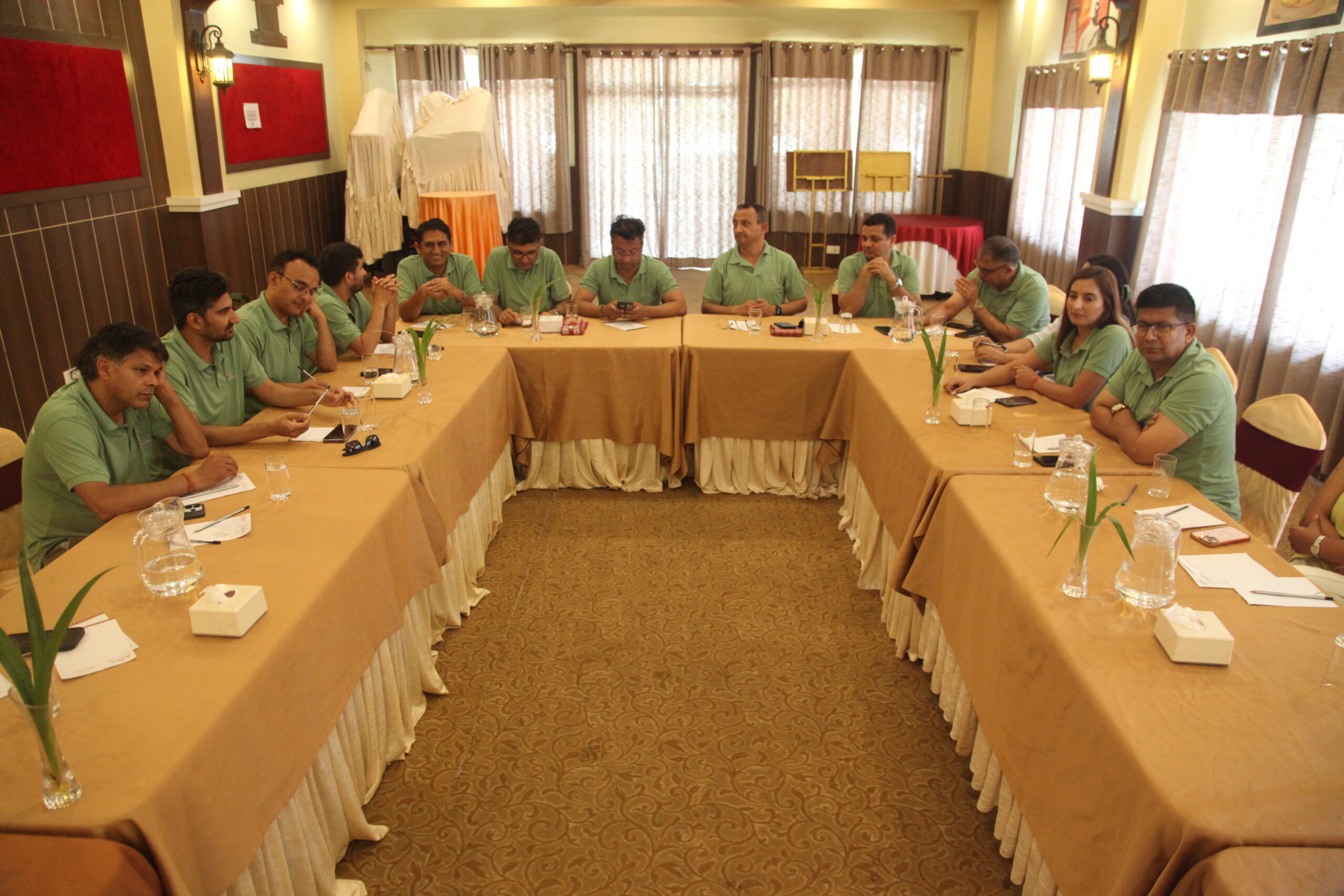
The second meeting of IPPAN held in Dhulikhel on July 2 and 20 has decided to organize the expo in coming January.
The Executive Committee has decided to organize the regular expo on January 12, 3 and 4 at Bhrikti Mandap in Kathmandu.
This is the fifth edition of the expo. Earlier, Himalaya Hydro Expo was held in 2018, 2019, 2022 and 2024. Similarly, the meeting also endorsed a 50-point action plan of IPPAN Vision 2029.
Likewise, IPPAN will work in the interest of the members of the organization and its members by resolving the problems they have been facing through policy formulation and effective implementation.
The meeting also decided to endorse a 50-point action plan under the IPPAN Vision 2029 taking the future works and activities of the newly elected executive committee of IPPAN as the main basis for the protection of investment.
The Executive Committee has announced with full commitment to implement this 50-point action plan with the full commitment of all the members, experts, experts and experts.
In the meeting, Chairman Dangi said that IPPAN would move ahead for the development of energy sector and promotion of private sector with a clear vision and action plan.
He further said that various committees and sub-committees formed by IPPAN will be actively involved after taking suggestions from advisors and expert advisors. He also urged the entire working committee to move ahead in a planned and united manner to make IPPAN a strong, capable and strong organization.
The meeting has formed various committees and sub-committees.
IPPAN’s 50-point action plan
}
a. Power Purchase Agreement (PPA) and its Amendments
1 = To prepare a draft bankable PPA with the provision of hydrology at par with international standards and to take initiative to adopt the Nepal Electricity Authority (NEA).
2. To take initiative to fix separate and fair rates for storage and pumped storage projects.
3 = To take initiative to immediately open the PPA of 16,000 MW projects that have been stalled after applying for PPA in NEA.
4 = To take initiative to provide cheaper rates to industrial customers to increase internal consumption and to take initiative for off-peak pricing.
5 = To take initiatives to make the grid installation process of private projects easy, simple and non-discriminatory.
6 = To take the initiative to provide compensation to the investors to prevent the loss caused by the delay of the NEA’s transmission line.
7. To take initiative to review the PPA rate on the basis of price increase.
8. To take initiative to compensate the investors if the NEA does not take the electricity.
9. Take initiatives to simplify and facilitate the PPA process.
10 = To take initiatives to end the tendency of PPA to be made of contingency and take and pay PPA by connecting it to the transmission line.
b= Policy and legal reforms
11. To take initiatives to make the bills under consideration in the parliament friendly to the private sector and to pass them within 1 year.
12 = To make arrangements to complete the forest land acquisition and tree cutting process within a year and to take initiative to bring sunset law.
13 = To take initiative to implement the policy decision that allows the private sector to construct the transmission line.
14 = To take initiative to make arrangements for the construction of a common transmission line for all the projects in the same river corridor.
15 = To initiate clear guidelines for electricity trade with neighboring countries and to issue electricity trade licenses.
16. Initiation to amend the Land Act to facilitate land acquisition for power projects
17 = To take initiative through the Ministry of Home Affairs for a separate security strategy for the security of the project.
18. Initiatives should be taken to prevent unnecessary delays by implementing provisions like “Silence is Consent”.
19. To take initiatives to eliminate the time and hassle required in the import of explosives and various electromechanical materials.
20. To take initiatives to make the return on return on ROE (ROE) investment-friendly.
C = Investment and Financial Reform -Points 21-30_
21 = To take initiative through the Ministry of Finance and Nepal Rastra Bank to establish a special energy fund for the hydropower sector.
22 = To take initiatives through the Ministry of Finance and Nepal Rastra Bank to expand access to green bonds and climate finance and foreign and mixed investment.
23. Initiatives will be taken to declare the energy sector as a priority sector and provide loan at less than 9 percent interest.
24. To take initiatives to facilitate the issuance of right shares in coordination with the regulatory bodies.
25 = To coordinate with Nepal Rastra Bank to announce special refinancing package for sick and small hydropower projects.
26 = To take initiative to completely scrap the contingency provisions of completed projects in all projects.
27. Initiatives will be taken to remove double taxation and unnecessary fees in energy projects.
28 = Expand the provision of loan on the basis of cash flow and pure project financing.
29 = To provide affordable and comprehensive insurance for the project.
30. Provision for VAT exemption or refund and tax incentives on construction materials.
d. Broadcasting and Infrastructure Construction – Points 31-35_
31 = Making the construction of transmission lines a matter of national priority, making grid access simple and developer-friendly and taking initiatives to allow the private sector to build transmission lines in public-private partnership model.
32 = To take initiative to provide for a just and scientific wheeling charge.
33 = To advocate for expediting the construction of transmission lines up to India and Bangladesh.
34 = To take initiatives to mobilize long-term financial sources, green finance and infrastructure funds through the private sector for broadcasting infrastructure.
35. To organize various orientation, training and other trainings to enhance the capacity and efficiency of the investors for the construction and management of transmission lines.
E = Consumption and Energy Diversification – Points 36–40_
36. To take initiatives to make ‘Made in Nepal’ products competitive by providing cheap electricity to industries.
37 = Promote electric vehicles by expanding EV charging infrastructure and work integration with organizations in the electric vehicle sector, including NADA.
38 = Initiate to increase the use of electric cooking and industrial use instead of LPG and diesel.
39 = To take initiative to prioritize battery storage for grid stability.
40. To conduct research and pilot projects of green hydrogen.
F= Environmental and Social Responsibility (Points 41–45)
41. Projects of less than 200 MW will be taken to make it IEE.
42 = Initiate the introduction and implementation of the Sunset Law so that the deadline for Environmental Impact Assessment (EIA/IEE) approval is completed within 3-5 months.
43 = To take initiative to provide skill training to the locals of the affected areas in the course of managing the manpower required for the construction of the project.
44 = To clearly demarcate the conservation area and buffer zone and to take initiative to allow the project to be built in accordance with the co-existent principle.
45. Promote carbon trading and climate emissions reduction.
= Institutional Strengthening and Dignity Building of IPPAN -Points 46-50)
46 = To develop IPPAN as a research and development (R&D) and think tank organization. Likewise, the contribution of the private sector to the economic and social sectors through energy development will be studied and made public and its contribution to the country’s prosperity will be highlighted.
47 = To make public information about IPPAN’s decision-making process, investors’ rights, and coordination with the government in a transparent manner. To regularly publish examples of problem solving of members and to highlight IPPAN as a solution-giving organization.
48. To organize an image building campaign with the help of reputed institutions and personalities both internal and external for public dignity in a systematic manner through the development of an advocacy strategy including communication strategy and to strengthen official branding -logo, website, news bulletin/letter, magazine_ along with branding strategy. Enhance the dignity of the sector by promoting successful projects and stories of outstanding member companies.
49 = To showcase IPPAN’s initiatives and the collective progress of its members at national, international energy conferences, trade fairs, and investment seminars. To present the positive image of Nepal’s energy sector to the world.
50. Implement a code of conduct for all executive committee members and set standards of professional ethics and social responsibility to be followed by member companies. So that the dignity of IPPAN and its members is automatically high.
b. Formation of various committees and sub-committees
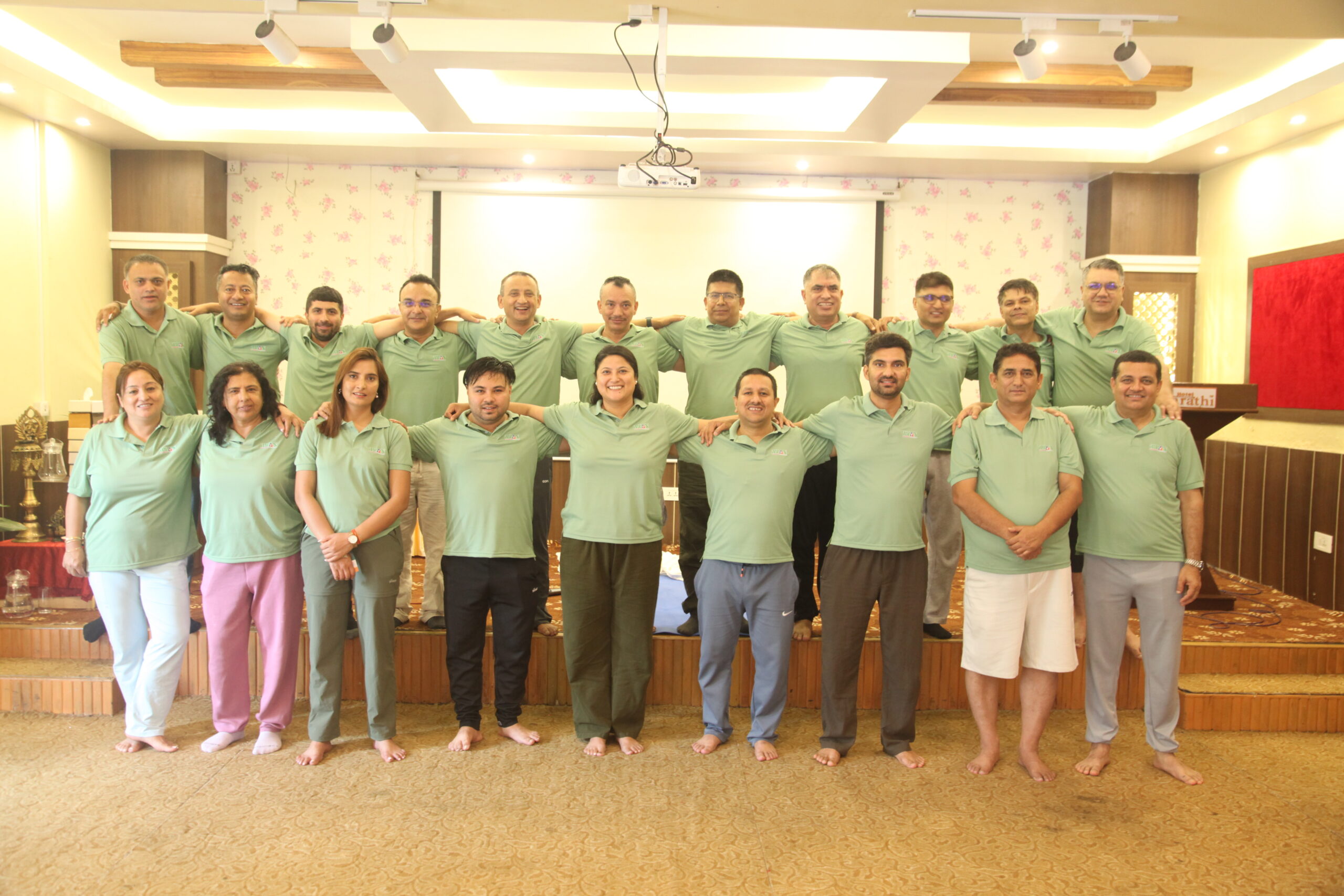
In order to formulate an action plan with clear vision for the formulation and implementation of the policy of IPPAN on the issues related to energy that the Independent Power Producers’ Association of Nepal (IPPAN) has been raising and will be raised in the future, it was decided to divide the functions and form various committees and sub-committees as follows: The working committee has also decided that the coordinators of the committee and sub-committee will submit the Terms of Reference (TOR) within 15 days.
1. Policy Making and Power Trade Committee
Convenor: Mr. Uttam Blon Lama
Members: Bikram Bista, Hima Prasad Pathak, Narendra Vallabh Pant, Susan Karmacharya, Uttar Kumar Shrestha, TN Acharya, Anup Acharya and Jagat Bahadur Pokh
rel
2. Ministry of Energy and Building Construction Committee
Convenor: Shri Narendra Ballabh Pant
Members: Mr. T.N. Acharya, Mr. Shankar Basyal, Mr. Anoop Acharya and Mr. Narayan Kandel,
3. Nepal Electricity Authority Coordination Committee
Convenor: Mr. Uttarkumar Shrestha
Members: Suman Kumari Joshi, Isha Shrestha and Jagadish Shiwakoti
4. Securities and NEPSE Coordination Committee
Convenor: Mr. Him Prasad Pathak
Members: Kabita Pokharel, Suman Kumari Joshi and Kadam KC.
5. Power Development Department Coordination Committee
Convenor: Mr. Vikram Bista
Members: Mr. Kubermani Nepal, Mr. Sangita Dhamala and Mr. Jagat Bahadur Pokhrel
6. Forest, Environment and Land Reform Coordinating Committee
Convener: Mr. Susan Karmacharya
Members: Mr. Bijay Mohan Bhattarai, Mr. Shankar Basyal and Mr. Pratima Gyawali
7. Solar, Hydrogen, Carbon Trading and Friday Forum Committee
Convenor: Mr. Kubermani Nepal
Members: Jagat Bahadur Pokharel, Jyoti Gaire, Milan Khadka and Barna Lamichhane
8. Banks, Financial Institutions and Insurance Coordinating Committee
Convenor: Mr. Suman Kumari Joshi
Members: Bijay Mohan Bhattarai, Kadam KC and Narayan Kan
del
9. Electricity Regulatory Commission Coordinating Subcommittee
Convenor: Mr. Balaram Khatiwada
Members: Mr. Krishna Ghimire (to be nominated after other members)
10. Provinces, Organizations and Secretariat Committee
Convener: Mr. Tien Acharya
Members: Mr. Kabita Pokharel, Mr. Bijay Mohan Bhattarai, Mr. Kubermani Nepal, Mr. Abhijna Malla, Mr. Suman Kumari Joshi and Mr. Isha Shrestha
}
11. Women’s Committee (We Power)
Convenor: Mr. Kabita Pokhrel
Members: Abhigya Malla, Suman Kumari Joshi, Isha Shrestha, Jyoti Gaire, Pratima Gyawali and Sangita Dham
ala
12. Committee on Accounts and Treasury
Convenor: Mr. Shankar Basyal
Members: Narayan Kandel, Jagadish Shiwakoti and Milan Khadka
13. Code of Conduct and Good Governance Sub-Committee
Convenor: Mr. Prakash Chandra Dulal
Members: Mr. Dipak Poudel (to be nominated after other members)
14. Technical Coordination Subcommittee
Coordinator: Mr. Kadam KC
Members: (6 skilled Civil, Electrical and Mechanical Engineers to be nominated later)
15. Subcommittee on International Relations and Event Management
Convenor: Mr. Anand Choudhury
Members: Abhidnya Malla, Santosh Kumar Nepal, Somnath Kandel, Baburam Thapa, Indira Panta, Yagya Subedi, Ram Prasad Acharya and Engineer Mohita Dangi
.
16. Young Energy Entrepreneurs Subcommittee
Convenor: Mr. Vernon Lamichhane
Members: (Nominated after 8 young entrepreneurs active in the energy sector)
c. Advisory and Expert Advisory Formation
}
The Executive Committee meeting of IPPAN has decided to form an 11-member advisory committee and a nine-member expert advisory committee as per the following chapter 9 (1) of the corporation’s statute.
a. Advisory Committee
Chief Advisor: Shree Ganesh Karki
Advisors: Mr. Umesh Shrestha, Mr. Batu Lamichhane, Mr. Raghunath Puri, Mr. Keshav Rayamajhi, Mr. Bharat Bahadur Khatri, Mr. Gyanendra Lal Pradhan, Mr. Sushil Thapa, Mr. Krishna Prasad Bhandari, Mr. Pushpajyoti Dhungana and Mr. Dinesh Gurung
.
b. Expert Advisory Committee
Chief Expert Advisor: Mr. Dinesh Kumar Ghimire
Expert Advisors: Mr. Anup Upadhyaya, Dr. Sandeep Shah, Mr. Manoj Kumar Goyal, Mr. Kumar Pandey, Dr. Atmaram Ghimire, Dr. Chhatra Bahadur Basnet, Arun Subedi and Narayan Prasad Poudel
d. Decision to hold Himalayan Hydro Expo in January
The Executive Committee has also decided to organize the Himalaya Hydro Expo on January 16, 17 and 18, 2027 at Bhrikti Mandap, Kathmandu. This is the fifth edition of the expo. Earlier, Himalaya Hydro Expo was held in 2018, 2019, 2022 and 2024.









प्रतिक्रिया दिनुहोस्