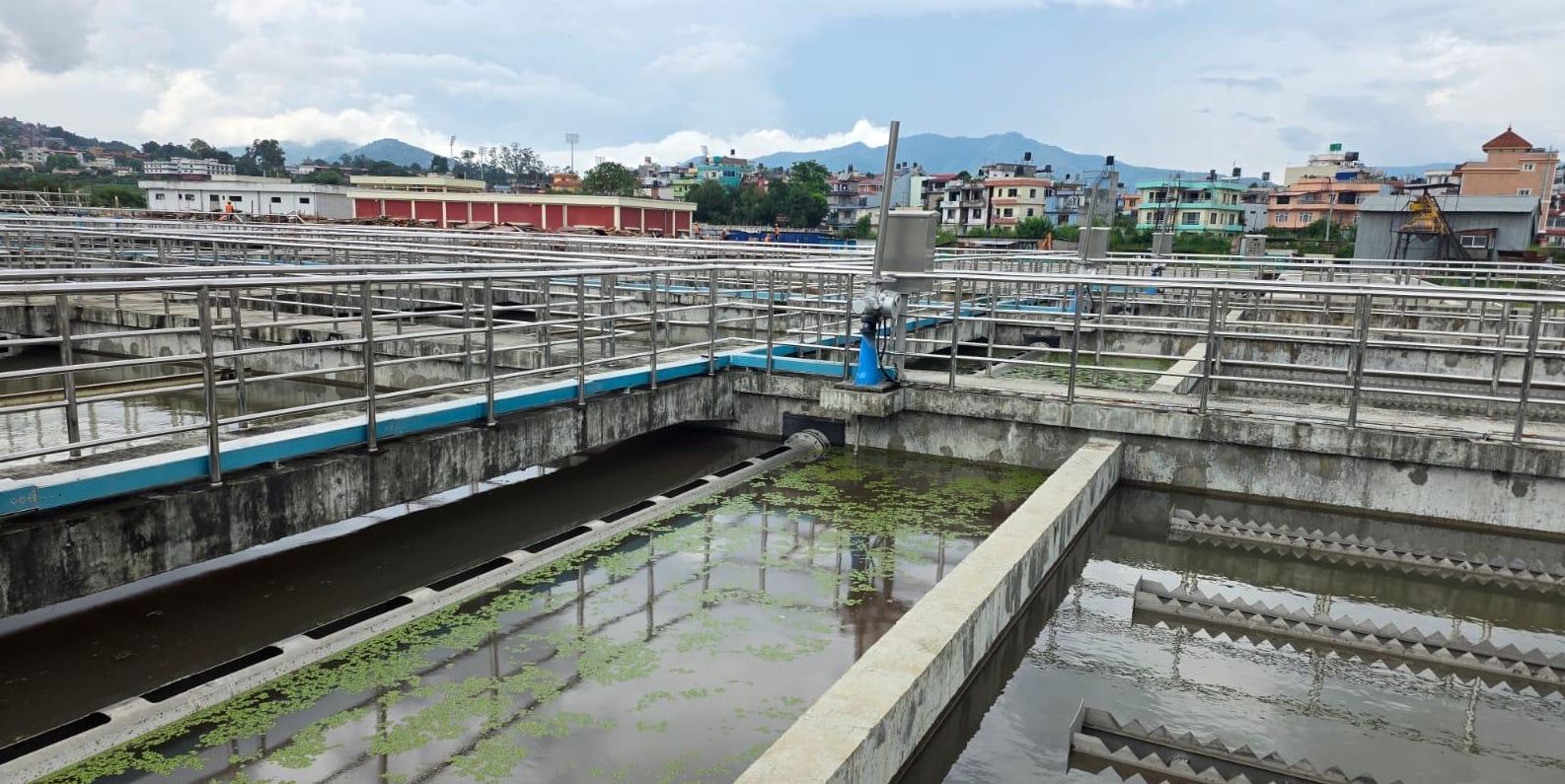
. The test run of a modern sewage treatment plant at Dhobighat in Lalitpur has begun.
According to the Project Implementation Directorate (PID), the project has the capacity to process 37.2 million liters of sewage on a daily basis.TAG_OPEN_div_26
According to PID chief and engineer Ram Kumar Shrestha, the center constructed by CGCOC-Atal JV is expected to contribute significantly to the sewerage management in the Kathmandu Valley.TAG_OPEN_div_24
The work of laying the main drainage on both sides of the Bagmati River has been completed by the High Powered Committee for Integrated Development of Bagmati Civilization.TAG_OPEN_div_22
According to Shrestha, after the center comes into full operation, the amount of sewage flowing into the Bagmati River will be significantly reduced, the river will be cleaned and there will be a positive impact on the environmental cleanliness of the Valley.TAG_OPEN_div_20
PID is constructing another sewage treatment plant with a capacity of 37.2 million liters per day at Dhobighat.TAG_OPEN_div_18 Similarly, a sewage treatment plant with a capacity of 14.2 million liters per day in Kodaku, 17 million liters in Sallaghari, 1 million liters in Hanumanghat and 30 lakh liters in Gokarna is under construction.
According to the directorate, about TAG_OPEN_div_16 80 percent of the drinking water is wasted. Shrestha said that the Kathmandu Upatyaka Khanepani Limited (KUKL) has been distributing around 200 million liters of water daily.
He said that the Ministry has been requested to provide land for the construction of systematic sewage treatment plant in the areas where the squatters have been removed from the squatters along the river.TAG_OPEN_div_14 According to him, the feasibility of installing decentralized sewage treatment system in other places of Kathmandu Valley is also being conducted.













प्रतिक्रिया दिनुहोस्