

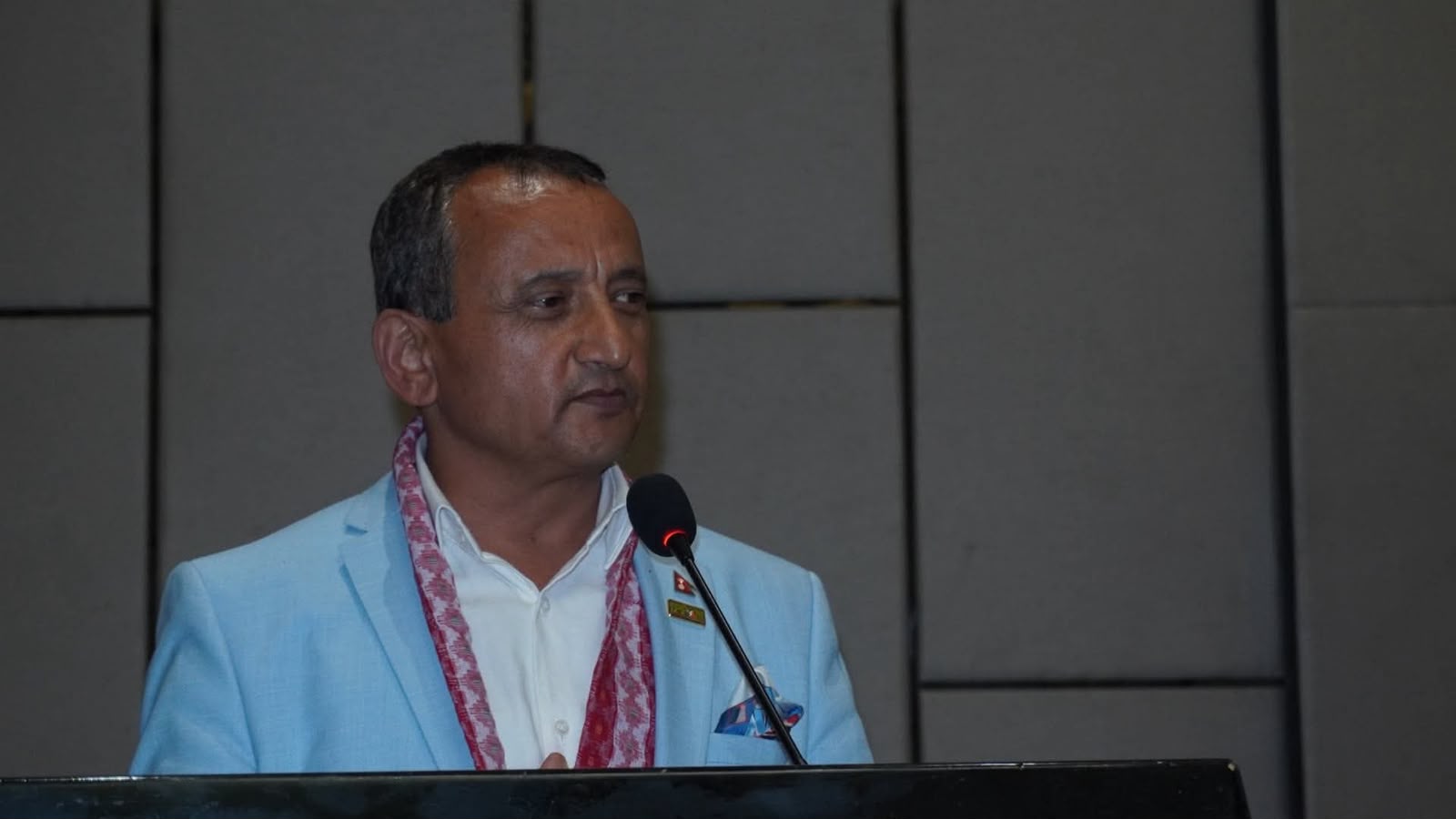
Kathmandu. Chairman of the Independent Power Producers’ Association of Nepal (IPPAN) Mohan Dangi has said that Nepal’s energy sector is facing a big challenge due to cumbersome administrative process and the ‘anti-development’ Forest Act.
He said this in his address to an interaction on ‘Challenges of Electronic Infrastructure Construction and Way Forward’ organized by Association of Economic Journalists of Nepal (NAFIJ).
On the occasion, Chairman Dangi welcomed the recent energy agreement signed between Nepal and India and the capacity enhancement of the transmission line. He expressed happiness over the Nepal-India Energy Secretary-level meeting held in Pokhara and decided to increase the capacity to 1400 MW for import and 1650 MW for export. He said that this has added new enthusiasm to the energy sector.
He blamed that many projects have been stalled due to the strict policy of the Ministry of Forest and Environment despite the investment of billions of rupees from the private sector in power generation.
“About 19,000 MW of projects have been affected due to our 45 per cent forest cover, 15 per cent mountainous area and buffer zones. On the one hand, the government will give permission, but on the other hand, billions of rupees will be stopped just by a warden or an officer cutting a letter,” said Dangi.
Stating that the present Forest Act and Regulations were obstacles not only to the energy sector but also to the overall infrastructure development, he demanded immediate revision to make it ‘development-friendly’.
“Eight ministries, 24 departments and more than 200 agencies have to be visited to complete a single energy project,” he said, adding that administrative hassles have discouraged investors. Similarly, around 1,000 MW of electricity is being wasted due to non-consumption of electricity produced during the rainy season and it is imperative to increase internal consumption and expand transmission lines.
He said that the government’s allocation of Rs 70 billion for the construction of transmission lines in the current fiscal year and taking initiative to involve the private sector in the construction of transmission lines and trade (trade) is a positive step.
He urged the government to fulfill the promises made in the election manifesto as the incumbent government is close to two-thirds majority and has the capacity to make policy changes.
“The incumbent government can easily change the Act, Laws and Directives if it wants. If the political parties fulfill the promises made in their manifestos, half of the problems in the energy sector will be solved,” Dangi said.
In the end, he thanked NAFIZ for initiating a discussion on the problems related to energy sector and expressed his confidence that the target of exporting 10,000 megawatts of electricity in 10 years would be achieved only if the private sector, government and media worked together.












प्रतिक्रिया दिनुहोस्