

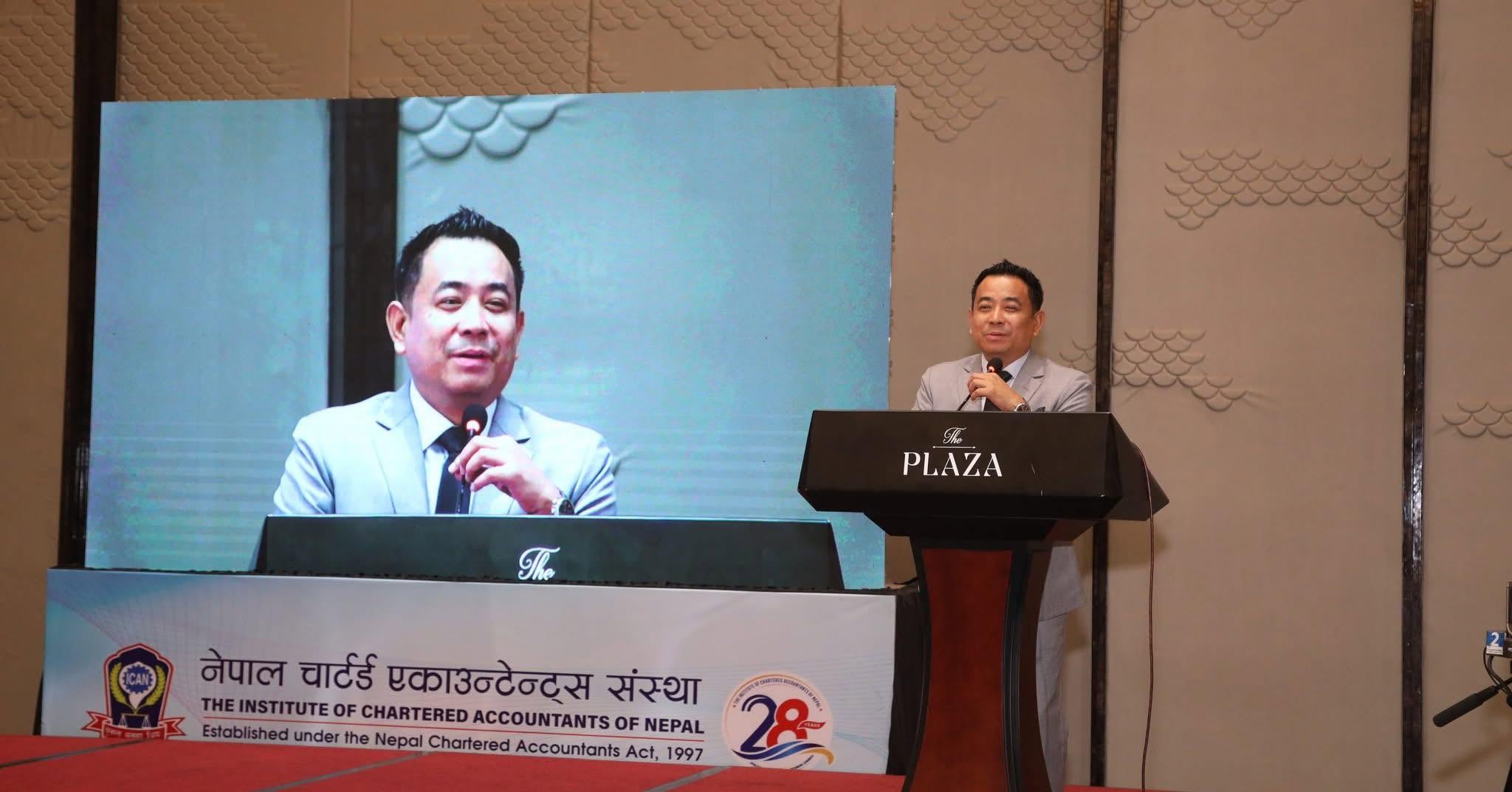
Kathmandu. In the past one year under the leadership of CA Nil Bahadur Saru Magar, outgoing President of the Institute of Chartered Accountants of Nepal (ICAN), the Institute has initiated various reform programs in the areas of professional practice, digital transformation, export of accounting services, international cooperation and corporate governance.
At a time when the accounting and auditing profession is moving towards Artificial Intelligence (AI), automation, data analytics, digital auditing and sustainability reporting, ICANN has prioritized institutional reforms and professional capacity building.
According to ICAN, the Large Practice Development Project has been started to make Nepali accountancy profession compete for international competition. Under this, merger guidelines have been issued to expand the institutional capacity of accounting firms, to encourage voluntary mergers, and to promote services by maintaining professional dignity by amending the marketing guidelines. Likewise, through the revised firm registration process, the legal basis has been prepared for Nepali accounting firms to open branches in foreign countries with the approval of the regulatory body.
The organization has launched the Global Accounting Initiative in Nepal with the objective of establishing Nepal as an international accounting and financial outsourcing destination. Under this, a concept paper was prepared, an accounting outsourcing portal was launched, promotional videos were made public and conferences were organized with the participation of government, private sector and international experts. The organization claims that Nepal’s potential was also presented in the program organized in the UK.
According to ICAN, a career orientation programme has been launched throughout the country to attract youths towards Chartered Accountancy education. This increased the number of new students from 1,707 to 2,388. Scholarships worth Rs 42 lakh have been provided to economically weaker students and for the first time campus placement program, placement portal and mentorship portal have been brought into operation.
A certificate program on data analytics and artificial intelligence (AI) has been launched with the objective of expanding technology-friendly services. Orientation has been provided to members and students on responsible use of AI and the digital ICAN program has been carried out to gradually transform member service, student service and administrative processes into digital mediums.
ICAN has also increased its activism in policy areas related to economic governance. Suggestions have been submitted to the government by conducting pre-budget interaction programs in various provinces before the budget preparation. The cooperative has collaborated with the Cooperative Regulatory Authority for the development of prudential audit framework, capacity building programme on financial analysis and fraud investigation with the Central Investigation Bureau of Nepal Police and certificate programme on public procurement management with the Public Procurement Monitoring Office.
ICANN has acquired the Associate Membership of Chartered Accountants Worldwide (CAW) to expand its international cooperation. The ministry has expanded its collaboration with other organisations and has taken initiatives to expand the institutional network of Chartered Accountants of Nepal in Canada and Dubai.
ICAN has also carried out amendment to regulations, organization and management survey, resolution of disciplinary issues pending for more than five years, publication of a new logo and directive and quarterly journal and e-news. On the financial management side, the company has reported an operating profit of more than Rs 8.5 million in the current fiscal year from an operating loss of Rs 1.91 crore in the previous fiscal year.
According to ICAN, all these initiatives are aimed at creating a long-term foundation for economic governance, knowledge-based service export and development of the organization into an international professional organization, not limited to its traditional regulatory role.















प्रतिक्रिया दिनुहोस्