

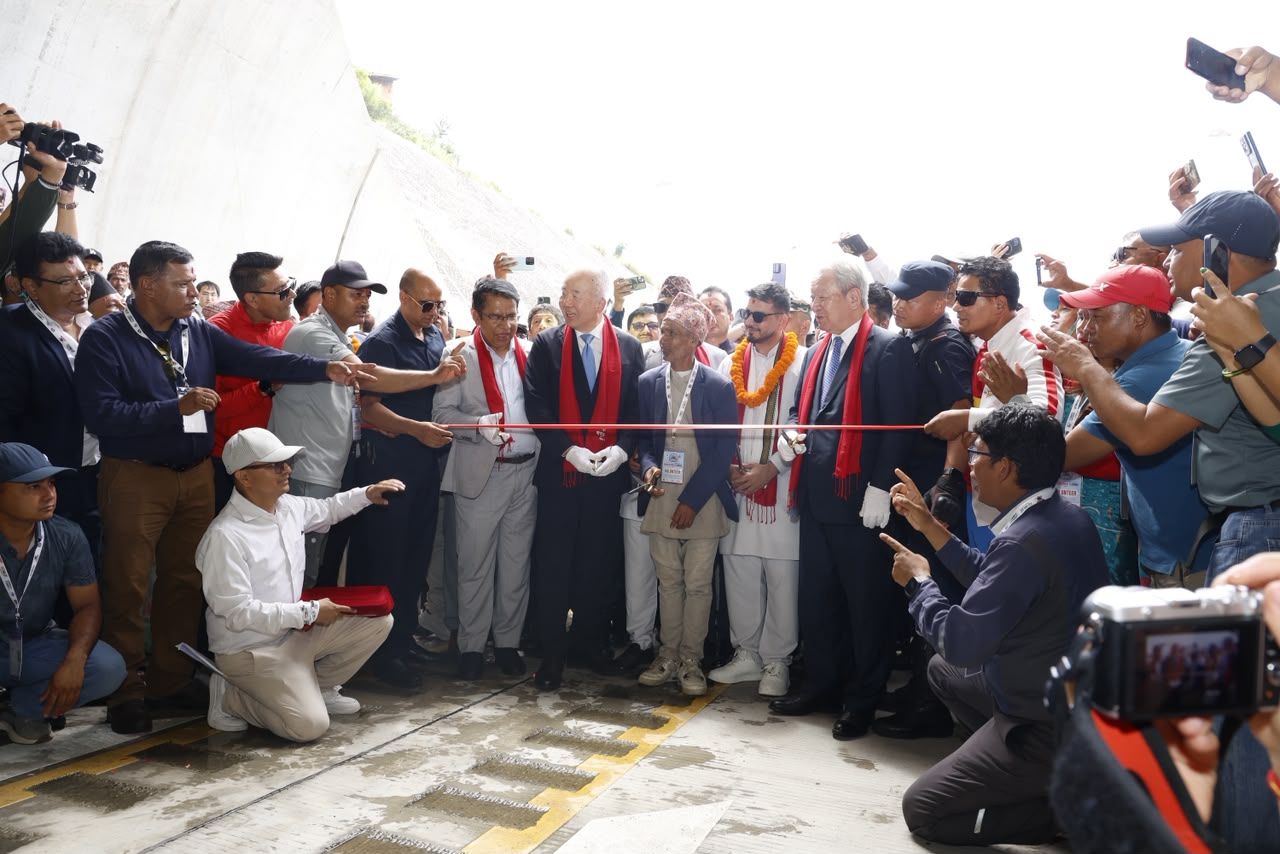
Kathmandu. Nepal’s first-ever Nagdhunga-Sisne Khola tunnel way has been inaugurated amidst a programme here today. The inauguration was held at around 10:30 am on Monday.
The project was jointly inaugurated by Minister for Infrastructure Development Sunil Lamsal and Japan International Cooperation Agency (JICA) President Tanaka Akihiko and Japanese Ambassador to Nepal, Maeda Toru.
The project has been brought into operation 24×7 from today after 80 months of the construction began.
The tunnel has been opened for ambulance, fire engines and emergency vehicles of security agencies in the first phase. It is said the plan is to conduct test of the tunnel for about a week to 10 days by driving essential vehicles.
According to the project, emergency vehicles using the tunnel route during the trial period will not have to pay any kind of fee and the public vehicles will be allowed to ply after successful testing of essential vehicles and ensuring safety.
Separate toll charges have been fixed for the use of the tunnel for cars, buses, trucks and lorries depending on the size and direction of the vehicle. The government has already made public the rate as per the decision to collect fees from the vehicles plying along the Nagdhunga Tunnel Way, in exercise of the powers given by Section 6 (1) of the Road Board Act, 2058 BS.
Vehicles such as cars, vans, pick-up tractors, micro buses and other light vehicles have been fixed at Rs 65 for entering Kathmandu and Rs 60 for exiting the Kathmandu Valley.
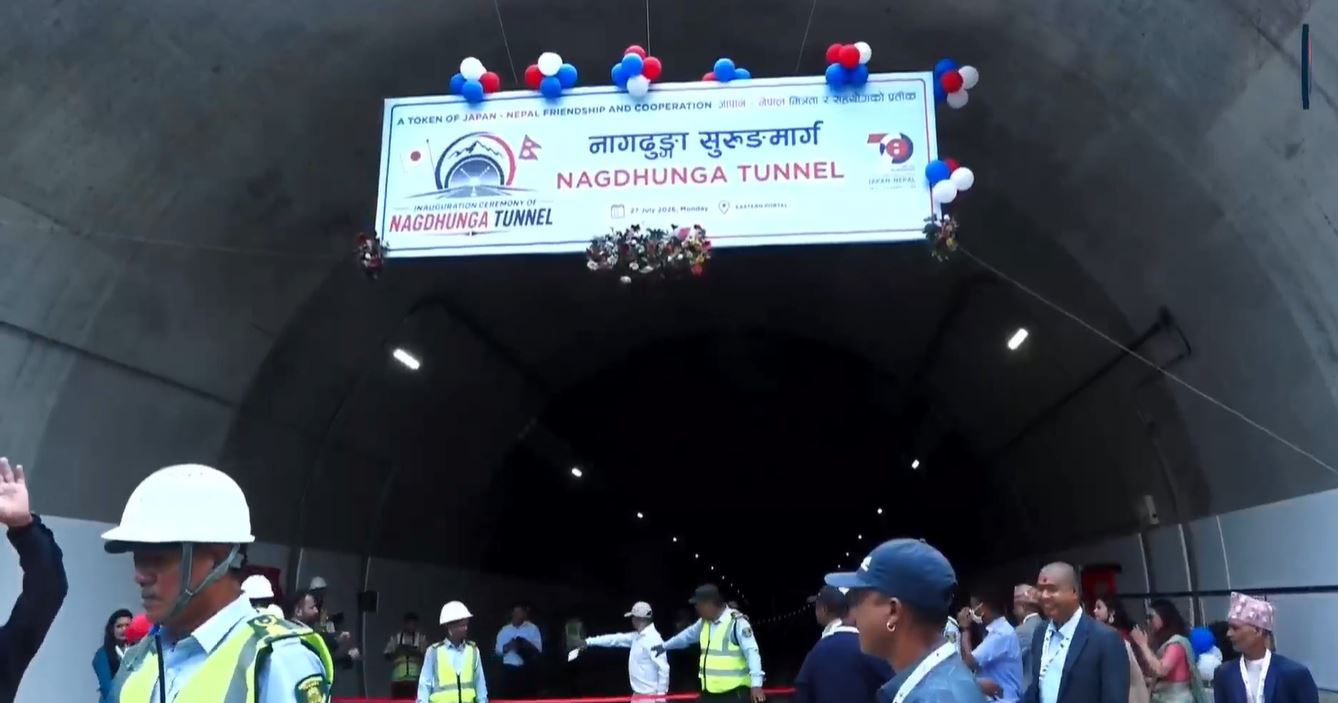
Likewise, entry fee for mini bus and mini tipper truck has been fixed at Rs 115 while for exit, Rs 260 for bus and truck (single rear axle) and Rs 200 for exit. For multi-axle truckers and heavy equipment, the entry fee has been fixed at Rs 600 and Rs 250 for exit.
Arrangements have been made for both N-tag and cash means based on RFID technology to facilitate the payment. Two-wheelers, three-wheelers, pedestrians and vehicles carrying highly flammable materials like diesel, petrol or gas have been banned from entering the tunnel.
The tunnel was constructed with a concessional loan of Rs 21.5 billion from Japan and Rs 6 billion from the Government of Nepal.









प्रतिक्रिया दिनुहोस्