

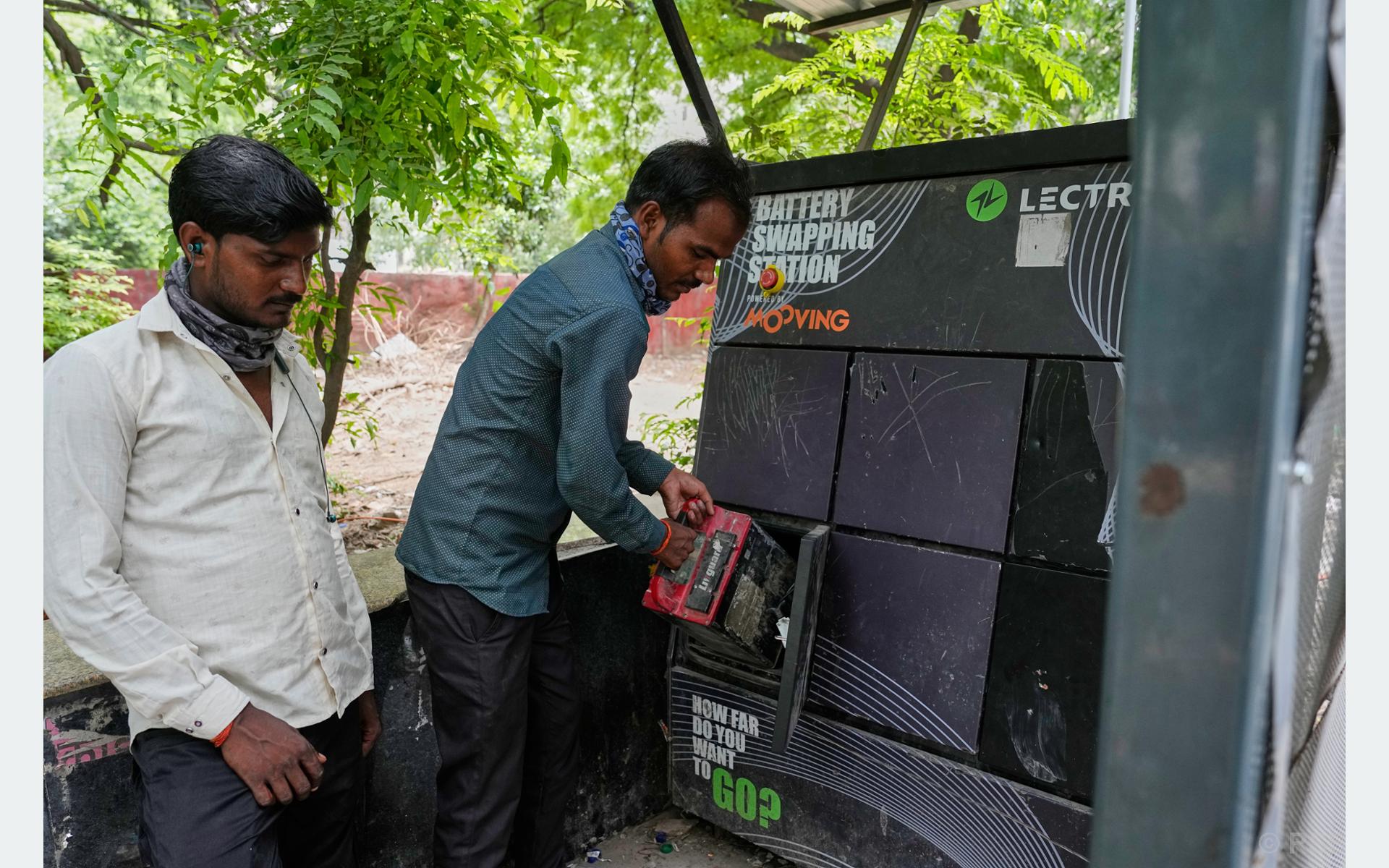
Kathmandu. New Delhi: In a bid to tackle rising air pollution, Delhi has rolled out an ambitious policy to electrify the majority of newly registered vehicles by 2027.
But the charging infrastructure, power supply and consumer confidence needed to make the policy a success are still challenges, experts and users say.
The new policy, which came into effect on July 1, aims to make most of the newly registered vehicles electric by 2027. Although the existing petrol and diesel vehicles will not be banned immediately, the government has come up with a plan to gradually reduce their use. Nearly 70 per cent of Delhi’s vehicles are two- and three-wheelers, so the new policy has given priority to these sections. The policy will be applicable to new three-wheelers and small goods vehicles from 2027 BS.
Under the policy, consumers purchasing electric vehicles will be given exemption on registration fee and some road tax. In addition, cash incentives will be provided to those who do not use old petrol-powered vehicles. According to the local government, the scheme is estimated to cost around Rs 150 billion, while buyers of electric vehicles will get up to Rs 50,000 and those who remove old petrol vehicles will get up to Rs 100,000.
Currently, only 5 per cent of the 87 lakh vehicles registered in Delhi are electric. However, more than one lakh new electric vehicles were registered last year. Most of them were two- and three-wheelers. For some time, registration of petrol-powered cars and big trucks will continue.
Jaideep Saraswat of Vasudha Foundation, which works in the field of clean energy, said Delhi’s policy is one of India’s most ambitious electric vehicle policies. According to him, the clear timeline has sent a message to vehicle manufacturers and consumers that the transition to electric vehicles is now unavoidable.
While states like Maharashtra, Karnataka, Telangana and Tamil Nadu are also promoting electric vehicles, Delhi has become the first state to set a clear target of phasing out petrol and diesel vehicles.
Delhi is one of the most polluted cities in the world. Schools have been forced to close, construction work and public health emergency measures have been recurred, especially in winter. Studies have shown that about one-fourth of the air pollution in the capital city is caused by vehicles, while two- and three-wheelers alone generate almost half of the air pollution.
Ruchita Shah, energy analyst at Global Energy Research Institute, Amber, said the expansion of electric vehicles would significantly reduce pollution. According to him, 12.7 per cent of new vehicles sold in Delhi in FY26 were electric. However, the national average was only 8.3 per cent. He said that the most important aspect of the new policy is to stop the new registration of some vehicles with internal combustion engines after a certain timeframe.
Sunil Dahiya, founder of environmental research firm Envirocatalyst, said that electric vehicles can significantly reduce public exposure to roadside pollution. However, he said that it will take a few years to see the full impact of the policy as the existing petrol, diesel and CNG vehicles will remain on the road for a long time.
However, consumers are still concerned about the charging facility, battery capacity and durability of the vehicle. Siddhanta Jha, a 22-year-old software engineer from north Delhi, said he is not convinced about the lifespan, price and impact of electric two-wheelers on the electric appliances during the rainy season. He said that he is thinking of buying electric vehicles only after the arrival of a more advanced model.
Shyam Singh, who drives an electric scooter at a charging centre in Delhi, said it is still difficult for long-distance commuters to opt for electric vehicles. According to him, the current charging center and battery distance capacity are not enough as expected.
According to energy analyst Shah, the success of the policy will depend on expanding adequate charging infrastructure, upgrading the distribution system and ensuring supply of electricity from renewable energy compared to fossil fuels. He said that it would be difficult to achieve the goal without the expansion of high-speed charging facilities, especially for buses, freight vehicles and cars.












प्रतिक्रिया दिनुहोस्