

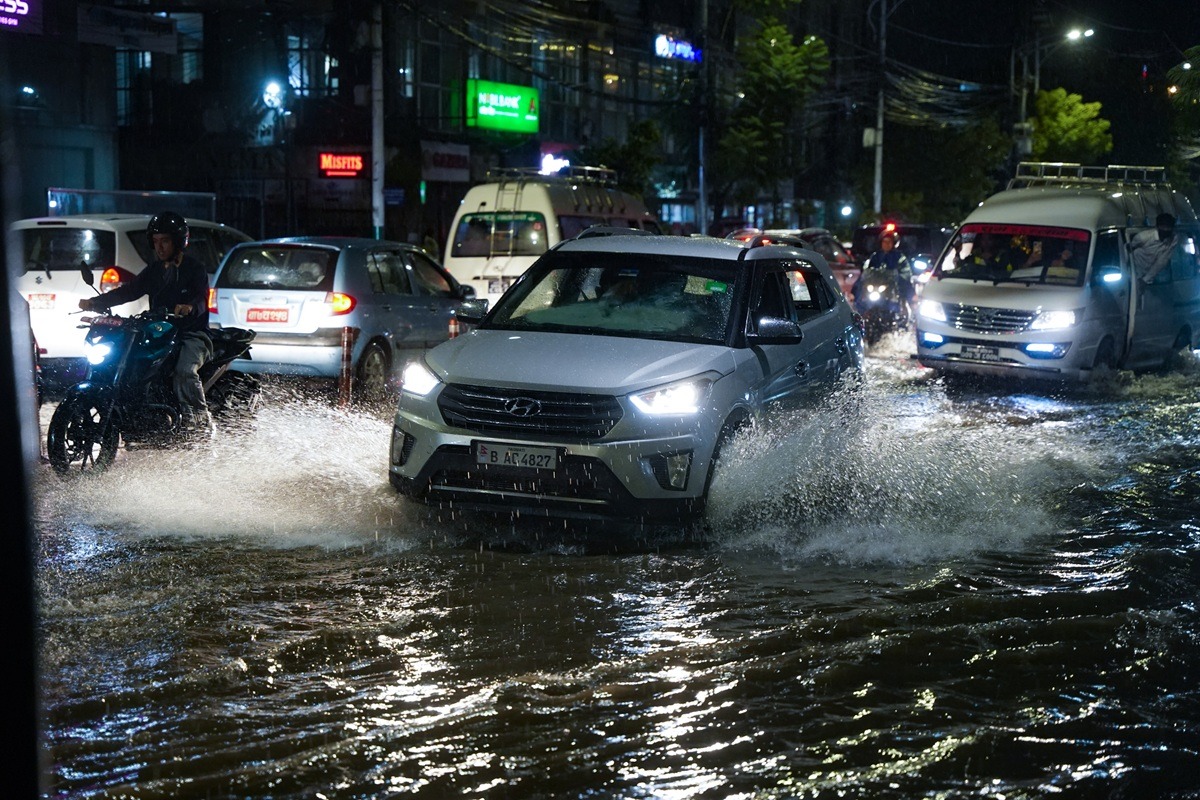
Kathmandu. The technical report has pointed out the unbalanced capacity of the infrastructure as the reason for inundation in the Jamal area of Kathmandu during the rainy season.
According to the technical analysis, during the rainy season, the surface water and sewage water accumulate in the Jamal area when it rains from different directions. The water reaches Jamal Chowk through 60 centimeter pipes from the Yatha side, 90 centimetres from the Election Commission, 45 centimetres from the Yellow Pagoda Hotel and 20 centimetres from the Public Administration Campus. The total inflow area is 0.826 square meters (about 120 centimeters of water collected through the pipe).
However, the drainage system is only 60 centimeters in diameter to drain out the water collected from all these sides. Its total outflow area is only 0.283 square meters. In this way, the way of exit is very narrow compared to the sewerage, which causes water to fill the road and get inundated. The report also pointed out that there is very little difference in the level difference between the end point of the outlet and the water level in the Tukucha rivulet causing obstruction by entering the drainage pipe during heavy rainfall.
Like the problem seen in Maitighar Mandala area in the past, the bottleneck problem in Jamal area can also be seen as a capacity imbalance. As a result, the Jamal area gets inundated even when there is little rainfall.
Acting Mayor of Kathmandu Metropolitan City, Sunita Dangol, directed the development partners concerned to collect information about the works carried out by them and the structures related to the water supply in Kantipath. After that, the officials of the partner office in coordination with the KMC’s Disaster Management Department reached Jamal for an on-site study.
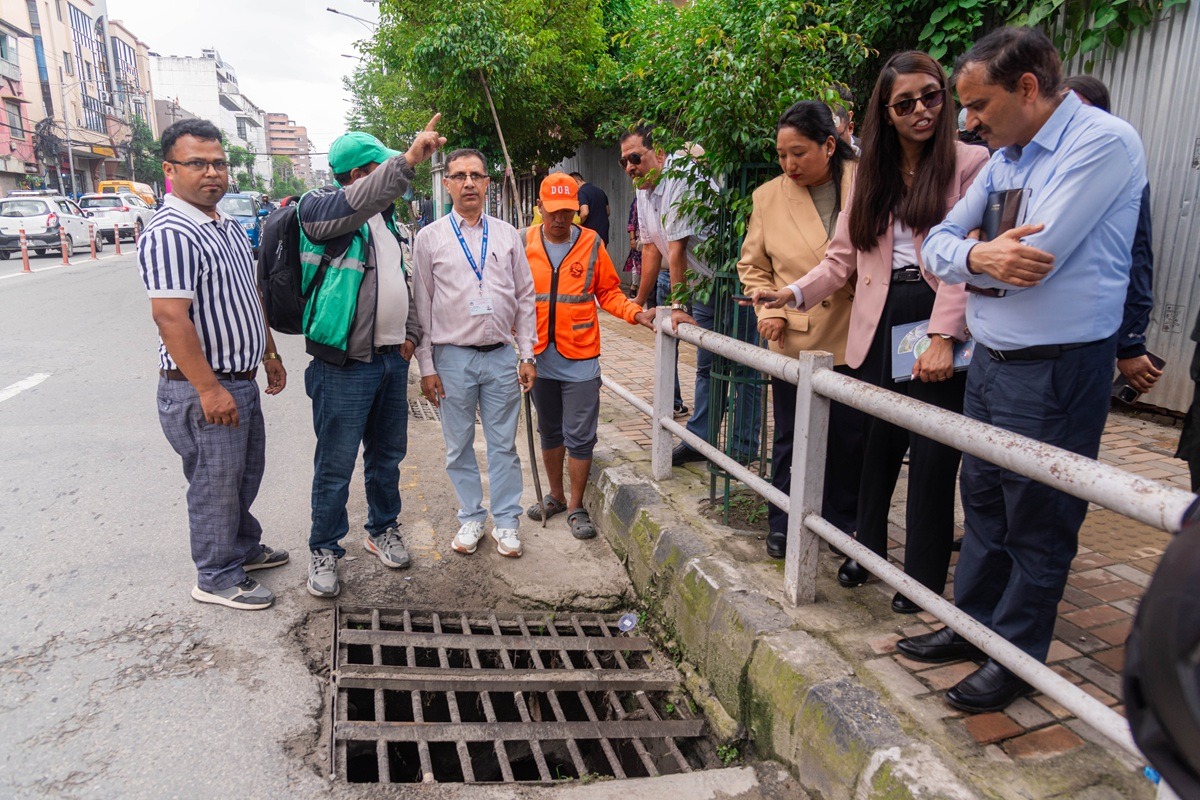
After the field study, National Disaster Risk Reduction and Management Authority (NDRRMA) Response Section Chief Ram Bahadur K. C. The report was prepared by a technical committee formed under the coordination of the Ministry of Health and Family Welfare. Other members of the committee are manager of Kathmandu Upatyaka Khanepani Limited Ujjwal Shrestha, Chief of Public Works Department of Kathmandu Metropolitan City Ram Chandra Nepali and engineer Shreenyaka Rauniyar of Division Road Office, Kathmandu. They prepared the report on the basis of on-site observation and discussion with stakeholders.
The committee has recommended three tiers of plans—short-term, mid-term and long-term to address the inundation.
The committee also calls for increasing the number of catch pits from Jamal to Keshar Mahal, the Department of Roads and the Metropolitan City should coordinate with the Metropolitan City to prevent the capacity of the sewerage pipes, manhole and catch pit from shrinking by cleaning the sand, mud, silt and garbage piled up in the sewerage pipes, manhole and catch pits.
Similarly, a medium-term solution calls for a larger-capacity trunk line to replace the existing 60-centimeter small exhaust pipe and reduce some of the water flow through a diversion system to reduce the water pressure at Jamal’s main square. The report has suggested carrying out a study to resume the old drainage system from the Public Administration Campus, Woodland Hotel to Mahendra’s statue and to operate water recharge system in hotels, shopping malls, schools and privately owned land in the area including Tri Chandra Multiple Campus to reduce the burden of rainwater.
The committee has proposed a model of integrated urban development and environment-friendly sewerage management for long-term solution. The Kathmandu Metropolitan City (KMC) has suggested making rainwater harvesting and groundwater recharge system mandatory for buildings in Jamal area.
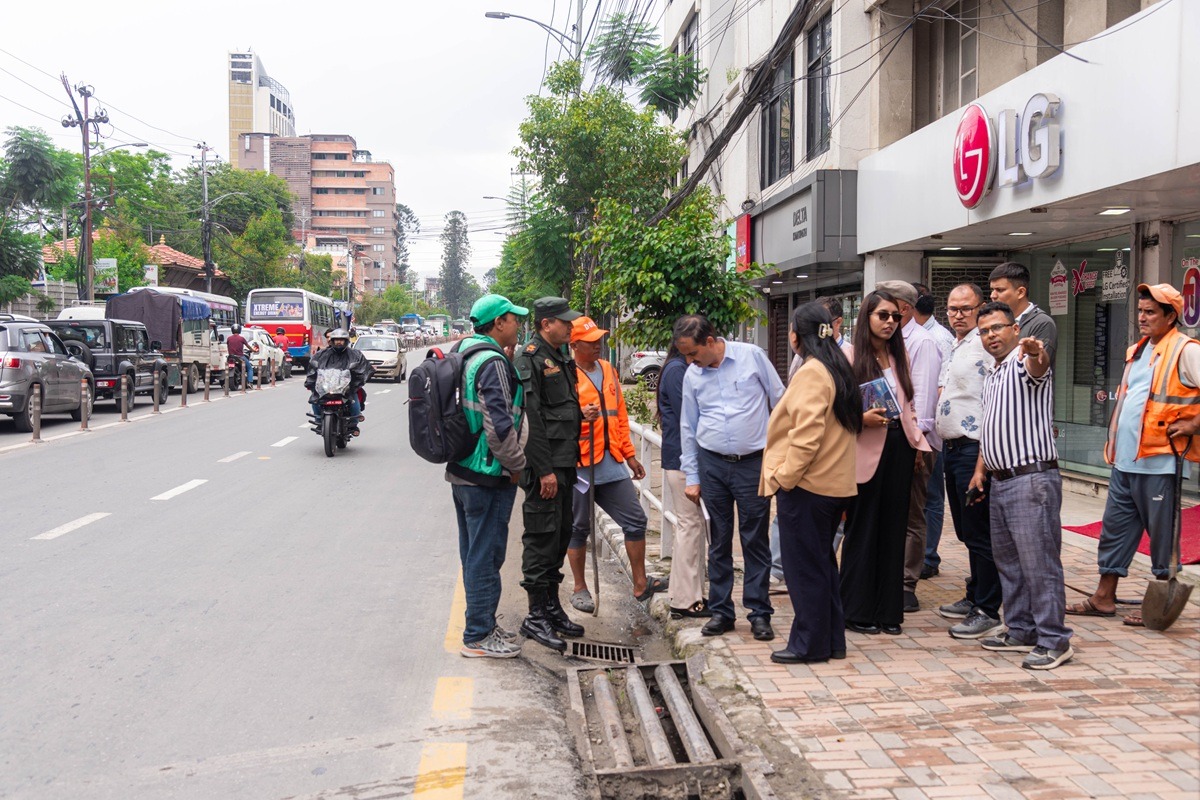
The report states that the rainwater collected on the road surface would be managed through a separate stormwater drainage system and such water could be treated and recharged to reservoirs like Ranipokhari.
The technical team has concluded that the problem of inundation in Jamal area would be permanently solved only if the design titled ‘Detailed Design of Saver Rehabilitation in the Core City Area of Kathmandu Metropolitan City’ prepared by the Kathmandu Upatyaka Khanepani Project Implementation Directorate in 2018 could be studied in coordination with the Division Road Office, Kathmandu and revised and implemented as per the need.
The water collected in the surface could be treated separately and recharged to the reservoirs on the basis of technical suitability, the report states.










प्रतिक्रिया दिनुहोस्