

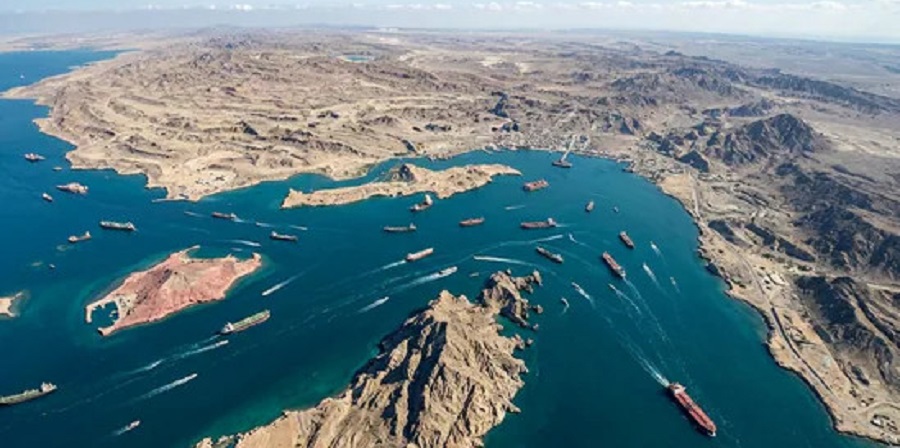
Kathmandu. Iran has rejected US President Donald Trump’s claim that the US maintains “full control” over the Strait of Hormuz, saying the strategic waterway remains blocked and will not be fully reopened until Tehran’s conditions are met. At the same time, the claims and counterclaims between the US and Iran over the important sea route have intensified.
The Persian Gulf Strait Authority (PGSA) said on social media X that US authorities’ claims that the Strait of Hormuz was not blocked would not change the real situation. According to the organization, the water valley is still blocked and will not be reopened until the conditions put in place by Iran are met.
Iran’s comments came hours after Trump said the US had “full control” over the Strait of Hormuz. Trump has described the US naval presence on Truth Social as a “steel wall” and said there is nothing Iran can do about it.
In his message, Trump said the US Navy was maintaining a blockade in the Strait of Hormuz and that Iran’s military infrastructure had been severely damaged. He also commented on Iran’s economic situation and said that it is facing high inflation.
The Strait of Hormuz is an important sea route for global energy supply. Since about 20 percent of the world’s petroleum trade passes through this route, any prolonged disruption or tension could have a direct impact on the price, transportation and supply of crude oil in the international market.
The latest tensions over the Strait Valley have escalated after weeks of military exchanges between Iranian, Israeli and US forces. Tehran has previously threatened to limit or block maritime traffic if external pressure and military action escalate against it. This has raised fears that tensions could escalate into a wider regional conflict outside Hormuz.
The US has responded by significantly increasing its naval presence in the Gulf. Washington says ensuring freedom of international maritime navigation is its top security priority. But along with the military tensions, the US and Iran are also trying to establish diplomatic contacts. Representatives of the two countries have been indirectly discussing possible terms on de-escalating the crisis in Hormuz and resuming regular commercial maritime traffic.
Meanwhile, the newly appointed head of Iran’s Supreme National Security Council, Mohsen Rezaei, has also threatened that Tehran will not fully open the Strait of Hormuz until all conditions are met. In a message published on X, Rezaei called for an end to the US-Iran war and sanctions, the release of frozen Iranian assets, and a regional ceasefire in Lebanon and Gaza. He claimed that the canal will remain closed until all these conditions are met.
The Strait of Hormuz has previously become one of the world’s most sensitive geopolitical sea lanes due to various military and political tensions. Military tensions have in the past raised crude oil prices in international markets and raised concerns about global supply chains. Following the latest tensions, naval patrols have been stepped up in the waters, and some merchant ships have changed their routes and security arrangements. Meanwhile, the international community has urged the parties concerned to exercise restraint and de-escalate tensions through dialogue.
Currently, commercial traffic is operating on important sea routes under tight security vigilance. However, there is uncertainty about how long the sea traffic will be able to operate regularly due to the extremely unstable situation around the waterfront. At the center of diplomatic concern is whether the ongoing indirect talks between the US and Iran can reduce tensions and create an environment for the regular reopening of the sea lane.















प्रतिक्रिया दिनुहोस्