

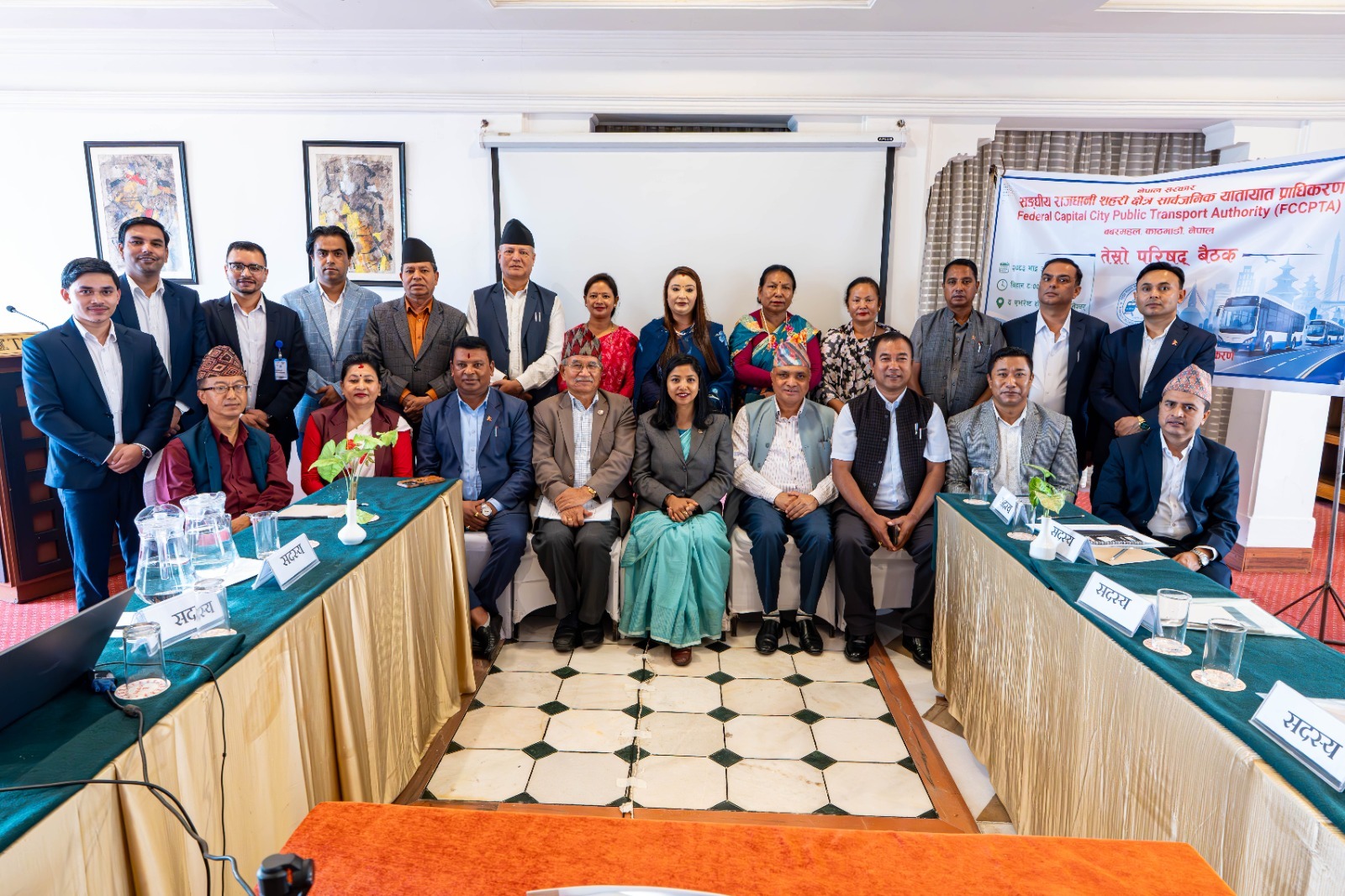
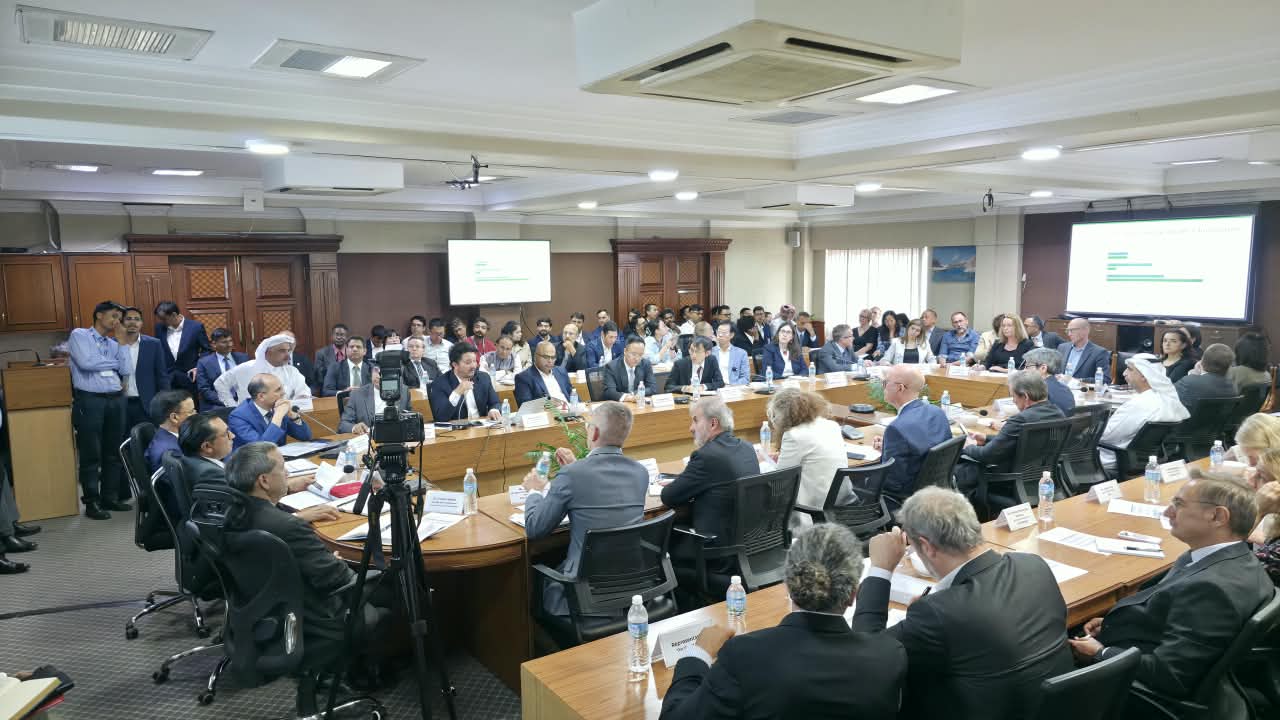
Kathmandu. Where are the public vehicles plying in Kathmandu Valley? The KTM Public Transport mobile application has been launched to ensure the ease of public transport such as how long it takes to reach the place where you are waiting. Kathmandu Metropolitan City’s Acting Mayor Sunita Dangol launched the application in the third meeting of the ‘Federally Capital Urban Area Public Transport Council’ here today.
This application can get information about about 1,200 vehicles with GPS. The authority has a plan to increase it. In the meeting, Chairman Dangol stressed the need of working on a system with financial partnership among the local governments to make the daytime transport system simple, accessible and accessible in the Kathmandu Valley as well as to expand the night service and to operate public transport from early morning for the students going to school and college. “Public transport is not an area that can be kept only within the boundaries of a municipality. This is a common issue of the municipalities as the municipalities are connected. Programs and services should be coordinated and homogeneous. ” he said.
Vice-chair of the meeting and Mayor of Lalitpur Metropolitan City, Chiribabu Maharjan, said that a system was needed to make the passengers travelling on public buses feel comfortable. “This council has the potential to change the shape of public transport. Let’s use this ability. Maharjan said.
“The NRA could not move ahead in the past due to lack of equal inter-governmental understanding in its jurisdiction. During the meeting, NEA Executive Officer Kuber Nepali said, “The government had put it in the scrapping list last year which stalled the works that were trying to move forward.” The Government of Nepal has decided to restructure this year. Therefore, programs have been proposed for the current fiscal year. ’
For this year, programmes such as determination of Bus Stopper Peak Drop Point, condition of night bus service, preparation of model of agreement and collaboration with the municipality, installation of public transport information system on the basis of GPS tracking at main bus stops, bus parks, etc. in partnership with the local levels and preparation of legal infrastructure for the implementation of cashless fare have been approved.
It has been decided to launch a campaign to encourage the culture of buying tickets and conduct research and research programs. During the discussion, suggestions were received on mutual relations and cooperation among the municipalities, operation of public transport targeting heritage sites and tourism areas.
The first meeting of the Council was held on September 12, 2080. The meeting had decided to request for coordination with the NRA before making any decision related to the transport management that falls under the jurisdiction of the Federal Capital Urban Area Public Transport Authority. The second meeting was held on 14th of 2081 BS. The meeting had decided to form a 9-member steering committee to coordinate and manage the decision making process of the council.
The number of members of the council is 35. Mayor of Lalitpur Metropolitan City Chiri Babu Maharjan, Mayor of Changunarayan Municipality Jeevan Khatri, Mayor of Chandragiri Municipality Ghanashyam Giri and Mayor of Budhanilkantha Municipality Mitharam Adhikari are members of the Council. Similarly, Transport Management Office, Traffic Police Office and Department of Roads, which are related to public transport system and infrastructure, have been made members of the committee. Kuber Nepali, the chief executive officer of the council, is the member-secretary.
Legal Provisions Relating to Authority and Council
According to Clause 3 of the Urban Area Public Transport (Management) Authority Act-2079, the provincial government can establish a maximum of seven members public transport authority to operate within one or more than one municipality area for the management of public transport services within the urban areas. Section 12 of the Act has a special provision regarding the Federal Capital Urban Area Public Transport Authority. It provides for the establishment of the Federal Capital Urban Area Public Transport Authority to regulate and manage the public transport services in the Federal Capital Region. As per the Act, there will be 8 authorities, including 1÷1 in each province and one in the federal capital.
The federal capital-urban area public transport council will be headed by the mayor of Kathmandu Metropolitan City for the operation, supervision and management of the functions of the Federal Capital Authority. He is the vice-chair of the mayoral council of Lalitpur Metropolitan City and a member of the mayoral council of Bhaktapur Municipality. Similarly, the joint secretary of the Ministry of Physical Infrastructure and Transport is a member. The members of the council include the Director General of the Department of Roads, the Department of Transport Management or a first-class employee assigned by him/her, the chief of the Kathmandu Traffic Police Office or the Superintendent of Police designated by him, and the secretary of the Ministry looking after the transport affairs of Bagmati Province.
Similarly, 3 representatives including 1 woman from different public transport companies, 2 including 1 woman from organizations working in the protection of consumer interests, 3 representatives including 1 woman nominated by the Bagmati Province government from the people who have expertise in the transport sector, one representative each nominated by the concerned local level from the mayor or deputy mayor of the municipalities of Kathmandu, Bhaktapur and Lalitpur districts not represented in the council. There will be 3 members nominated by the council representing workers, senior citizens and people with disabilities. The Chief Executive Officer will act as the Member Secretary of the Council. It is a self-governing and organized institution with unbroken succession.
Functions, Duties and Powers of the Authority
}
The main tasks of the NRA are to formulate policy, short-term and long-term plan and strategy, operate and manage environment-friendly and passenger-friendly public transport, develop cashless integrated transport system based on information technology, develop real-time information system and implement the developed systems. Construction and operation of public toilets at bus stops and stops, pedestrians, people with disabilities and cyclists are the main tasks of the NRA.
The main responsibilities of the Authority are to collect, record, update and use the details related to public transport, to fix the service charge for providing transport services in residential areas, business centers and shopping malls, to determine the routes, to operate one-way, two-way operation on the designated routes and to ban the vehicles completely or partially on the designated routes.










प्रतिक्रिया दिनुहोस्